

Read three reviews of Grok vs ChatGPT and you’ll walk away more confused than when you started. One has Grok sweeping real-time research and calls it the smarter buy. The next crowns ChatGPT the obvious pick. Both can’t be right, and yet both are.
The answer depends entirely on what job you’re hiring the AI to do. A model that tops a reasoning leaderboard can still be the wrong tool for drafting your documentation, and the model that reads today’s news can still be the wrong one to trust with your company’s data.
So I won’t hand you one blanket winner. I’ll name a winner for each use case that actually decides your subscription: writing and content, real-time research, business automation, coding, price, and data privacy.
The timing here is unusually clean. Grok 4.5 launched on July 8. GPT-5.6 went generally available on July 9. Two flagships, twenty-four hours apart, and almost every comparison published before those two dates is now describing a fight that no longer exists.
Grok vs ChatGPT at a Glance: Models, Makers, and Current Lineup
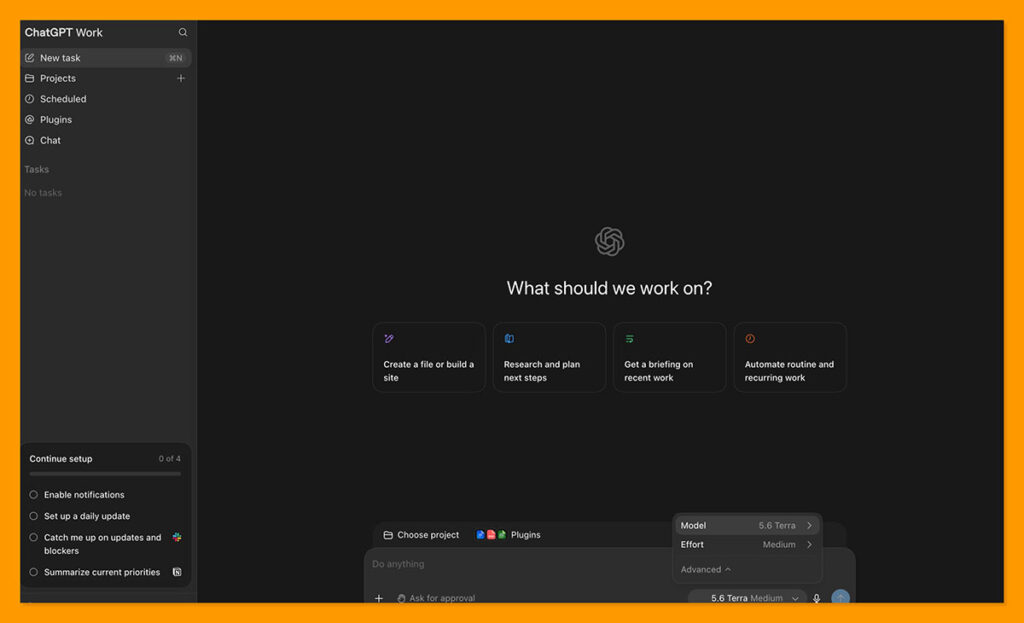
The first thing to understand is that “GPT-5.6” is not one model. It’s a family of three: Sol (the flagship), Terra (the balanced middle), and Luna (the budget tier). Each runs at one of five reasoning effort levels, from light up to max, plus an Ultra mode that spins up parallel subagents.
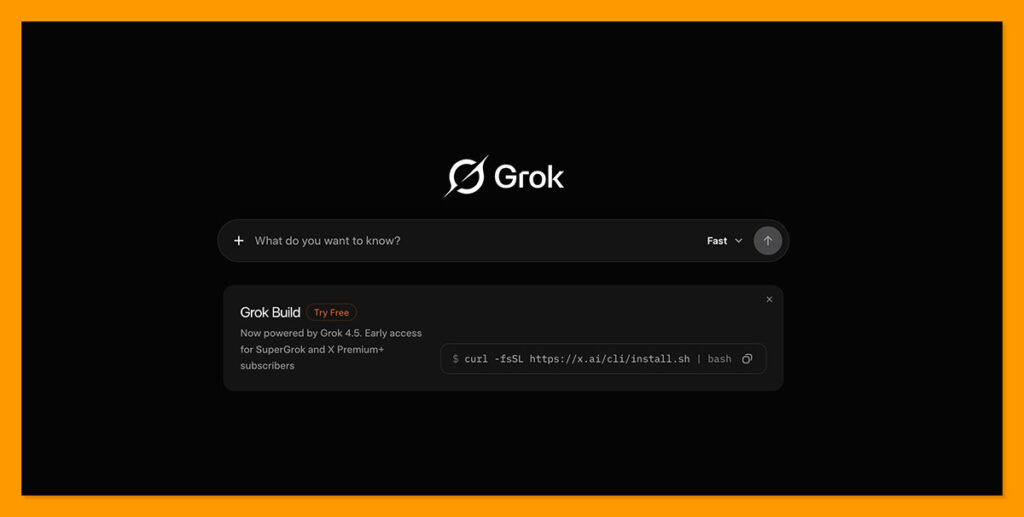
Grok 4.5 is a single flagship. That difference in shape matters more than any single benchmark below, because it means the honest question isn’t “Grok or ChatGPT,” it’s “Grok or which ChatGPT.”
Key Takeaways
- ChatGPT wins writing, business automation, and data privacy for most users.
- Grok wins real-time research and video generation, full stop.
- GPT-5.6 flipped the coding verdict. Sol and Grok 4.5 tie on SWE-bench Pro, but Sol takes Terminal-Bench and DeepSWE clearly.
- Grok 4.5 costs more than the Grok it replaced and holds half the context window.
- ChatGPT Plus ($20/mo) is still the best-value daily driver; SuperGrok Lite ($10/mo) is the cheapest paid entry.
- Grok trains on your chats by default, while ChatGPT Business does not.
| Dimension | ChatGPT | Grok |
|---|---|---|
| Maker | OpenAI | xAI (now a SpaceX subsidiary) |
| Flagship | GPT-5.6 Sol (plus Terra and Luna) | Grok 4.5 |
| Released | July 9, 2026 | July 8, 2026 |
| Flagship context window | ~1M tokens (Sol) | 500K tokens |
| Real-time X + web data | No native X access | Yes, always-on |
| Video generation | None | Grok Imagine |
| Autonomous task agent | ChatGPT Work (July 2026) | Multi-agent mode |
| Connector marketplace | Large, mature | Newer, thinner |
| In-chat checkout | Instant Checkout (live) | None |
| EU availability | Available | Not at launch, expected mid-July |
| Trains on chats by default | No (Business/API) | Yes (opt-out required) |
Note the context row, because it reverses what was true a week ago. Grok used to be the long-context option. It isn’t anymore. Grok 4.5 ships with 500K tokens, half of what Grok 4.3 offered, while Sol carries roughly a million. If you feed models entire codebases or long transcripts, the tables have literally turned.
The deeper split is architectural, and it explains almost everything below. The GPT-5.6 family is tuned for precision and structured, agentic work. Its knowledge is frozen at a training cutoff, so it has no built-in window into what happened today unless you hand it a tool. That makes it steady, literal, and dependable.
Grok 4.5 takes the opposite bet. It’s wired to always-on X and web search, so it knows what the internet is talking about right now. That live feed is its superpower and its liability: it absorbs whatever bias and noise is trending on the platform that day.
1. Writing and Content: Drafts, Copy, and Long-Form
“5 weeks of misery.” That’s how one creator described trying to get a chatbot to finish a single writing project: overthinking, endless verbosity, repetition, and prompt fatigue, until they swore off paying another cent. If you’ve ever asked an AI for a clean draft and gotten back three paragraphs of placeholder mush stuffed with hashtags, you know exactly that feeling.
For the everyday writing most people actually need, ChatGPT is the one I reach for. It follows instructions more literally and hands back finished, publish-ready output instead of a rough draft you have to rebuild from scratch.
What ChatGPT does better here
- Instruction-following: tell it “no placeholders” and it respects that. In one side-by-side script test, Grok left the placeholders in anyway.
- Clean artifact output: it delivers long copy in an organized block you can lift straight out, not buried in the middle of a chat.
- Long-form structure: it holds an outline across a full article, report, or document without wandering off-brief.
One practical note on the new lineup: the reasoning effort setting changes the writing more than the model choice does. Sol at higher effort levels produces noticeably better prose than Sol at light effort, and Terra is the value pick if you’re drafting all day. Which brings a catch worth internalizing before you get comfortable: higher effort levels burn your usage allowance far faster. More on that in the pricing section.
Grok isn’t out of the race, though. On the LMArena blind text leaderboard, Grok’s thinking mode has ranked at or near the top, and it scores high on EQ-Bench for tone and emotional nuance. That shows up in short, punchy social posts and hooks, where personality beats precision. Those rankings predate the GPT-5.6 launch, so treat them as a snapshot rather than a settled result.
The catch is that Grok needs a leash. In one hands-on test, its generic output scored a weak 6 out of 10: too many hashtags, no distinct voice. The moment the prompt referenced a specific account’s style, quality jumped to 9 out of 10. So for Grok vs ChatGPT on writing, the deciding factor is how much steering you’re willing to do.
The Winner
Best for polished, ready-to-publish writing: ChatGPT. Skip Grok here unless you’re willing to feed it a strong style reference every single time.
2. Real-Time Research: Market Intelligence and Trend Spotting
Point Grok at a topic and it goes to work in about 80 seconds. In one hands-on test, a single prompt (“act as a market research agent, analyze competitors using real-time web and X search”) returned a full competitor breakdown, actual user pain points pulled straight from X, and a list of untapped opportunities. The reviewer scored it 9.5 out of 10.
This is Grok’s genuine, hard-to-copy edge, and it’s the one category GPT-5.6 did nothing to change. OpenAI shipped a better reasoner, a bigger context window, and a task agent. It did not ship a live feed of X.
What Grok does that ChatGPT simply can’t
- Live X and web search, on by default: it reads what people are saying today, not what they said before a training cutoff.
- Market and competitor research (9.5/10): themes, pain points, and gaps in a couple of minutes.
- Feedback analysis (10/10): paste raw reviews and it clusters them by theme, calculates an NPS score, and drafts a prioritized roadmap in under two minutes.
- YouTube transcript summaries: hand it a video URL and it summarizes the real transcript, accurately.
ChatGPT’s weakness here is concrete and occasionally maddening. One user kept telling ChatGPT the PS5 Pro was on sale; ChatGPT insisted it wasn’t out yet, and even after screenshots from Best Buy and Amazon, it argued they were just marketing the regular console differently. “ChatGPT just guesses most of the time,” the user concluded. Without native real-time access, it fills gaps with confident guesses.
One honest caveat keeps Grok from being a slam dunk. Its live feed is mostly X, and X content is largely unscreened individual opinion, not expert-vetted fact. The same firehose that makes Grok fast makes it only as reliable as the crowd it’s reading. Always sanity-check what it surfaces, and always include “search X and web” in the prompt to switch the feature on.
The Winner:
For trend spotting, competitor tracking, and sentiment mining, Grok is the tool, and it isn’t close. Treat its findings as leads to verify rather than gospel, and you’ll get in minutes the research that used to eat an afternoon.
3. Business Automation: Agents, Integrations, and Connected Tools
This category just got more lopsided, not less. On July 9, OpenAI shipped ChatGPT Work, an autonomous task agent that completes multi-step jobs (spreadsheets, reports, slide decks) across your connected apps. The macOS ChatGPT app and the Codex app merged into one, with Work and Codex sitting side by side: Codex tuned for coding, Work tuned for everything else.
Grok has no equivalent. Its multi-agent mode reasons in parallel inside a conversation; ChatGPT Work goes and does the job in your other software. Those are not the same product category.
What ChatGPT brings to automation
- ChatGPT Work: an autonomous agent for multi-step tasks across connected apps, bundled from Plus upward.
- Mature connector marketplace: Gmail and a deep bench of productivity integrations, ready today.
- Codex for knowledge work: it reads local files and folders to handle real, iterative tasks.
- ChatGPT Sites: a public-beta feature that builds hosted websites, with an optional “Login with ChatGPT” option.
- Instant Checkout: in-chat purchases via the Agentic Commerce Protocol, an open standard OpenAI built with Stripe.
Grok’s automation story is younger, but it exists
- Official Zapier integration (“Grok by xAI”) for wiring it into no-code workflows.
- Microsoft Office add-ins: Grok 4.5 ships into Word, PowerPoint, and Excel.
- Multi-agent mode: parallel sub-agents reasoning together (up to 16 on the $300 Heavy tier).
The difference isn’t only feature count, it’s orientation. ChatGPT’s automation is built for repeatable processes that touch other software. Grok’s is built for parallel reasoning inside a single conversation. One practitioner put the caution plainly: a single clever prompt isn’t a real “agent.” True autonomous automation on top of Grok still needs an orchestration layer like n8n or LangChain to become dependable.
The catch nobody mentions in the launch coverage: Codex, ChatGPT Work, ChatGPT for Excel, and workspace agents all draw from the same usage and credit pool. Run the Work agent hard in the morning and you may find Codex throttled by afternoon. They are one budget wearing two interfaces.
The Winner:
For automation and connected workflows, ChatGPT takes it comfortably, and the July launch widened the gap. If you want the AI wired into the tools you already run on, it’s the clear pick today.
4. Coding and Technical Work: Benchmarks and Dev Tools
Here’s where the July double-launch did the most damage to conventional wisdom. For about twenty-four hours, Grok 4.5 was the cheaper model that beat OpenAI’s flagship on coding benchmarks. Then GPT-5.6 shipped, and that story mostly evaporated.
| Benchmark | GPT-5.6 Sol | Grok 4.5 | Read it this way |
|---|---|---|---|
| SWE-bench Pro (repo-scale fixes) | 64.6% | 64.7% | A 0.1-point gap. Call it a tie. |
| Terminal-Bench 2.1 (agentic CLI) | 91.9% | 83.3% | Sol’s figure is at max reasoning effort, which costs more tokens |
| DeepSWE 1.1 | 72.7% | 53% | Both from launch materials, different evaluators |
| GPQA Diamond (science reasoning) | Not published | 93.1% | Grok posts a genuinely strong score here |
| Coding Agent Index (Artificial Analysis) | 80 (Terra 77, Luna 75) | Ties Sol on one of three sub-evals | The most independent number on this table |
Read that table carefully before you switch tools. Most of these numbers come from vendor launch materials run on vendor harnesses, with different scaffolding and different definitions of “solved.” Scores routinely slide several points once a neutral party re-runs them under a common agent. That isn’t misconduct, it’s just what always happens in the first week, and it happened with the previous generation on both sides.
Strip the caveats and the shape is clear. Grok 4.5 holds a tie on repo-scale fixes and a real lead on science reasoning. It loses agentic command-line work by more than eight points and DeepSWE by nearly twenty. The “cheaper model wins on capability” story lasted exactly one day.
Where Grok is still genuinely hard to argue with
- 2.5x cheaper on input tokens than Sol ($2 vs $5 per million).
- 5x cheaper on output tokens than Sol ($6 vs $30 per million).
- Fast: xAI serves it at roughly 80 tokens per second, and independent measurement put it above 90.
- Token-thrifty: it burns far fewer tokens per completed task, which compounds across an agent loop.
But most people weighing Grok vs ChatGPT for code aren’t shipping production software. The real jobs are smaller: writing a script, fixing a broken function, cleaning a messy dataset, or running a CSV through some analysis. For that kind of work, integration beats leaderboard position every time, and Codex reads your local folders while Grok Build makes you come to the terminal.
The Winner:
ChatGPT, and this is the verdict GPT-5.6 changed. On capability Sol now leads everywhere except a tied SWE-bench Pro. Grok 4.5 keeps a real argument on cost per completed task at high volume, which is a procurement decision, not a daily-driver decision.
5. Grok vs ChatGPT Pricing: Plans, API Costs, and Rate Limits
“I just got rate limited. I’m confused, aren’t I paying for it?” That complaint shows up constantly from SuperGrok subscribers. Sticker price is the easy part. What you actually get per dollar is where it gets interesting, and the new model families made this messier for both sides.
ChatGPT’s plans, top to bottom
- Free: $0. Limited use, and not the flagship model.
- Go: $8/mo. Roomier limits, still not the flagship, may show ads.
- Plus: $20/mo. Unlocks Sol, Terra, and Luna, plus Codex and the Work agent. The sweet spot for most people.
- Pro: $100/mo for 5x Plus limits, or $200/mo for 20x, plus the exclusive Sol Pro tier.
- Business: $20/seat/mo annual ($25 monthly), two-seat minimum, and no training on your data.
Grok’s plans, top to bottom
- Free: $0. Roughly 10 prompts per 2 hours on a smaller model.
- SuperGrok Lite: $10/mo. The cheapest paid entry; basic Imagine at 480p.
- SuperGrok: $30/mo. DeepSearch, Big Brain mode, unlimited images.
- X Premium+: $40/mo web, $30 mobile.
- SuperGrok Heavy: $300/mo. Maximum limits and 16-agent mode.
Check what you’re actually buying before you subscribe to Grok. Pricing trackers report that as of July 2026, SuperGrok Heavy is the only consumer tier with confirmed full Grok 4.5 access, with standard SuperGrok and X Premium+ still receiving it in stages. Paying $30 does not automatically mean running the model you read the benchmarks for.
On the API, the picture is no longer a clean Grok win:
| Model | Input $/M | Output $/M | Context |
|---|---|---|---|
| GPT-5.6 Sol | $5.00 | $30.00 | ~1M |
| GPT-5.6 Terra | $2.50 | $15.00 | ~1M |
| GPT-5.6 Luna | $1.00 | $6.00 | ~1M |
| Grok 4.5 | $2.00 | $6.00 | 500K |
| Grok 4.3 (previous flagship) | $1.25 | $2.50 | 1M |
| Grok 4.1 Fast | $0.20 | $0.50 | 2M |
Two things jump off that table. First, Grok 4.5 costs more than the Grok it replaced. Input went from $1.25 to $2.00 and output more than doubled, from $2.50 to $6.00, while the context window halved. “Upgrade to the new one” is not automatic. For long-context retrieval and bulk jobs, Grok 4.3 is still the better buy inside xAI’s own catalog.
Second, GPT-5.6 Luna undercuts Grok 4.5 on input price ($1 versus $2) and matches it on output ($6), with double the context. Luna trades away capability to get there, so it isn’t a clean swap. But “cheapest frontier model” and “cheapest model, period” are two different claims, and Grok can no longer make the second one.
Rate limits are where the real friction lives
This is the part that changed most, and not in ChatGPT’s favor. OpenAI’s limits used to be reassuringly flat. Now Plus runs on a rolling five-hour window with a weekly cap stacked on top, and the number of messages you get depends on which model and effort level you pick: roughly 15 to 90 messages on Sol, 20 to 110 on Terra, and 50 to 280 on Luna, varying with task size.
That range is the whole story. Run Sol at max effort or Ultra mode and you will torch a week’s allowance in an afternoon. Two people on the same $20 plan can have completely different experiences depending on nothing but a settings toggle. Default to medium effort for everyday work and escalate deliberately.
Grok, for its part, still uses an opaque per-model credit system where image and video caps exhaust fast, and users report timers sticking for 12-plus hours instead of resetting on the promised window. Neither company has solved this. ChatGPT simply gives you a dial to control it.
The Winner:
Best value overall: ChatGPT Plus at $20. Cheapest way in: ChatGPT Go ($8) or SuperGrok Lite ($10). Best API economics: genuinely contested now. Grok 4.5 for token-thrifty agent loops, Luna for raw cheapness, Grok 4.3 for long context on a budget.
6. Data Privacy and Brand Safety: What You Need to Know
Since a January 2026 update to X’s terms, anything you type into Grok is legally treated the same as a public X post. Your prompts, your uploaded data, Grok’s answers, all folded into X’s definition of “Content.” In March, an Amsterdam court hit xAI with fines of €100,000 per day over non-consensual deepfakes. If you feed proprietary or client data into an AI, that’s not a footnote. It’s the whole decision.
How each handles your data by default
- ChatGPT: OpenAI does not train on ChatGPT Business, Enterprise, or API data by default. Training is opt-in only, and zero-data-retention is available for qualifying API customers.
- Grok: xAI trains on consumer prompts, searches, and outputs by default. You must actively opt out, and since the January terms change, your inputs are classed as public X “Content.”
The regulatory backdrop is heavier still
- Jan 2026: Indonesia, Malaysia, and the Philippines temporarily ban Grok over non-consensual deepfakes (later lifted after written assurances).
- Feb 2026: SpaceX acquires xAI; some legal pages now read “SpaceXAI.”
- Mar 2026: Amsterdam court injunction with €100,000/day fines, the first binding EU ruling against an AI image generator.
- Jul 2026: Grok 4.5 launches without EU availability, with access expected mid-July. If you’re in Europe, the flagship may simply not be there.
- Aug 2026 onward: EU bloc-wide deepfake rules take effect, with more due in 2027.
Turn that into a decision. If you handle client records, personal data, or unreleased work, default to ChatGPT Business, where the no-training policy is contractual, not a setting you hope you remembered to flip. A contract survives a forgotten toggle, and it gives you something to point to if a client or a regulator ever asks where their data went.
The Winner
For anything touching sensitive or proprietary data, ChatGPT Business is the safer default. Use Grok deliberately, for the narrow jobs where its live data earns its keep, and turn training off before you type a single word.
The Verdict: Which AI Wins for Each Use Case
| Use case | Winner | Why |
|---|---|---|
| Writing & content | ChatGPT | Publish-ready output that follows instructions |
| Real-time research | Grok | Native, always-on X and web search |
| Business automation | ChatGPT | ChatGPT Work, mature connectors, in-chat transactions |
| Coding & technical | ChatGPT | Sol leads everywhere but a tied SWE-bench Pro |
| Price / value | Depends | Plus is the best subscription; the API answer is now genuinely contested |
| Data privacy | ChatGPT | No-train default, no regulatory baggage |
For most people, the call is straightforward: make ChatGPT Plus at $20 your daily driver. It writes your drafts, connects to your tools, handles your code, and keeps your data out of a training set. That now covers five of the six categories above, up from four before GPT-5.6 landed.
Then treat Grok as a specialist, not a replacement. For $10 to $30 a month, SuperGrok Lite or SuperGrok buys you the one thing ChatGPT still can’t do: a live read on what’s happening right now, plus video generation if you need it. That is a real capability, and it is the entire remaining case for the subscription.
So is Grok better than ChatGPT? For a day in July, on coding, it had an argument. GPT-5.6 took that argument away. What’s left is real-time research, and that’s a genuine, defensible niche.
The honest answer is that the strongest setup runs both: ChatGPT as the backbone, Grok as the real-time scout, if your budget stretches to roughly $30 to $50 a month combined. If it only stretches to one, make it ChatGPT.
Frequently Asked Questions
What is the difference between GPT-5.6 Sol, Terra, and Luna?
They’re three tiers of the same family. Sol is the flagship (highest capability, $5/$30 per million tokens on the API), Terra is the balanced middle ($2.50/$15), and Luna is the budget tier ($1/$6). All three carry roughly a million tokens of context. A common pattern is running most of a workflow on Terra or Luna and escalating only the hard steps to Sol.
Is Grok 4.5 better than GPT-5.6 for coding?
No, with one narrow exception. Grok 4.5 ties Sol on SWE-bench Pro (64.7% to 64.6%) but loses Terminal-Bench 2.1 by more than eight points and DeepSWE 1.1 by nearly twenty. Grok keeps a real advantage on cost per completed task, since it’s cheaper per token and burns fewer of them. For high-volume agent loops that’s a genuine argument. For daily coding it isn’t.
Does Grok train on my data by default?
Yes, and you have to opt out manually. Since a January 2026 X terms update, Grok prompts and outputs are legally treated as public X “Content.” ChatGPT Business, Enterprise, and API data is never used for training unless you explicitly opt in, which makes it the safer home for proprietary information.
Why am I hitting ChatGPT usage limits so fast?
Almost certainly your reasoning effort setting. On Plus, a rolling five-hour window gives roughly 15 to 90 messages on Sol depending on task size, versus 50 to 280 on Luna. Max effort and Ultra mode consume the allowance dramatically faster. Codex, ChatGPT Work, and Excel all draw from the same pool, so heavy use of one throttles the others. Default to medium effort and escalate on purpose.
Should I upgrade from Grok 4.3 to Grok 4.5?
Not automatically. Grok 4.5 costs more than its predecessor (input up from $1.25 to $2.00, output from $2.50 to $6.00) and halves the context window, from 1M tokens to 500K. It earns its price on agentic and coding work. For long-context retrieval, document analysis, or bulk batch jobs, Grok 4.3 remains the better value.
Is SuperGrok worth it over ChatGPT Plus?
For most people, no. ChatGPT Plus ($20) beats SuperGrok ($30) on value, writing quality, and ecosystem depth, and now on coding too. SuperGrok only earns its place if you need heavy real-time X research or native video generation. Check which tier actually gets you Grok 4.5 before subscribing, since rollout across consumer plans has been staged.

Comments 0 Responses