

Here is the dirty secret of this category: almost every “best AI headshot generator” article you have read was published by a company that conveniently ranks itself at the top. Headshots.com grades itself an A. HeadshotPro ranks itself number one. Headshotphoto.io does the same. We sell no headshot tool, so this ranking of the best AI headshot generators owes nothing to anyone.
That matters because the stakes are real. LinkedIn profiles with a photo pull 21x more views and 9x more connection requests, and a complete profile with a photo is 36x more likely to earn a recruiter message. The good news on the fear everyone has (“will I look obviously AI?”): in blind tests, recruiters correctly flag AI headshots only 38 to 40 percent of the time, and just 29 percent for top-tier paid tools.
We judged every tool on likeness, realism, price, and privacy, with honest cons for all nine, including our top three. The at-a-glance table and our method come first.
| 21x | more profile views for LinkedIn profiles that include a photo (9x more connection requests) |
| 36x | more likely to receive a recruiter message with a complete, photo-backed profile |
| 38-40% | of AI headshots are correctly flagged by recruiters, dropping to just 29% for top-tier tools |
| $0.30-$3 | cost per usable AI image, versus $30 to $100+ per image from a photographer |
How We Picked: Our Criteria and the At-a-Glance Comparison
We weighted realism and likeness highest, then price-per-usable-image, then input effort, turnaround, refund safety, and privacy. Most of these tools run on similar underlying models (Stable Diffusion and fine-tuned variants), so refinement, not raw technology, is what actually separates them. That is why a lesser-known name can beat a household one.
Here is the rubric, in priority order:
- Realism and the “no AI look”: natural skin texture with visible pores, no waxy or airbrushed-flat sheen.
- Likeness accuracy: resisting “likeness drift,” the subtle deviation around glasses, hairline, and skin that experts like Anangsha Alammyan and Nitin Sharma call the real failure mode.
- Price and cost-per-usable-image: roughly $0.30 to $3.00 for AI versus $30 to $100+ per image from a photographer.
- Input effort and turnaround: how many photos you must supply and how fast results land.
- Refund and guarantee safety: whether you have recourse if the batch disappoints.
- Privacy and data handling: deletion timelines and whether uploads train models.
| Tool | Best For | Price | Min Photos | Turnaround | Output | Realism |
|---|---|---|---|---|---|---|
| HeadshotPro | Overall / LinkedIn | $29-$59 | 10-20 | 1-3 hrs | 40-200 | 4.5/5 |
| Secta AI | Volume + editing | $49 flat | 20-25 | Hours | 184-300 | 4.6/5 |
| Aragon AI | Likeness, fewest photos | ~$35-$60 | 6 | 30-60 min | up to 100 | 4.6/5 |
| BetterPic | 4K resolution | $35-$79 | 8-12 | Hours | from 20 | 4.4/5 |
| InstaHeadshots | Fastest turnaround | $49-$69 | 10 | 15 min | 40-200 | 4.7/5 |
| Dreamwave | Auto-correction edits | $35-$99 | Varies | Hours | Varies | 4.3/5 |
| The Multiverse AI | Remote teams | $29 | 100+20 | 2 hrs | 100+ | Solid |
| PhotoPacks.AI | Best value | $24 | Varies | <1 hr | 100 | 10/10* |
| Canva | Free placeholder | Free w/ Pro | 1 ref | <1 min | 1/day | ~35% likeness |
Two buyer notes competitors skip. First, input-photo quality is the single biggest determinant of output across every tool on this list: use clear, well-lit, varied shots, no hats or sunglasses, and quality beats raw count. Second, the photographer math: a session runs $150 to $500 for 5 to 15 edited images, versus $29 to $99 for 40 to 300 AI images. Quality tier, not “AI” itself, drives detectability.
1. HeadshotPro: Best Overall for Professional LinkedIn Headshots
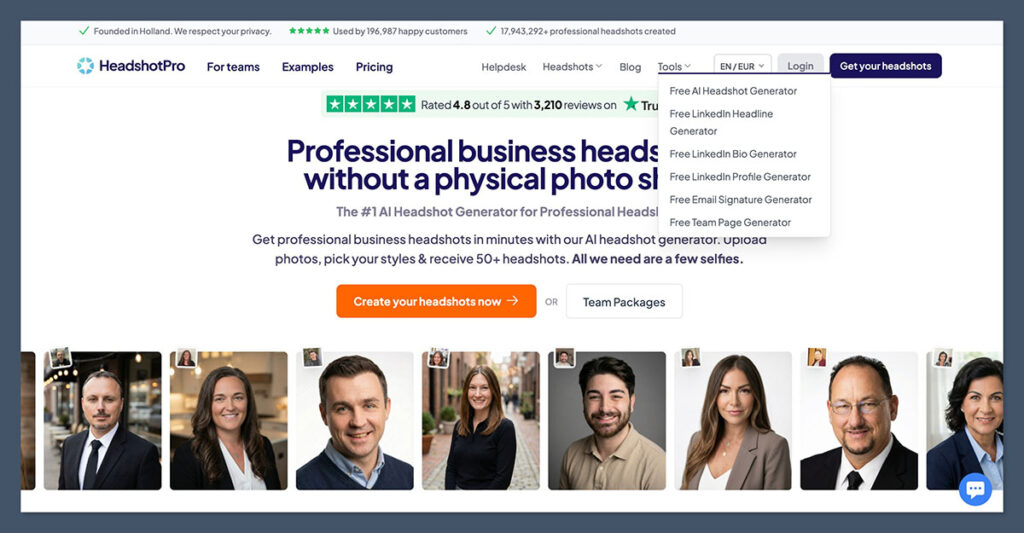
HeadshotPro advertises “18M+ headshots for 196,987+ customers” and calls itself number one, yet one independent reviewer argued it is “the best at SEO, not necessarily quality.” We rank it first anyway, on the output rather than the marketing, and we will show you exactly where it slips.
Pricing: $29 for 40 headshots (3-hour turnaround), $39 for 100 (2-hour), and $59 for 200 (1-hour). It needs 10 to 20 input photos, and minimum photos land in the middle of the field. Turnaround is among the fastest at one to three hours, output count stretches to 200, and enterprise ordering can drop the price to roughly $20 per employee for about 120 images at scale.
Key Features
- The most photorealistic output in several head-to-head tests, closest to a real studio shoot.
- The only tool in some tests that lets you pick specific clothing items.
- Over 30 style options across professional backdrops and outfits.
- Strong team workflow: org setup, locked backdrops and outfits, and magic-link invites.
- Fast tiered turnaround, from three hours down to one.
✔ Pros
- Realism: top-tier skin and lighting quality for LinkedIn and professional use.
- Clothing control: rare item-level wardrobe selection.
- Teams: excellent for distributed and remote workforces.
- Track record: enormous proven volume behind the product.
✘ Cons
- Skin texture: can look over-smoothed and retouched, which hurt likeness in some tests.
- Hairstyles: about 95 percent of one tester’s results had short hairstyles, a real diversity gap.
- Editing: only two retouching options versus Secta’s fuller Remix suite.
- Privacy: the policy deletes uploads within 14 days of a confirmed request but does not state whether photos train models or who owns outputs.
The Verdict
HeadshotPro is the well-rounded default. It balances realism and features better than anything else here and owns the strongest team story, so it wins for most professionals building a recruiter-ready LinkedIn photo. The clothing control alone saves the wardrobe headache that trips up rivals, and the tiered turnaround means you can pay a little more to shave the wait to an hour. Dock it for hairstyle monotony and a thin privacy disclosure, and preview your gallery before you download anything to protect a possible refund. For most readers, this is the safe first stop before you go shopping the specialists below.
2. Secta AI: Best for Volume and Post-Generation Editing
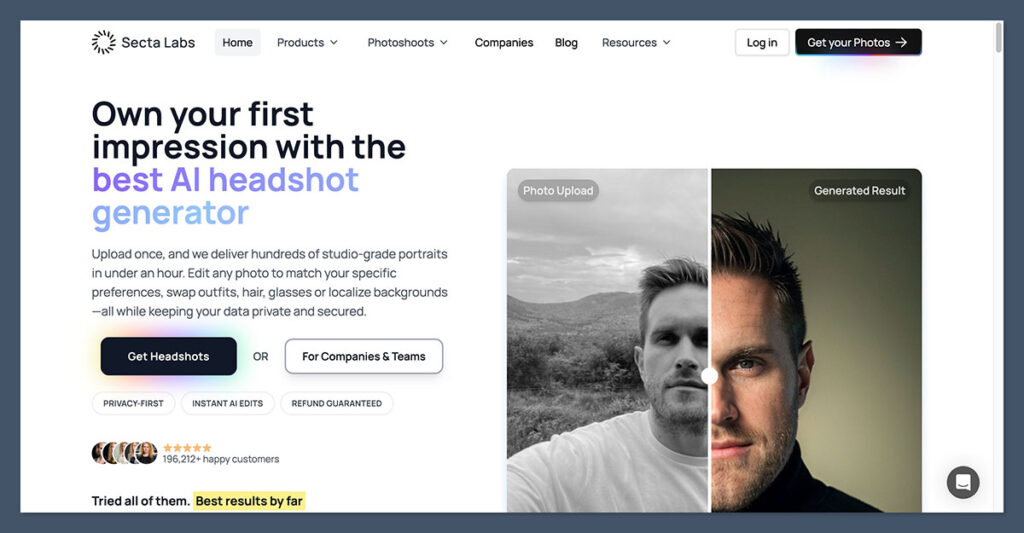
Most reviews could not or would not properly test Secta. Headshots.com wrote it off as “too polished” with a C-minus, and HeadshotPro literally “could not review” it because Secta’s photo-similarity filter rejected the inputs. Read those two facts skeptically: “too polished” from a direct competitor is a convenient way to bury a rival, and a filter that rejects inputs is a quirk, not a quality verdict.
The honest independent read is that Secta’s polish is both its feature and its flaw. Hands-on testing confirms the over-processing is real, with faces smoothed and visibly aged, which means the flat $49-for-300 headline hides a curation tax: you get the most images in the category, but you pay for that volume in time spent discarding the ones that no longer look like you. The value is genuine only if you actually enjoy editing down a big pile.
Pricing: a flat $49 one-time fee for a claimed 300+ headshots across 90 to 130+ styles. One hands-on reviewer received 184 of the advertised 300+, so treat the headline number as a ceiling. The minimum photos requirement is the highest of the majors, turnaround runs a few hours, and output count is the largest in the category. Founded around 2023 by Mark Jaks, Secta also carries the longest refund window of the big three at 30 days.
Key Features
- The largest output volume of any tool here for a single flat fee.
- A Remix suite for granular edits: expression, clothing, background, hair, eyes, retouch, upscale, and recolor.
- Support for group photos, which Aragon and HeadshotPro do not accept.
- 90+ style variety spanning corporate to creative looks.
- Flexible use beyond LinkedIn, including creator work like YouTube thumbnails.
✔ Pros
- Volume: unmatched image and style count for the price.
- Editing: the deepest post-generation toolkit in the roundup.
- Refund: the longest guarantee window at 30 days.
- Flexibility: handles more use cases than the pure LinkedIn tools.
✘ Cons
- Input effort: 20 to 25 photos minimum, 30 to 35 recommended, the heaviest ask of the majors.
- Over-processing: reviewers say it pushes face shape and color grading too far. One noted, “Most didn’t look like me and aged me quite a bit.”
- Delivered count: 184 images fell short of the advertised 300+.
- Privacy: at least one aggregator flags thinner published data specifics than rivals.
The Verdict
Best for people who want the widest menu of looks and hands-on editing control, and who do not mind curating a large batch to surface the keepers. Skip it if you want a small set of guaranteed-usable images with minimal effort, or if hunting down 20-plus quality selfies sounds like a chore you would rather avoid.
3. Aragon AI: Best for Realistic Likeness With the Fewest Photos
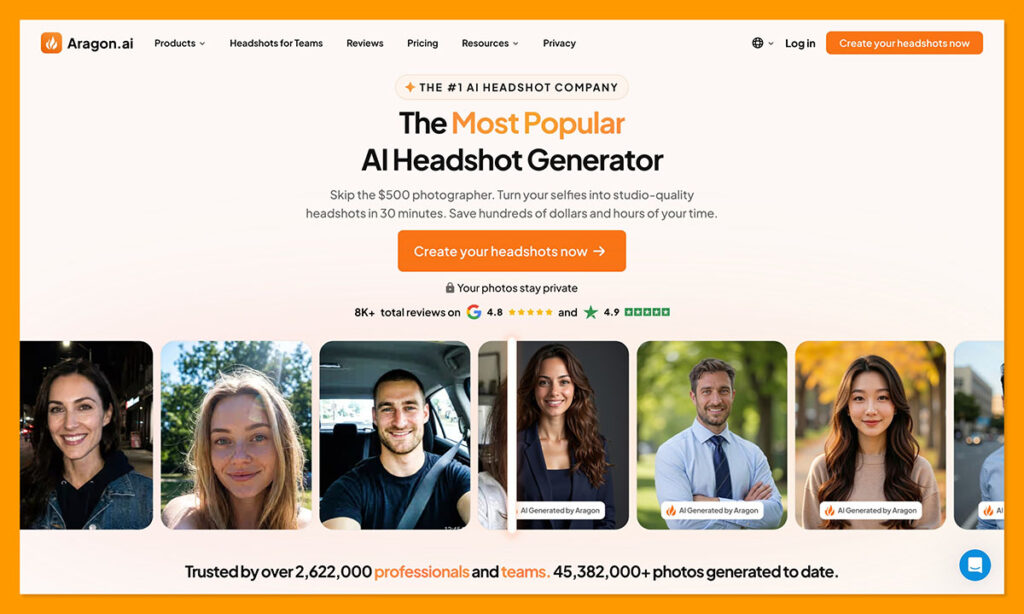
Aragon markets itself on two promises, the fewest photos and the best likeness, and unusually, independent testing backs both at the same time. In a head-to-head likeness test, Aragon hit 88 percent facial-likeness accuracy, capturing sharper bone structure and finer eye detail than both Secta and HeadshotPro, from as few as 6 uploaded photos. In a category where marketing and results usually diverge, that alignment is the story.
The analytical caveat: the same aggressive refinement that wins the identity test also over-smooths skin, so freckles and fine texture quietly disappear. Aragon optimizes for “recognizably you” over “texturally real,” which is the right trade for a LinkedIn photo and the wrong one if visible authenticity is what you are after. If your worst fear is a photo that does not look like you, this is the pick that fights hardest against likeness drift.
Pricing: up to 100 headshots in roughly 30 to 60 minutes from a minimum of just 6 photos. The minimum photos requirement is the lowest in the field, turnaround is the fastest realistic option here, and output count reaches 100. Aragon carries a 7-day money-back guarantee (the shortest of the big three, void once you download), plus AES-256 encrypted storage and self-serve data deletion.
Key Features
- The lowest input requirement anywhere on this list, just 6 selfies.
- Fast, realistic turnaround in about 30 to 60 minutes.
- Won the facial-identity comparison at 88 percent likeness.
- A strong enterprise story with branded team headshots, API integrations across 8,000+ apps, and a referral program.
- The best-documented privacy posture of the featured three.
✔ Pros
- Effort: the least uploading of any tool here.
- Likeness: the top identity-accuracy score in testing.
- Speed: realistic results in under an hour.
- Security: clearest encryption and deletion controls of the top three.
✘ Cons
- Styles: fewer looks than Secta (as few as 6 versus 90+ in one comparison).
- Refund: the shortest window at 7 days.
- Over-retouching: skin can read “too perfect,” missing natural detail like freckles.
- Background remover: leaves rough seams around the subject.
The Verdict
If you want the picture to unmistakably look like you and you refuse to dig up 20 selfies, buy Aragon. The 6-photo minimum genuinely lowers the barrier, and the 88 percent likeness result means you spend less time discarding shots that feel like a stranger. Budget a few minutes to review for over-smoothing around the skin and freckles, clean up any rough background seams, and preview inside the 7-day window before you download, because that click ends your refund. It is the sharpest identity play here, provided you accept a narrower style menu than Secta.
4. BetterPic: Best for 4K Resolution and Understated Realism

A blind-test reviewer called BetterPic “insanely realistic and underrated” relative to how little you hear about it, and the direction of that gap is the whole point. Most tools in this category out-market their output; BetterPic under-markets its own, which is exactly why it rarely tops the sponsored lists that other reviewers publish.
Independent blind tests put its realism ahead of its reputation, and 4K resolution on every tier is a concrete, checkable differentiator rather than a slogan. The catch is how that quality is priced: this is a resolution play, not a volume play, so $35 for 20 single-style images is weak value if you just need a usable batch and do not care about print or large-format display.
Pricing: $35 to $79 depending on plan, with 4K resolution (3,840 x 5,120 px) on every tier. It asks for 8 to 12 input photos, so the minimum photos requirement sits comfortably in the middle, turnaround runs a few hours, and output count starts around 20 on the entry plan.
Key Features
- 4K output on every plan, which is rare in this category.
- Strong photorealism confirmed by independent blind tests.
- A professional look suited to LinkedIn and larger-format or print use.
- A straightforward 8 to 12 photo input requirement.
✔ Pros
- Resolution: the highest baseline in the roundup.
- Realism: convincingly natural skin and texture.
- Print-ready: holds up on high-res displays and physical output.
✘ Cons
- Price per image: $35 buys just 20 headshots in one style, weak next to flat-fee rivals delivering far more.
- Evidence: fewer independent data points than the big three.
The Verdict
Choose BetterPic when resolution and per-image realism matter more than sheer quantity, for a portfolio, print, or a large web header. That 4K ceiling holds up where volume tools visibly soften on a big display, which is the difference between a headshot that survives a conference banner and one that does not. Choose Secta instead when you want dozens of styles cheaply and are willing to curate a big pile to find the winners. Just go in knowing you pay for the resolution here, since $35 buys far fewer images than the flat-fee crowd.
5. InstaHeadshots: Best for Fastest Turnaround
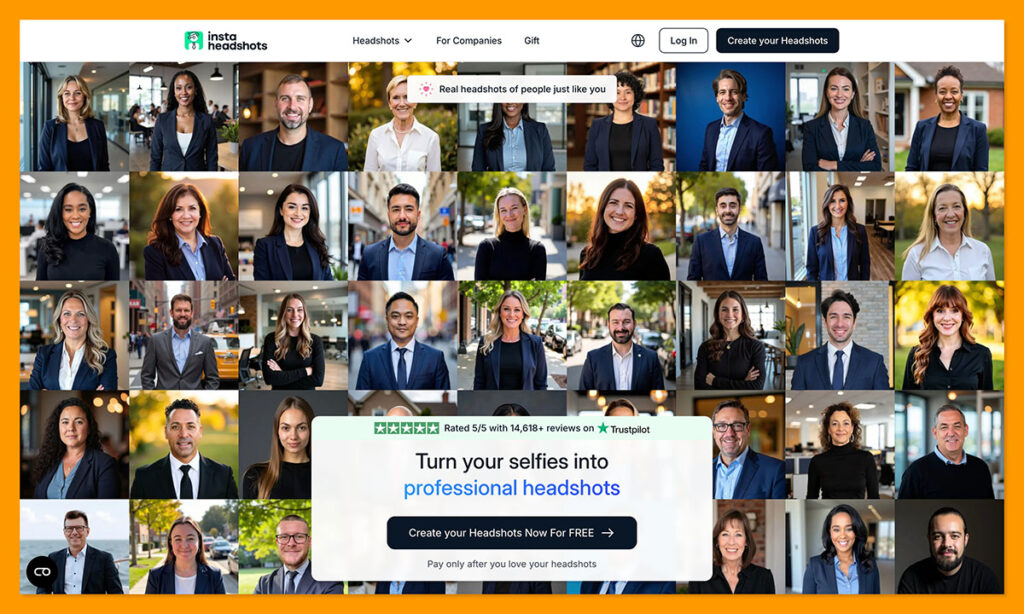
Need a headshot in the next 15 minutes? InstaHeadshots advertises the fastest turnaround in the field, and in one independent aggregator it topped every major on realism with a 4.7 out of 5, edging Aragon and Secta (both 4.6), HeadshotPro (4.5), and BetterPic (4.4). Treat that number with a little caution, though: it comes from a single aggregator, and being both the fastest and the most realistic runs against how this category normally works, where speed usually costs refinement.
The more durable trust signal is the refund rule. Money back if fewer than 4 delivered images are usable is a measurable promise, not a vague satisfaction pledge, and that concreteness tells you more than any single score. The hidden cost is input rigidity: the fixed 2 upper-body plus 8 close-up requirement is the real price of that 15-minute clock.
Pricing: Starter $49 (40 headshots), Simple $59 (100), Premium $69 (200). The Starter plan turns around in 15 minutes, the minimum photos requirement is 10 in a specific mix (2 upper-body plus 8 close-up), and output count climbs to 200. There is a 100 percent money-back guarantee if fewer than 4 delivered headshots are usable, a concrete yardstick rather than a vague satisfaction promise.
Key Features
- The fastest advertised turnaround anywhere here at 15 minutes.
- The top realism score (4.7/5) in one head-to-head comparison.
- A usable-count refund guarantee that is unusually concrete.
- Tiered volume scaling up to 200 images.
✔ Pros
- Speed: genuinely minutes, not hours.
- Realism: ranked first in at least one independent test.
- Refund: tied to actual usable output, not vague satisfaction.
✘ Cons
- Price: $49/$59/$69 matches or beats Secta and HeadshotPro at equivalent volume, so it is not the value play.
- Rigid inputs: demands a fixed 2 upper-body plus 8 close-up mix rather than flexible uploads.
The Verdict
This is the deadline pick. If you need something professional in minutes and want a refund yardstick you can actually measure, InstaHeadshots delivers, and the 4.7 realism score means speed does not cost you quality here. Prep the exact 2 upper-body plus 8 close-up mix before you start so the rigid input rule does not stall the 15-minute clock. Still, check Secta or Aragon first if price-per-image or upload flexibility matters more to you than raw speed.
6. Dreamwave: Best Auto-Correction Editing Suite (With One Big Catch)
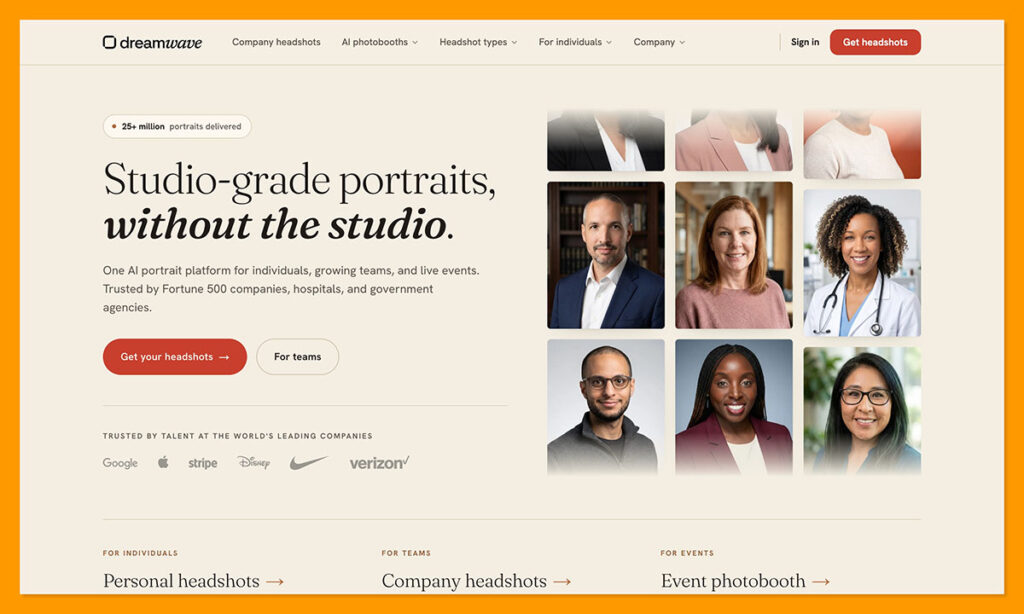
Dreamwave has the strongest auto-correction suite in the roundup, with auto-eye and auto-teeth fixes that quietly rescue near-miss images. There is a catch that has burned buyers, though, and it is worth stating up front: every sale is final. Weigh those two facts against each other, because together they define the tool.
The auto-correction is a real edge no rival matches, but the no-refund policy inverts the category’s normal risk balance: everywhere else a weak batch costs only your time, while here it costs the full price. Dreamwave’s independent scores (4.3 realism, 4.4 likeness, 4.0 value) are solid but not high enough to justify betting money you cannot recover. So the auto-fixing is really insurance you are forced to buy, and it only pays out if your input photos were strong to begin with.
Pricing: $35 to $99 depending on package, with no refunds under any circumstance. It scores well in blind testing, with 4.3/5 realism, 4.4/5 likeness, and 4.0/5 value, and it asks for less personal information at signup than most rivals. Confirm your minimum photos and expect turnaround in hours, but know the output count varies by package. That 4.4 likeness score edges its 4.3 realism, so the tool captures who you are slightly better than it polishes the shot, which is exactly why the auto-correction suite matters here.
Key Features
- Best-in-class auto-correction (auto-eye and auto-teeth) that fixes small artifacts automatically.
- Leaner data collection at signup, which feels faster and more private.
- Solid realism and likeness scores in blind testing.
- Multiple package tiers to match budget and volume.
✔ Pros
- Auto-fixing: cleans up common AI tells without manual work.
- Privacy footprint: collects less personal data than competitors.
- Scores: strong realism and likeness numbers.
✘ Cons
- No refunds: “purchases are final sale, no exceptions,” a real outlier versus Aragon, Secta, and HeadshotPro.
- Occasional tells: some outputs still read as AI-polished or blurry with “empty expressions” depending on the style.
The Verdict
Best for confident buyers who love automated cleanup and who supplied strong, varied source photos to begin with. Because the final-sale policy is a hard outlier against Aragon’s 7 days, Secta’s 30, and HeadshotPro’s guarantee, your input photos carry double the weight here: feed it clear, well-lit, varied shots so the auto-eye and auto-teeth fixes have good material to work with. Skip it if you want any safety net at all, because with no refund a weak batch is simply money gone, and no editing suite fully offsets that risk.
7. The Multiverse AI: Best for Remote Teams and Pay-As-You-Go Flexibility
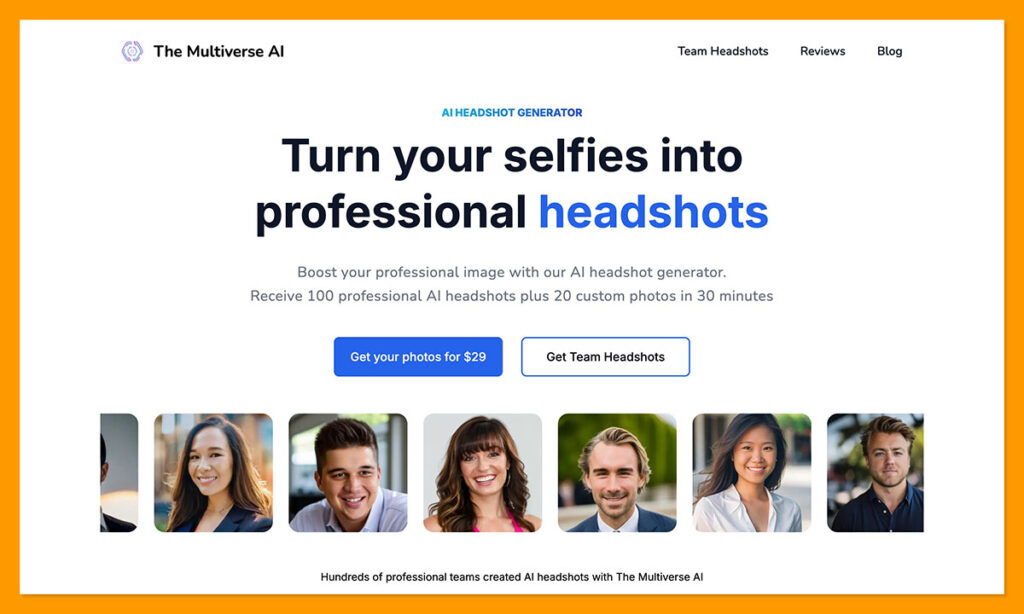
Most tools lock you into a fixed package. The Multiverse AI lets you buy exactly what you need and keep editing forever: $7 unlocks 100 more images, $14 retrains the model on new photos, and post-generation editing is free and unlimited. The pay-as-you-go structure, not the image quality, is the actual product here, and it is a smarter model than the fixed-package norm for anyone who cannot predict how many headshots they will really use.
The analytical caveat: the $29 base only buys 100 images, which Secta beats at a similar flat price, so Multiverse wins on economics only if you lean on the free unlimited editing that rivals make you re-buy or re-run to get. Priced per outcome rather than per package, it is a team tool first and a solo tool second.
Pricing: $29 for 100 professional headshots plus 20 custom photos, with a 2-hour turnaround. Add 100 more images for $7 or retrain for $14, and enjoy free unlimited editing after generation. The minimum photos input follows the usual selfie guidance, turnaround is about two hours, and the output count starts at 100 and grows a la carte.
Key Features
- A la carte add-ons so you buy only what you need.
- Free unlimited editing after generation, which is unusual here.
- Remote-team positioning for consistent, on-brand headshots from home.
- A competitive $29 base price.
✔ Pros
- Economics: flexible pay-as-you-go pricing.
- Editing: free ongoing edits with no extra charge.
- Teams: a natural fit for distributed workforces.
- Entry price: low barrier at $29.
✘ Cons
- Base volume: 100 images is lower than Secta at a similar price.
- Input dependence: quality still hinges on selfie quality, with visible artifacts on close inspection, same as rivals.
The Verdict
If you are outfitting a remote team or want to avoid overpaying for images you will not use, start here with the $29 base and add on as you go. The free unlimited post-generation editing is the quiet advantage, since rivals like BetterPic and Aragon make you re-buy or re-run to fix a look, so budget-conscious teams can keep refining on-brand headshots at no extra cost. Vet everyone’s source selfies first, because input quality still governs the result no matter how flexible the pricing is.
8. PhotoPacks.AI: Best Value Underdog
When a Squarespace designer with 6-plus years of experience tested tools purely on lighting depth, skin texture, and anatomical accuracy, ignoring the marketing entirely, the tool she scored a perfect 10 out of 10 was not HeadshotPro, Secta, or Aragon. It was PhotoPacks.AI. That result is exactly why self-published rankings cannot be trusted.
One caveat keeps this honest: a perfect score from a single expert is a strong signal, not a settled verdict. It carries real weight because it came from someone scrutinizing pores and anatomy rather than reading a pricing page, but it rests on a far smaller evidence base than the hundreds of data points behind the big three. The claim that survives scrutiny is the price: $24 for 100 images in under an hour is verifiable and category-leading. Buy on cost plus one credible realism read, and accept the thin track record.
Pricing: $24 for 100 headshots, delivered in under an hour. It undercuts nearly every competitor on price while carrying a top independent realism score. Confirm your minimum photos with the standard selfie guidance, note the sub-1-hour turnaround, and count on an output count of 100.
Key Features
- A top independent realism score on texture, lighting, and anatomy.
- An aggressive $24 price for 100 images.
- Sub-1-hour delivery.
- Strong value-per-usable-image economics.
✔ Pros
- Price: the lowest in the roundup for its volume.
- Realism: independently verified by a design professional.
- Speed: fast turnaround under an hour.
✘ Cons
- Brand recognition: far fewer independent data points than the big three, so the strong score rests on a smaller review base.
The Verdict
Pick PhotoPacks.AI when value and verified realism matter more than a long track record and team features. At $24 for 100 images under an hour, it is the cheapest credible option on this list, and the designer’s 10-out-of-10 score came from scrutinizing skin texture and anatomy, not marketing copy. Pick HeadshotPro instead when you want the safest, most-tested option with a full enterprise workflow behind it and the reassurance of millions of prior orders. For a solo professional watching the budget, though, the underdog is the smarter first spend.
9. Canva: Best Free Option, With Serious Limits
“Free” sounds great until your blazer lapels stop folding, your collar melts into your neck, and your face comes back only about 35 percent you. The important thing to understand is why it fails, because the limitation is structural, not a bug waiting for a patch.
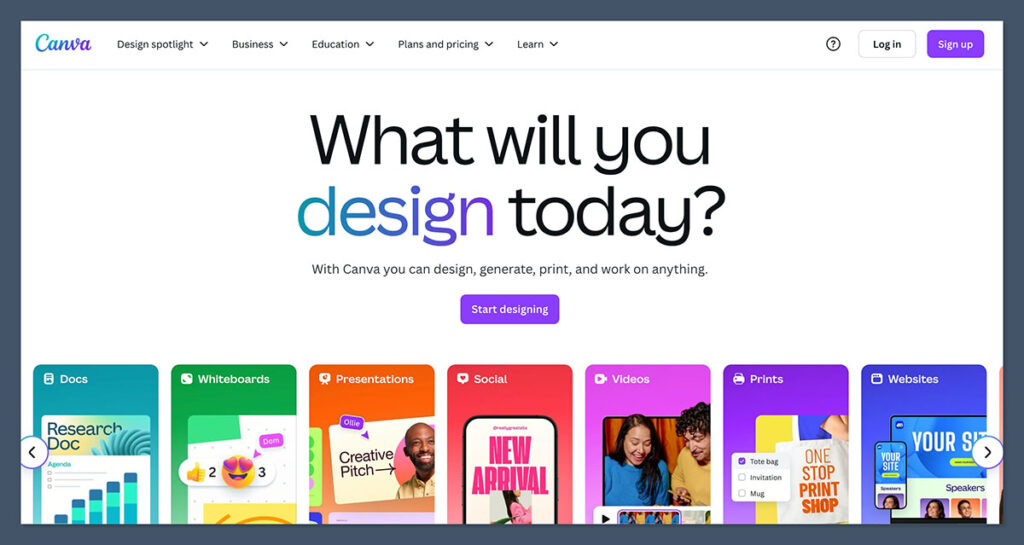
Canva is not a headshot tool at all: it repurposes Magic Media and Magic Edit, which do single-reference style transfer with no identity-model training. Without that per-person training step, roughly 35 percent likeness is close to the ceiling, not a starting point that improves. That reframes the entire pitch: Canva is free the way a placeholder is free, useful right up until the moment the photo actually has to represent you.
Pricing: effectively free for existing Canva Pro or Teams subscribers, but it is not a dedicated headshot tool. It repurposes Magic Media and Magic Edit (single-reference style transfer, with no identity model training), the minimum photos input is a single reference, turnaround is under a minute, and the output count is capped at one generation per day.
Key Features
- Free for current Canva Pro and Teams subscribers.
- The fastest raw generation here, under a minute, since there is no per-user training.
- Built into a design tool you may already use daily.
✔ Pros
- Cost: no extra charge for existing Canva subscribers.
- Speed: near-instant output.
- Convenience: lives inside a workflow you already know.
✘ Cons
- Likeness: only about 35 percent versus 80 percent-plus for dedicated tools.
- Volume: one generation per day against 40 to 300 images from real headshot tools.
- Garment errors: misaligned buttons and vanishing collars break down at full LinkedIn-header size.
- Privacy: free tools are likelier to use uploads for training, analytics, or resale.
The Verdict
Best for a quick, no-stakes avatar or a temporary placeholder. Skip it for any serious LinkedIn or job-search photo, because the likeness gap and garment glitches undercut the exact professionalism you are trying to project, and the free-tool privacy tradeoff is not nothing.
The Bottom Line: Which AI Headshot Generator Should You Choose?
Unlike the self-serving lists that seeded this category, this ranking sells nothing, so it can say the quiet part plainly: for top-tier tools, recruiters usually cannot tell (roughly 29 percent detection). The choice is about fit, not whether AI headshots “work.”
Match the tool to your job:
- Best overall and LinkedIn: HeadshotPro.
- Most looks and editing control: Secta AI.
- Best likeness from the fewest photos: Aragon AI.
- Highest resolution and print: BetterPic.
- Fastest turnaround: InstaHeadshots.
- Remote teams and flexible spend: The Multiverse AI.
- Best value: PhotoPacks.AI.
- Free placeholder only: Canva.
On the eternal AI-versus-photographer question: AI wins decisively on cost (10 to 100x cheaper per usable image) and speed, and it passes recruiter scrutiny when the output is high quality. A real photographer still wins for client-facing, on-camera, or high-stakes roles where career coach Sarah Johnston notes AI can feel “soulless,” and for distinctive features prone to likeness drift.
One more honesty note worth carrying into checkout: recruiters prefer AI-quality images in blind tests (76.5 percent picked one as their favorite), yet 66 percent said they would be put off if they recognized a photo as AI-made. The lesson is not to hide it but to buy quality, since the giveaways come from cheap tools, not from AI as a category.
Your next move: gather 10 to 20 clear, well-lit, varied selfies with no hats or sunglasses, start with the pick that matches your use case above, and preview every image before you download so you never forfeit your refund.
Frequently Asked Questions About AI Headshot Generators
Can recruiters tell if my headshot is AI-generated?
Usually not, if the tool is good. Recruiters correctly spot AI headshots only 38 to 40 percent of the time overall, despite 80 percent believing they judged accurately. Detection climbs to about 59 percent for free or cheap tools but drops to roughly 29 percent for premium ones. The real risk is quality tells, not “AI” itself.
Do AI headshot generators train their AI on my uploaded photos?
Reputable paid providers generally do not. They build a temporary personal model, generate your images, then delete the source photos, commonly within 7 to 30 days. HeadshotPro deletes uploads within 14 days of a confirmed request, and Aragon uses AES-256 encryption with self-serve deletion. Free tools are the ones more likely to monetize your uploads, so favor paid tools with a clear deletion policy.
How many photos do I need to upload for HeadshotPro, Secta, and Aragon?
Requirements vary widely. Aragon needs as few as 6 photos, HeadshotPro asks for 10 to 20, and Secta requires the most at 20 to 25 minimum (30 to 35 recommended). More is not always better. Variety in angle, lighting, and background matters far more than raw count for getting a result that actually looks like you.
Can I get a refund if I don’t like my AI headshots?
It depends on the tool. Aragon offers a 7-day window, Secta offers 30 days, InstaHeadshots refunds only if fewer than 4 images are usable, and Dreamwave offers nothing at all. Across nearly every provider, downloading the final images voids the guarantee, so always preview your full gallery before you download anything.
Should I get an AI headshot or hire a professional photographer?
AI wins on cost (10 to 100x cheaper per usable image) and speed, and recruiters largely cannot tell for high-quality output. A photographer still wins for high-stakes, client-facing, or on-camera roles where authenticity and personal connection matter most, and for people whose distinctive features (glasses, unusual hairlines) are prone to AI likeness drift. Match the decision to your role’s visibility.
What visual tells give away a bad AI headshot?
The common giveaways are waxy pore-less skin, mismatched or physically impossible eye catchlights, distorted or fused-looking teeth, warped or asymmetric ears, unnatural background blur that ignores real depth-of-field physics, and clothing or jewelry errors like melted button lines and vanishing collars. As models have improved, these tells have become far less common in top-tier tools.
Do AI headshot generators offer team or enterprise plans?
Yes. HeadshotPro supports organization setup with locked backdrops and outfits plus magic-link invites, with enterprise pricing dropping to about $20 per employee at scale. Aragon markets team plans from small businesses to Fortune 500 companies, and AI SuitUp scales from $37 down to $25 per member as team size grows. These meaningfully lower the per-person cost.

Comments 0 Responses