

Best for teams
nexos.ai
Visit nexos.ai →From $39/month
- Access to 200+ AI models
- Shared projects and model comparisons
- No-code agents and app integrations
Best for creation

Genspark
Visit Genspark →Free plan; paid from $24.99/month
- Create slides, sheets, media, and code
- Coordinate tasks with Super Agent
- Research and content creation tools
Best for enterprises

Glean
Visit Glean →Custom enterprise pricing
- Search across company knowledge
- More than 275 app connectors
- Agent governance and permissions
I’m actually liking the direction AI workspace solutions are going in these days. Most of us use several tools every day already, if a platform can consolidate some of that work, and reduce the amount of tabs I have open every day (and the number of subscriptions I have to pay for), I’m all for it. nexos.ai, Glean, and Genspark streamline things in different ways.
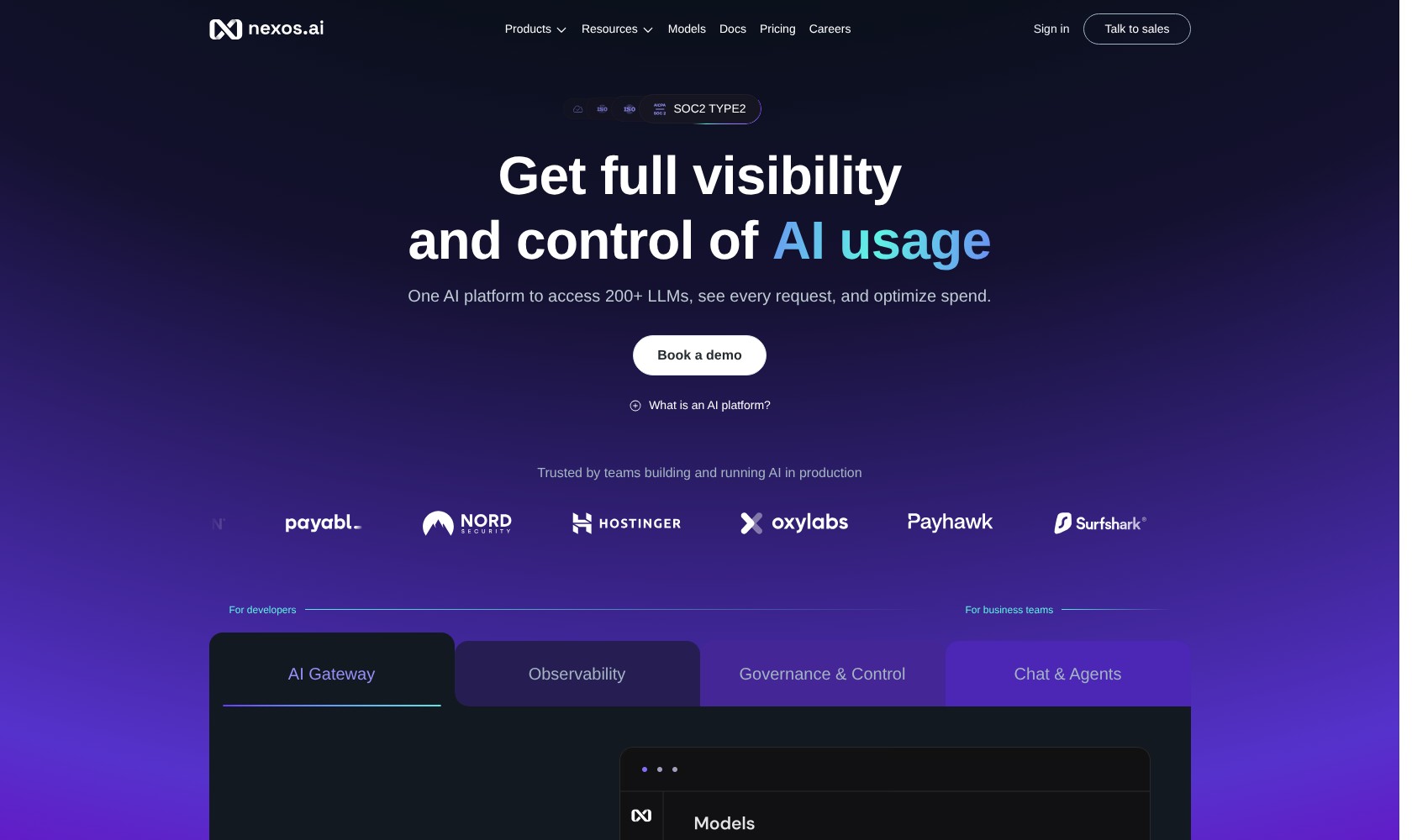
Glean is all about knowledge management, reducing the number of tools you have to have open when you’re working with an AI assistant. Genspark is more about research, and getting a task finished faster, whether you’re producing spreadsheets or code. nexos.ai is the large, model-agnostic product with 200+ models, side-by-side comparisons, shared projects, work app connections, plus the option to build your own AI agents.
Here, I’m looking at all three side-by-side, although it’s worth saying I’m focusing on workspace features only for now, even though some tools, like nexos.ai, offer extra developer tools.
Quick Verdict: Who Is Each Platform Right For?
nexos.ai is my favorite overall pick for teams that want access to a broad range of AI models, handy collaboration tools, plus features that let them build their own agents from scratch.
Genspark is probably the one I’d look at if I was keen to get an asset produced quickly, it’s a fantastic option for consultants, analysts, or creator teams.
Glean, on the other hand, is the enterprise choice for minimizing app sprawl, with company context built across people, files, activity, and systems, plus more than 275 app connections.
nexos.ai vs Genspark vs Glean: Quick Overview
| Comparison | nexos.ai | Genspark | Glean |
|---|---|---|---|
| Best for | Small or mid-sized teams with too many subscriptions | Teams doing a lot of research, consultants, or creators | Larger enterprises looking to unify apps and AI |
| Main strength | 200+ models with comparison options, shared projects, no-code agents, plus integrations | Excellent range of output options including media, code, sheets, or slides | Extensive company search permissions, app connections, plus agent governance |
| Main drawback | Overkill if you only use one app | Unpredictable credit consumption and no version history | Expensive pricing, some issues with output variety |
| Pricing | Starting at $39 per month with 1000 credits | Free for 100-200 credits per day, plans start at $24.99 per month | Custom pricing (usually more expensive) |
nexos.ai vs Genspark vs Glean: Model Access and AI Choice
If what you want most from an AI workspace is all of your favorite models in one place, nexos.ai is an amazing choice, with 200+ models from leading providers ranging from OpenAI to Meta, Google, Anthropic, and beyond. You can choose your favorite model straight away, let Auto Select choose one for you, or test the output of multiple models at the same time with the comparison feature. Admins also get to choose which models different users can access.
Genspark gives you around 70+ models, and also offers manual or automatic selection options. You can use the Super Agent assistant to coordinate models with over 150 tools, and there’s also more than 700 MCP connection options. You’ll also be able to use the Workspace system to route different chunks of a task to different models. Plus, you get outputs in virtually every format you can think of.
Glean’s Model Hub offers access to around 35 LLMs, with solutions from things like Amazon Bedrock, Azure Open AI, plus Google Vertex. Similar to Genspark, you can choose one model for your “agent” then assign different models to different steps in a process.
All three are great for depth, but I’d still give the win to nexos.ai for overall variety, and how easy it is to work across multiple models at the same time.
No-Code Agents and Workflow Automation
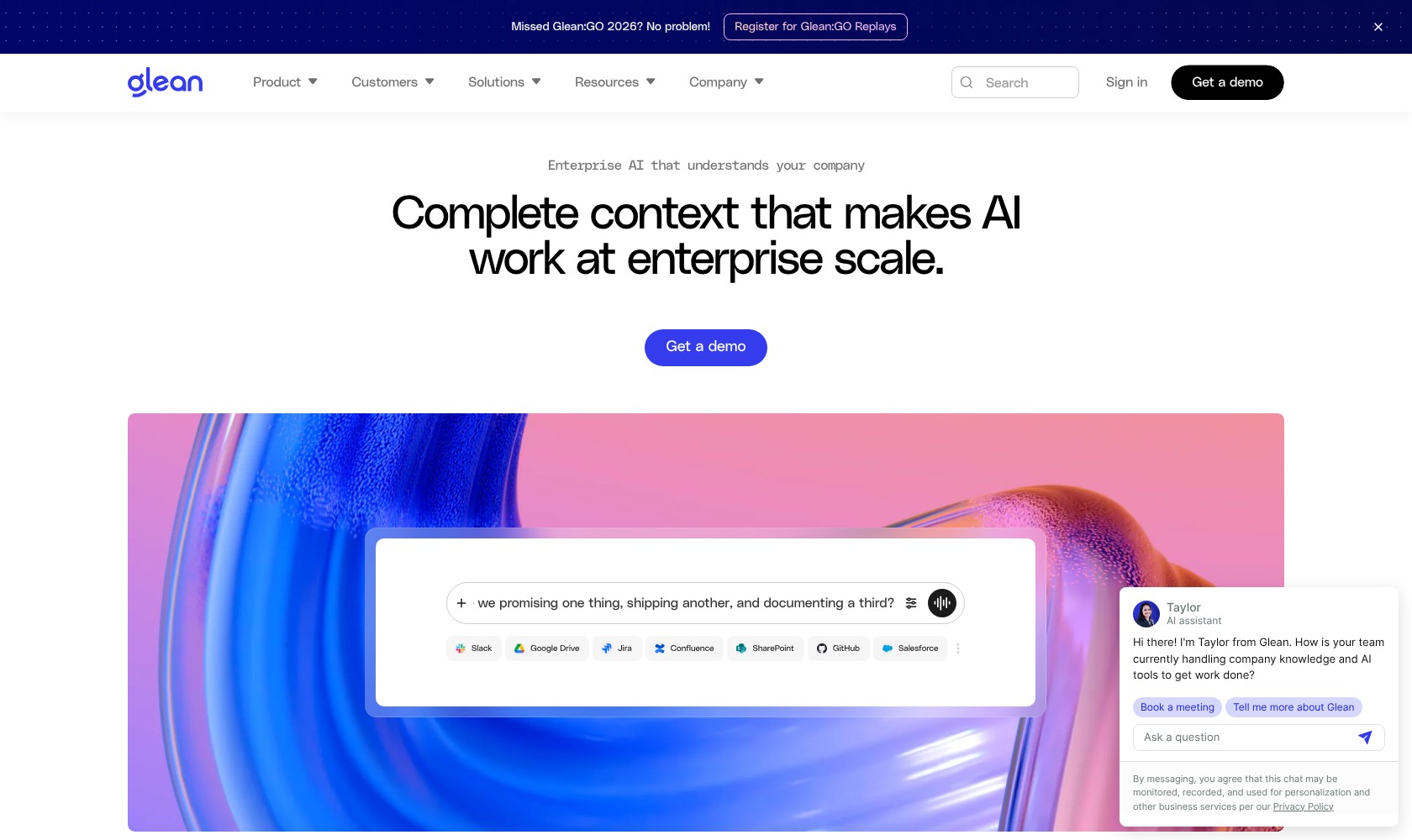
Virtually every AI workspace has some kind of agent building feature these days, but some are definitely more complicated than others. For instance, since Glean is more focused on enterprise work, you’ve got a builder that supports natural-language creation, as well as detailed visual workflows where you can add branches, loops, sub-agents, or per-step model choices.
Builders on Glean also get debugging and preview tools, access to extensive version histories, restoration options, permissions, plus a company Agent library.
nexos.ai makes things a bit simpler for less technical teams, with a no-code builder and hundreds of templates you can use to create agents for jobs linked to things like marketing or customer service. The builder asks you follow-up questions about the job you want to do and creates instructions. It also lets you test the agent before you share it with your team. Agents can also run on-demand or on a schedule, with human-in-the-loop checks.
There’s still a lot of variety from nexos.ai, and the agents do great work. Nord Security, for instance, has saved more than ten hours a week with one agent that evaluates interviews and offers candidate feedback.
Genspark is somewhere in the middle, with the option for users to create a custom agent from a prompt, test it, edit instructions, then share it privately or publicly through the Agent Store. You can also pull several agents into one “Super Agent” conversation, while the Agentbase moves them into recurring processes or apps.
Overall, Genspark probably handles the widest range of autonomous work, while Glean gives you more governance and control. nexos.ai is better if you just want a way to create agents quickly, without worrying about compliance problems or errors.
Integrations, Company Knowledge, and Search
Glean seems like the most obvious pick if you’re worrying about integrations. You get more than 275 connectors plus an enterprise graph that maps everything from people to projects or activity in one place. Leaders get full control over permissions for every app connection too.
nexos.ai has a growing list of integration options, starting with things like Google Workspace and Microsoft 365 apps, then extending into more specific tools like GitHub, Zendesk, or Confluence. I do like how easy it is to keep everything in one place with Projects here, plus, you can connect nexos.ai to communication tools like Slack as well.
Genspark is mostly focused on built-in tools, plus MCP integrations, although there are a handful of integrations available for productivity apps like Google Docs. You’ve got the SecondBrain tool to pull all of your contextual data into one space, plus Hubs to help share history across connected projects.
All three are flexible enough, it really just depends on what kinds of integrations, and the level of connector depth you actually need.
Research and Content Creation Capabilities
For broad functionality (if you plan on using AI for a lot of different tasks), nexos.ai is a brilliant choice. There’s the chat functionality with live web search and deep research mode. You can complete tasks and create content from files to images with multiple models. Plus, teams get to work on the same project together, and even share the agents they build themselves.
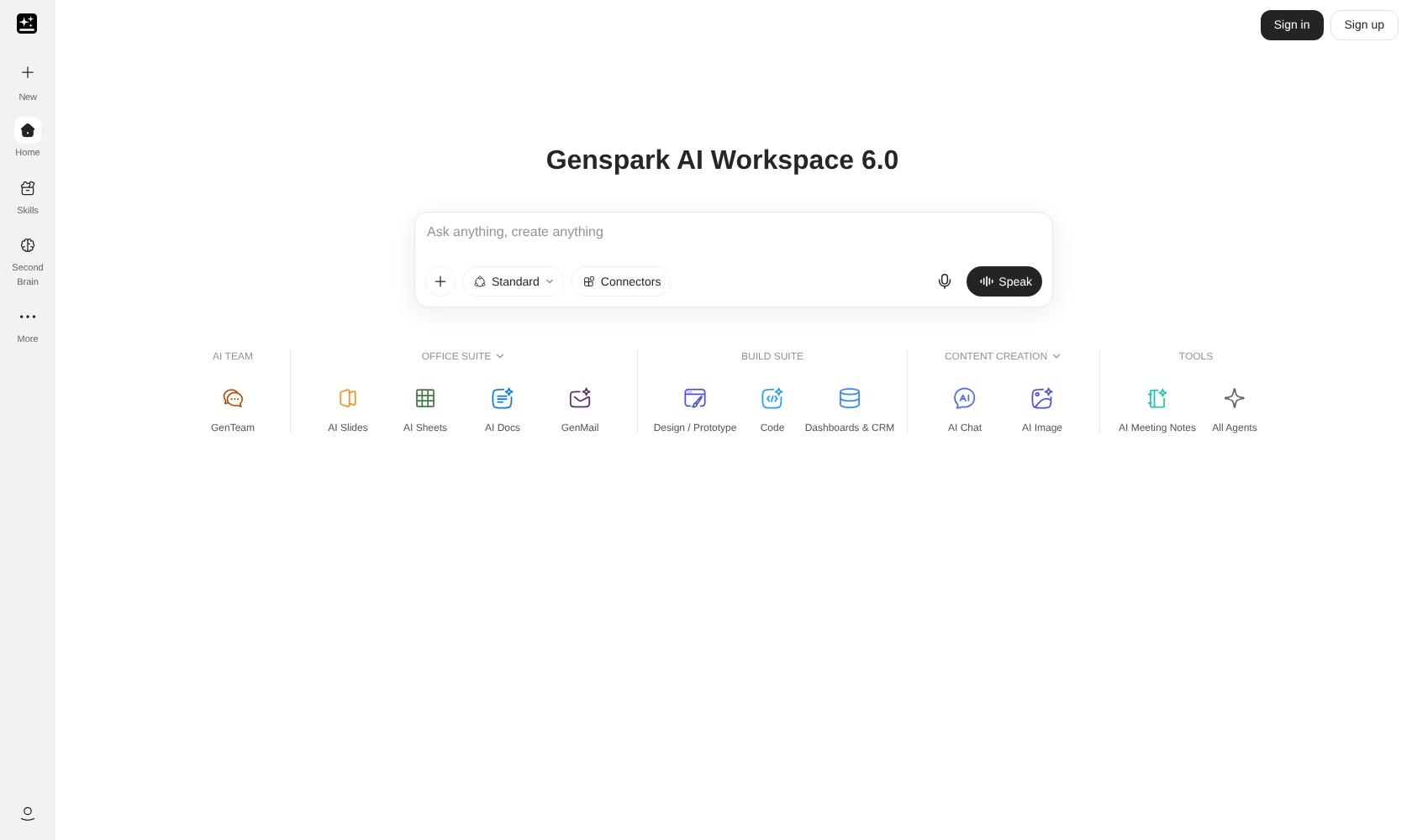
Genspark is much larger in scale if you’re looking for more complex output. You can produce everything from slides to music or code with specific editors. There are AI Sheets for cleaning or evaluating data, AI Docs which you can export into just about any file type, then Slides for turning content into presentations.
Glean is definitely capable for content creation with an assistant that can create visuals, slides, or pages with insights into your company data. It’s still the better tool for comprehensive research and data management though, with fewer output options than either nexos.ai or Genspark.
Ease of Use, and Collaboration
All of these tools are easy enough to use after a bit of a learning period. nexos.ai was the one I felt most confident with the fastest, though. The Auto Select option makes it a lot easier to find the ideal model straight away, and I like that you can test outputs before you commit to anything. Plus, the Projects section is ideal for collaboration.
Glean takes more work to set up. You have to map your permissions, set specific rules, plus connect a lot of sources and apps to the system before you can really get to work. Still, once you get set up it’s easy to bring the system into your day-to-day work with extensions for browsers and apps, and the natural language search options are straightforward enough.
Genspark needs users to learn a few more things than nexos.ai. You’ve got the specialist creation suites, team tools, Second Brain, plus the Super Agent, so you probably won’t jump in and feel like an expert in the whole platform within an hour. Still, I think the tools are easy enough to use once you’ve spent a little time with them.
Security, Governance, and Control
All of these tools thankfully address the major security and governance needs of most businesses. All of them give you useful certifications like SOC 2 Type 2 and ISO 27001 & 42001, nexos.ai also has GDPR certification, while Glean offers ISO 4200 certification too.
With all of the tools, customer data isn’t used to train any models, and they all give you extra controls you can take advantage of. For instance, on nexos.ai, you can apply zero data retention rules for each model. There’s also SSO, RBAC, restrictions, guardrails, plus token tracking on certain plans. The enterprise plans even give you tailored security.
Genspark and Glean do give you more options for where you host your data. Genspark supports US-West, EU, or APAC, while Glean offers hosting in the US, APAC, and EMEA. Overall, Glean probably has a bit more appeal for cautious enterprises, because every customer gets their own single-tenant environment, and you can choose to host that yourself, or have Glean do it for you.
nexos.ai vs Genspark vs Glean: Pricing
| Platform | Starting price |
|---|---|
| nexos.ai | Starting at $39 per month |
| Genspark | Free plan with paid plans starting at $24.99 per month |
| Glean | Custom enterprise pricing |
Genspark is the cheaper option for an individual, starting at $24.99 for 10,000 credits per month, there’s also a free plan that gives you up to 200 credits per day. Still, you will need to pay for each user. For teams, and power users, plans start at around $249.99 per month.
nexos.ai, on the other hand, starts at $39 per month, with unlimited AI agents, access to all the models, 1,000 monthly credits, integrations, plus bonus credits when you need them. The enterprise plan is custom priced, intended for teams of more than 50 people, with tailored security, usage tracking, SSO, plus extra customer support.
Glean doesn’t have the same plan structure as nexos.ai or Genspark. Every company needs to contact the team for a custom quote, which can add up pretty quickly when you consider everything from hosting to custom connections.
nexos.ai vs Glean vs Genspark: My Verdict
I like all of these platforms for different things. Genspark is definitely fantastic if you want to get high-quality output in a range of formats. It’s got the best production range of all. Glean is better, on the other hand, if you’re looking for lots of connections to business tools, plus extensive control.
nexos.ai is ultimately the easier option to recommend to almost anyone. If your team already uses a lot of different AI tools, and you’re sick of dealing with scattered subscriptions (or even Shadow AI), nexos.ai can fix that. It gives every user access to more than 200 models, direct comparisons, shared projects, connected workplace data, plus custom agents with no code setup.
nexos.ai might not beat Genspark for creative output, or Glean for enterprise knowledge management, but it’s definitely the easiest way to make the most of multiple AI tools, and keep the tool sprawl problem to a minimum.

Comments 0 Responses