

Best Overall

Shopify
Visit Website →From $29/month (billed annually)
AI agents included in every plan
- Sidekick drafts store changes for your approval
- Inbox agent answers shoppers
- Products discoverable in ChatGPT, Gemini and Copilot
Best Shopify Support Agent

Gorgias
Visit Website →From $10/month (50 tickets)
AI Agent $0.90 to $1.00 per automated interaction
- Cancels orders and edits shipping addresses
- Shopper confirmation before irreversible actions
- Recharge, Skio and Loop subscription actions
Best Shopping Assistant

Rep AI
Visit Website →From $19/month at 3,000 sessions
14-day free trial
- Proactive chats when shoppers are about to leave
- Cart rescue and upsells
- Cancels and modifies orders
Based on our comparison of 17 platforms, Shopify is the best agentic AI platform for retail and ecommerce because its agents come with every plan. Plus, Sidekick drafts changes for your approval, while Agentic Storefronts puts eligible products in front of shoppers using ChatGPT, Gemini and Copilot.
However, Sidekick can’t talk to your customers, and Shopify’s store agents work only on Shopify. I recommend adding Gorgias if order-heavy support is your bottleneck.
Unlike a basic chatbot, an agentic AI platform takes actions for you, such as editing orders or building campaigns within your limits. In this guide, I’ll explain each platform’s capabilities, busy-month costs and drawbacks.
Key Takeaways
- Shopify is our top pick: Sidekick, Inbox, Flow and Agentic Storefronts come with every plan, from $29/month billed annually
- Tidio, Klaviyo and Symphony have free plans, while Sierra uses custom, outcome-based contracts
- Billing units differ: Gorgias charges $0.90 to $1.00 per automated interaction, Fin $0.99 per outcome, Rep AI by sessions and Symphony by credits
- Actions vary: Gorgias, Rep AI, Klaviyo and Fin can change orders; Tidio and LiveChat leave standard refunds to your team
- Choose Gorgias for Shopify support: its agent cancels orders and edits shipping addresses inside the conversation
We prioritize what agents actually do: agent actions and guardrails (30%), pricing clarity and peak-season cost (20%), store platform fit (15%), setup effort (15%), agentic commerce readiness (10%), and reputation (10%).
I focus on actions, approvals and billing rules, rather than treating a fluent answer as a completed task. You can read more about our methodology below.
See Our Best Agentic AI Platforms for Retail and Ecommerce
Choose among three store layers: on-site selling, after-sale support, or marketing and operations. Agentic commerce adds discovery and purchasing through assistants such as ChatGPT, although checkout varies by channel.
- Shopify: Best Overall
- Gorgias: Best Customer Support Agent for Shopify
- Rep AI: Best On-Site Shopping Assistant
- Klaviyo: Best Marketing Agent
- Tidio: Best Budget Pick for Small Stores
- LiveChat: Best Live Chat With Human Handoff
- Fin: Best Pay-Per-Outcome Support Agent
- Salesforce Agentforce: Best Enterprise Commerce Suite
- Sierra: Best Enterprise Customer Experience Agent
- Symphony by Wix: Best for Wix and Solo Store Owners
Before starting a trial, compare billing units and store platforms to narrow your shortlist.
Agentic AI Platform Comparison Table
Start with What the agents do: an AI agent that edits orders can cost the same as one that only answers questions. Next, compare the pricing model, since sessions and resolutions produce different busy-month bills. Check support for your specific action, not just the widget.
| Platform | Best for | What the agents do | Works with | Starting price | Pricing model | Free plan/trial |
|---|---|---|---|---|---|---|
| Shopify | Best overall | Sidekick edits products, discounts and orders after review; Inbox answers shoppers; Agentic Storefronts distributes products to AI assistants | Shopify; Agentic plan for other stores | $29/month billed annually | Flat plan, agents included | 3 days free, then $1/month for 3 months |
| Gorgias | Shopify customer support | Cancels orders, edits addresses, pauses or skips subscriptions | Shopify actions; BigCommerce, Magento, WooCommerce helpdesk | $10/month for 50 tickets | Tickets plus $0.90 annual or $1.00 monthly per automated interaction | 7 days free |
| Rep AI | On-site shopping assistant | Proactive recommendations, upsells, cart rescue, cancellations and order changes | Shopify | $19/month at 3,000 sessions, billed monthly | Store sessions; $12 per extra 1,000 | 14 days free |
| Klaviyo | Marketing agent | Composer builds campaigns and reviews flows; Customer Agent handles returns, order edits and promotions | Shopify, WooCommerce, BigCommerce, Adobe Commerce, Wix | Free; Email from $20/month | Profiles, Composer credits, Customer Agent resolutions | Free plan |
| Tidio | Small stores on a budget | Lyro answers, recommends, adds to cart and sends recovery codes | Shopify, WooCommerce, WordPress, Magento | Free; Lyro from $32.50/month billed annually | Lyro conversations, resolved or not; Premium differs | Free plan; 7 days free |
| LiveChat | Live chat with human handoff | Answers, sells from Shopify catalog, transfers chats with history | Shopify, WooCommerce, BigCommerce, Magento, Adobe Commerce | $19/user/month billed annually | Seats with resolutions; extra $49.50 per 50 | 14 days free, no card |
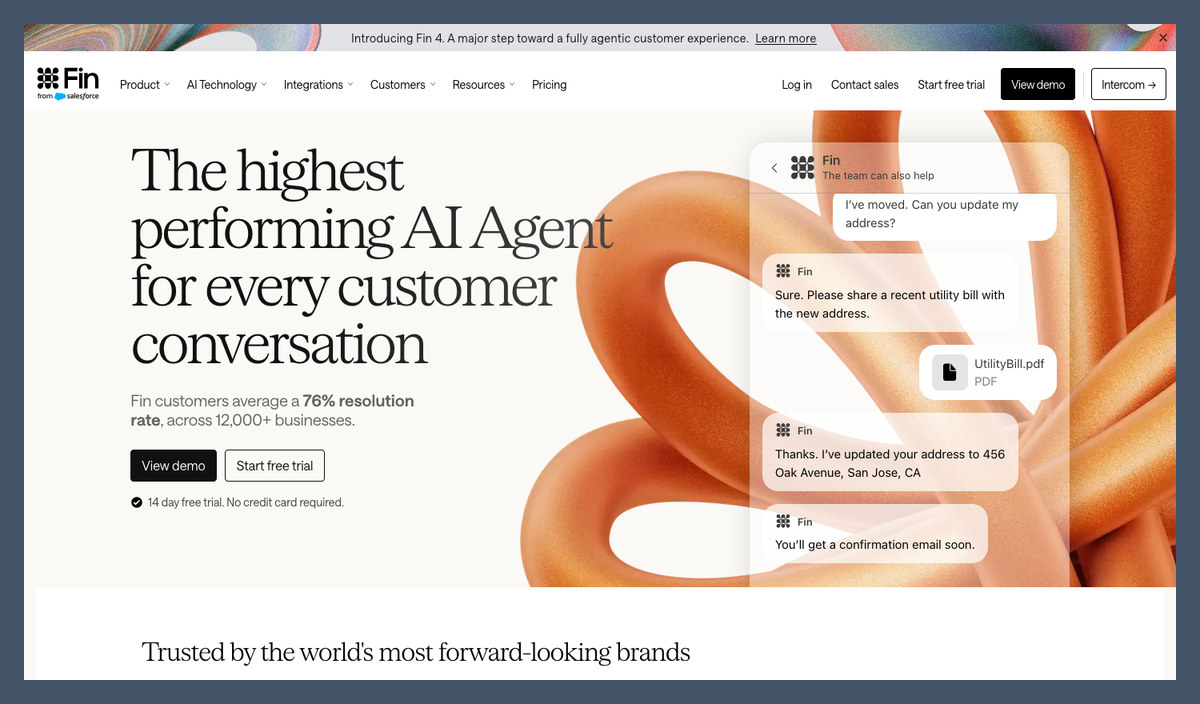
| Fin | Pay-per-outcome support | Answers, recommends, adds to cart, handles returns and order updates | Shopify with Intercom for Ecommerce; API connections for Service | $0.99 per outcome | Outcomes plus Intercom seats or $49/month minimum | 14 days free |
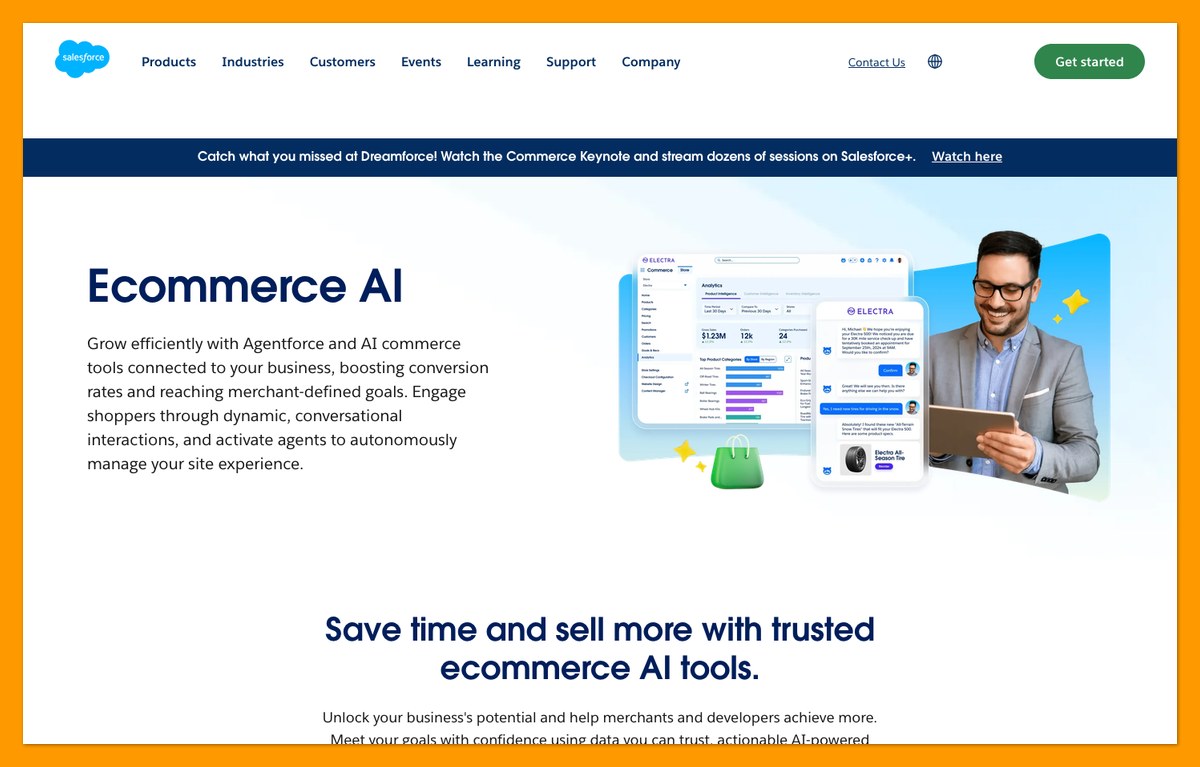
| Salesforce Agentforce | Enterprise commerce suite | Shopper, merchandising, B2B buyer and administration agents | Salesforce Commerce Cloud | $0 Foundations for existing Salesforce customers | $2 per conversation or $0.10 per action | Foundations available to Salesforce customers |
| Sierra | Enterprise customer experience | Custom agents for orders, returns, warranty claims and subscriptions | Custom integrations | Custom quote | Outcome-based | None published |
| Symphony by Wix | Wix and solo store owners | Maestro delegates marketing, messaging, scheduling and finance | Wix; standalone app with external agents | Free; Basic $16/month billed annually | Monthly AI credits | Free plan |
1. Shopify: Best Overall

Shopify includes its agents in every plan. Sidekick drafts product, discount and order changes for your review, Inbox answers shoppers, and Agentic Storefronts lists your products in AI assistants.
- Pro: Included agents across plans
- Pro: Admin actions with approval
- Pro: Catalog distribution to AI assistants
- Con: No Sidekick customer conversations
- Con: Shopify-only store agents
- Con: Unpublished Sidekick usage limits
- Best for
- Store admin and AI-channel selling
- Agents
- Sidekick, Inbox, Flow, Agentic Storefronts
- Works with
- Shopify; Agentic plan for other stores
- Free plan or trial
- 3 days free, then $1/month for 3 months
- Best for: Store administration and AI-channel selling
- Agents: Sidekick drafts changes; Inbox answers shoppers; Flow automates tasks; Agentic Storefronts distributes products
- Works with: Shopify; Agentic plan for other stores
- Starting price: $29/month billed annually or $39 monthly; agents included
- Free plan or trial: 3 days free, then $1/month for 3 months
Shopify wins overall because its agents come with every plan, including Sidekick, which drafts product, discount and order changes for your review.
However, Inbox doesn’t cancel or refund orders, while Sidekick doesn’t handle customer conversations. I recommend Gorgias when support tickets are your bottleneck.
Pros
- Included agents across plans
- Admin actions with approval
- Catalog distribution to AI assistants
- Plain-English Flow creation
Cons
- No Sidekick customer conversations
- Shopify-only store agents
- Unpublished Sidekick usage limits
What’s new with Shopify?
The Fall ’26 Edition adds multi-change jobs behind one approval, alongside draft-order creation and editing for your store. Connected assistants also support store management, including through a ChatGPT sidebar extension, rather than only helping shoppers find products. Separately, Inbox lets shoppers start checkout from chat, although it still doesn’t cancel or refund their orders for them.
Why use Shopify in 2027?
Agentic Storefronts is on by default for eligible stores, with no additional fees beyond standard processing for those sales. ChatGPT shoppers can discover your products through Shopify Catalog, but they still finish checkout on your store rather than inside ChatGPT. For the support gaps these tools leave, compare the apps in our best AI tools for Shopify guide.
My Shopify testing notes
I prioritize the Store changes review, using Start review and Show original before publishing anything to the store. Order edits require Update order, while generated Flow workflows need activation. Our Shopify Flow prompt examples provide starting points, but published store changes lack automatic undo, so make sure you check exact SKUs before making bulk edits.
How Much Does Shopify Cost?
Basic includes every agent covered here, but Sidekick usage limits vary by plan and Shopify doesn’t publish those allowances.
| Plan | Monthly price (billed annually) | Monthly price (billed monthly) | AI agents included |
|---|---|---|---|
| Basic | $29 | $39 | Sidekick, Inbox agent, Flow, Agentic Storefronts |
| Grow | $79 | $105 | Same agents, lower card rates |
| Advanced | $299 | $399 | Same agents |
| Plus | From $2,300 | From $2,300 | Same agents, plus draft-order deposits through Sidekick |
| Agentic plan (stores not on Shopify) | $0 | $0 | Shopify Catalog distribution in AI channels; card rates from 2.9% + 30c per sale |
Try Shopify: Visit Shopify

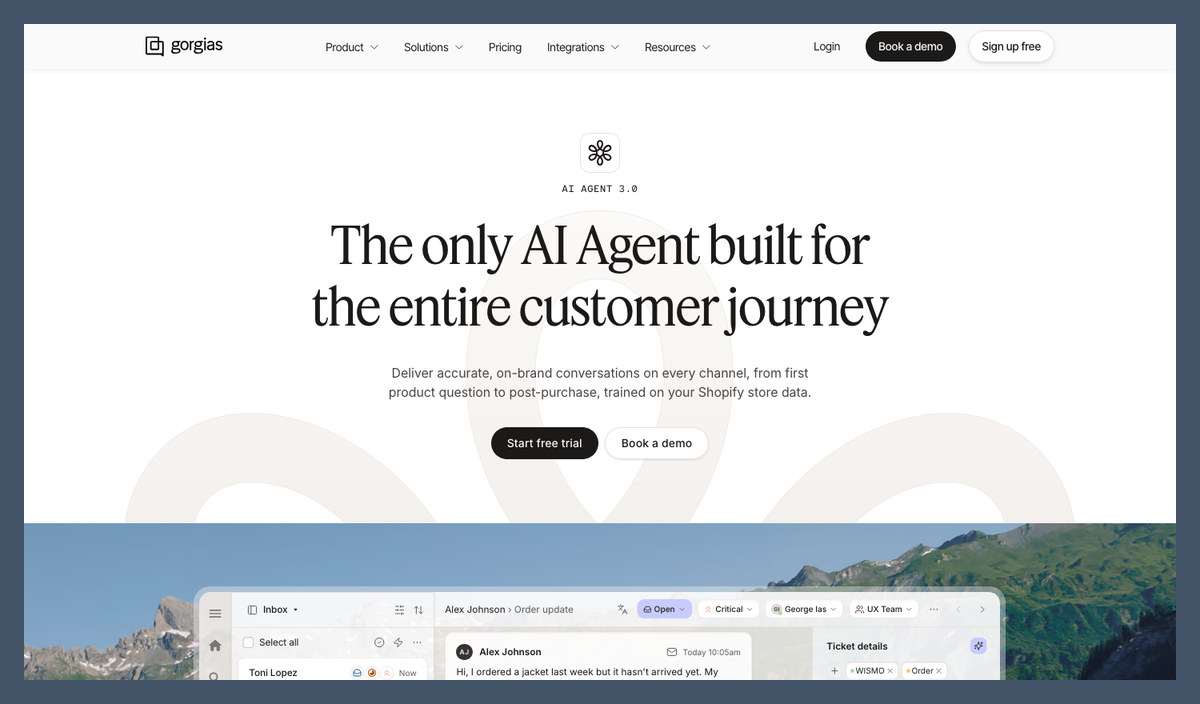
2. Gorgias: Best Customer Support Agent for Shopify

Gorgias cancels orders and edits shipping addresses for Shopify stores, with conditions and shopper confirmation guarding consequential actions. AI-resolved conversations also use helpdesk tickets.
- Pro: Order cancellations and address edits
- Pro: Confirmation for irreversible actions
- Pro: Recharge, Skio and Loop connections
- Con: Shopify-only native AI actions
- Con: Stacked ticket and interaction charges
- Con: No free plan
- Best for
- Shopify order questions and changes
- Agents
- AI Agent, Shopping Assistant, Gaia
- Works with
- Shopify actions; BigCommerce, Magento, WooCommerce helpdesk
- Free plan or trial
- 7-day trial; no free plan
- Best for: Shopify order questions and changes
- Agents: AI Agent changes orders; Shopping Assistant recommends; Gaia assists staff
- Works with: Shopify actions; BigCommerce, Magento and WooCommerce helpdesk integrations
- Starting price: $10/month for 50 tickets; AI interactions $0.90 billed annually or $1.00 monthly
- Free plan or trial: 7-day trial; no free plan
Gorgias leads for Shopify support because it cancels orders and edits shipping addresses, using conditions and shopper confirmation to control consequential actions.
However, AI-resolved conversations also consume helpdesk tickets, and native actions require Shopify. For basic support elsewhere, I recommend Tidio or LiveChat.
Pros
- Order cancellations and address edits
- Confirmation for irreversible actions
- Recharge, Skio and Loop connections
- Ticket-based rather than seat-based billing
Cons
- Shopify-only native AI actions
- Stacked ticket and interaction charges
- No free plan
What’s new with Gorgias?
The Fall Launch 2026 expanded AI Agent’s channels and introduced channel-specific tone settings, so its tone can differ across those channels. Gaia also became available across the support team, while AI Agent is available on every plan. That said, resolved conversations still incur separate usage charges, so agent availability doesn’t mean those interactions are included in your helpdesk price.
Why use Gorgias in 2027?
Gorgias handles cancellation requests with live Shopify data, rather than simply explaining your policy and leaving the actual change to your team. You can also set conditions that restrict address edits to unfulfilled orders, keeping those actions within your rules. For me, that distinction matters during Black Friday, when a correct answer can still leave someone manually changing the order.
My Gorgias testing notes
I recommend adding Cancel order and Edit shipping address from the actions library to a skill, rather than stopping at policy answers. Keep Customer confirmation enabled for consequential changes, and restrict address edits to unfulfilled orders. The Playground uses real store data rather than a separate example catalog, so make sure you test with a fake customer profile.
How Much Does Gorgias Cost?
The helpdesk charges by tickets, not seats, but AI interactions cost extra, so you need to budget for both.
| Plan | Monthly price (billed monthly) | Price (billed annually) | Tickets per month |
|---|---|---|---|
| Starter | $10 | None listed | 50 |
| Basic | $60 | $600 per year | 300 |
| Pro | $360 | $3,600 per year | 2,000 |
| Advanced | $900 | $9,000 per year | 5,000 |
| Enterprise | Custom quote | Custom quote | Custom |
| AI Agent add-on | $1.00 per automated interaction | $0.90 per automated interaction | Each AI-resolved conversation also uses a ticket |
Try Gorgias: Visit Gorgias
3. Rep AI: Best On-Site Shopping Assistant

Rep AI opens conversations when visitors look ready to leave, rescues carts and upsells, and its Support agent changes orders and subscriptions. It is Shopify-only and billed on store sessions.
- Pro: Proactive drop-off chats
- Pro: Cart rescue and upsells
- Pro: Order and subscription changes
- Con: Shopify only
- Con: Traffic-driven seasonal costs
- Con: Paid customization outside Concierge
- Best for
- Proactive Shopify selling
- Agents
- AI Sales Agent, AI Support Agent
- Works with
- Shopify only
- Free plan or trial
- 14-day trial
- Best for: Proactive Shopify selling
- Agents: AI Sales Agent recommends and rescues carts; AI Support Agent changes orders and subscriptions
- Works with: Shopify only
- Starting price: Support $19/month or Sales $39/month at 3,000 sessions, billed monthly
- Free plan or trial: 14-day trial
Rep AI earns its shopping crown because it acts before shoppers ask, opening conversations when visitors appear ready to leave your store.
However, it’s Shopify-only and billed on store traffic, unlike LiveChat, whose resolution allowance doesn’t increase simply because more people visit.
Pros
- Proactive drop-off chats
- Cart rescue and upsells
- Order and subscription changes
- Unlimited seats
Cons
- Shopify only
- Traffic-driven seasonal costs
- Paid customization outside Concierge
What’s new with Rep AI?
Rep AI now calls itself an Agentic Commerce Operating System, reflecting its expansion beyond the storefront widget into other customer conversations. An add-on brings the agent to email and social messaging, including WhatsApp, while paying customers can also add an AI Helpdesk. However, entry subscriptions don’t include everything, so you need to distinguish the storefront plan from these additions.
Why use Rep AI in 2027?
Rep AI responds to shopper behavior with recommendations and alternatives to unavailable products, rather than waiting for every visitor to ask a question. Its support agent also cancels and modifies orders, giving you a separate option for after-sale requests. When comparing AI sales agents, I recommend testing the proactive trigger instead of judging only answers to typed questions.
My Rep AI testing notes
My setup checklist starts with the catalog and help center, followed by tone settings and drop-off detection for proactive conversations. The Console’s Billing page tracks AI conversations, but store sessions determine storefront charges, so these aren’t interchangeable measures. Entry tiers cover 500 products, so make sure you check both catalog coverage and November traffic before committing.
How Much Does Rep AI Cost?
Extra traffic costs $12 per 1,000 sessions, while Concierge is the plan I recommend when you need both selling and support.
| Plan | Price (billed monthly) | Price (billed annually) | Sessions and features |
|---|---|---|---|
| Support | $19/month | $182/year | 3,000 sessions; order status, returns, cancel or modify orders, subscription edits |
| Sales | $39/month | $348/year | 3,000 sessions; drop-off detection, recommendations, cart rescue, virtual try-on |
| Concierge (Sales + Support) | $46/month | $445/year | 3,000 sessions; both agents, Flow Studio, custom policies, priority support |
| Pay as you grow | $12 per 1,000 sessions | n/a | Free to install |
| AI for email, social and WhatsApp | $0.75 per AI-resolved conversation (from $68/month) | n/a | Add-on |
| High volume | Custom quote | Custom quote | Assigned success manager, SLA, SSO |
Try Rep AI: Visit Rep AI

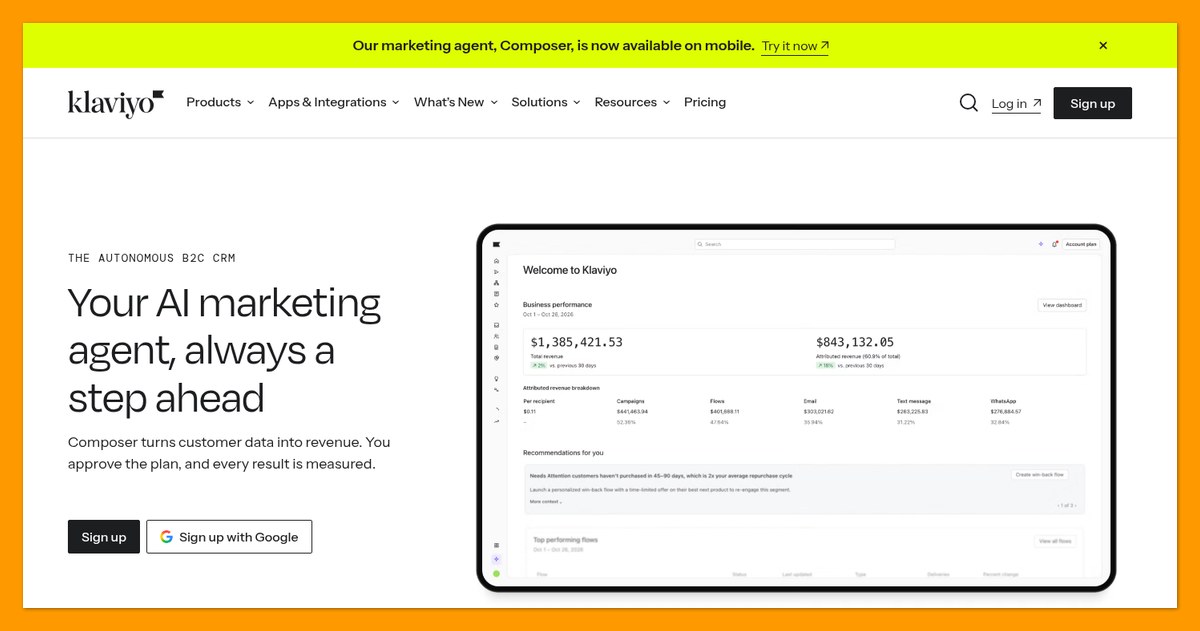
4. Klaviyo: Best Marketing Agent

Klaviyo’s Composer builds campaigns and reviews flows from the same customer profiles behind your email and SMS, while Customer Agent handles returns, order edits and promotions.
- Pro: Campaign creation and flow reviews
- Pro: Returns, order edits and promotions
- Pro: Shared marketing and service data
- Con: Three separate billing units
- Con: Estimated Composer action costs
- Con: Customer Agent add-on charges
- Best for
- Connected marketing and customer service
- Agents
- Composer, Customer Agent
- Works with
- Shopify, WooCommerce, BigCommerce, Adobe Commerce, Wix
- Free plan or trial
- Free plan with limited agent usage
- Best for: Connected marketing and customer service
- Agents: Composer builds campaigns and reviews flows; Customer Agent handles returns, order edits and promotions
- Works with: Shopify, WooCommerce, BigCommerce, Adobe Commerce and Wix
- Starting price: Free; Email from $20/month; Composer $20/month for 2,000 credits
- Free plan or trial: Free plan with limited agent usage
Klaviyo wins for marketing because Composer builds campaigns and reviews flows using the same customer profiles that support your email and SMS.
However, profiles, credits and resolutions are separate billing units, so I recommend Tidio’s cheaper starting point if you only need support answers.
Pros
- Campaign creation and flow reviews
- Returns, order edits and promotions
- Shared marketing and service data
- Broad store-platform support
Cons
- Three separate billing units
- Estimated Composer action costs
- Customer Agent add-on charges
What’s new with Klaviyo?
Klaviyo’s marketing agent is now Composer, while Customer Agent has gained multi-geo support and Helpdesk has joined the lineup. Building and testing Customer Agent inside Composer doesn’t consume Composer credits, so that setup work differs from creating a campaign. However, campaign work does use credits, which makes it important to separate agent testing from your regular marketing activity.
Why use Klaviyo in 2027?
Both agents use the same customer profiles and order data, connecting returns conversations with the retention work you run through marketing. When a conversation needs human attention, its history carries over to Klaviyo Helpdesk or the helpdesk you already use. That said, this connection between marketing and service doesn’t replace Shopify’s catalog-editing tools for managing the store itself.
My Klaviyo testing notes
I recommend setting the persona and escalation topics before running built-in simulations, so those tests reflect how you want the agent to respond. Keep this free testing separate from campaign creation, which spends Composer credits rather than sharing that exemption. Action estimates can be exceeded, so make sure you leave flexible overages off until you understand regular usage.
How Much Does Klaviyo Cost?
Plans scale with active profiles, while agents have separate charges, so I recommend starting free before adding paid capacity.
| Plan or add-on | Monthly price | What’s included |
|---|---|---|
| Free | $0 | 250 active profiles, 500 emails a month, $10 of Composer usage, a small monthly Customer Agent allowance |
| From $20 | 500 active profiles, 5,000 emails a month | |
| Marketing | From $25 | 500 active profiles; adds social marketing, reviews and Customer Hub |
| Composer (paid plan) | $20 | 2,000 credits; extra credits $10 per 1,000 |
| Customer Agent | $700 | 1,000 AI resolutions |
| Custom | Custom quote | More than 150,000 active profiles |
Try Klaviyo: Visit Klaviyo
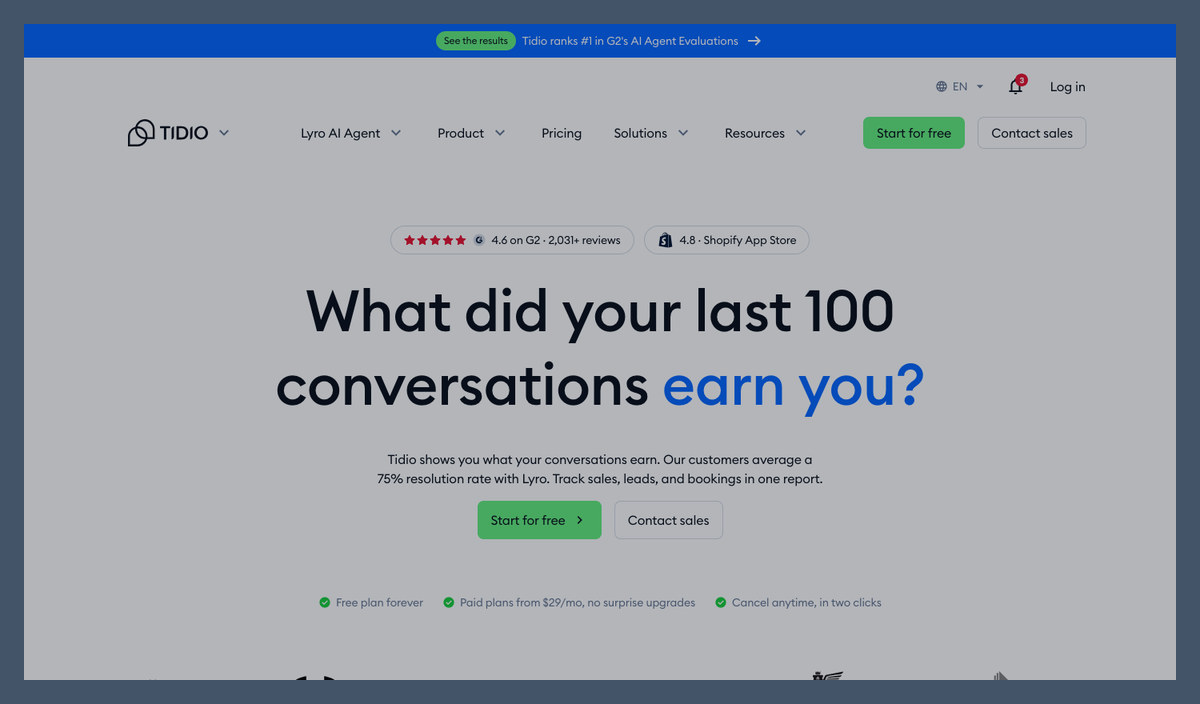
5. Tidio: Best Budget Pick for Small Stores

Tidio’s Lyro answers questions, recommends products, adds items to cart and sends recovery codes, starting on a free plan. Outside Premium, every conversation Lyro replies to counts toward billing.
- Pro: Free introductory Lyro allowance
- Pro: Low paid entry point
- Pro: Multiple store platforms
- Con: Unresolved conversations still billed
- Con: No ready-made refund action
- Con: One-time free Lyro allowance
- Best for
- Affordable FAQ and order-status coverage
- Agents
- Lyro, Flows
- Works with
- Shopify, WooCommerce, WordPress, Magento
- Free plan or trial
- 50 one-time Lyro conversations; 7-day trial
- Best for: Affordable FAQ and order-status coverage
- Agents: Lyro answers and recommends; Flows runs rule-based sales prompts
- Works with: Shopify, WooCommerce, WordPress, Magento and widget installations
- Starting price: Free; Lyro from $32.50/month billed annually or $39 monthly for 50 conversations
- Free plan or trial: 50 one-time Lyro conversations; 7-day paid-plan trial
Tidio is my budget pick because Lyro starts on a free plan, with product recommendations and cart-recovery tools also available.
However, outside Premium, every conversation receiving a Lyro reply counts, even if it remains unresolved. Gorgias is stronger for ready-made order cancellations.
Pros
- Free introductory Lyro allowance
- Low paid entry point
- Multiple store platforms
- Recommendations and add-to-cart actions
Cons
- Unresolved conversations still billed
- No ready-made refund action
- One-time free Lyro allowance
What’s new with Tidio?
Tidio sells Lyro stand-alone, so you can keep another helpdesk rather than replacing it to use the agent. Its offering includes native Shopify actions and connections through Actions & MCPs, extending the options beyond answering from your content. Premium also introduces pay-per-resolution billing, although cheaper Lyro tiers still charge by conversation whether or not the request gets resolved.
Why use Tidio in 2027?
For owners who also handle support themselves, after-hours coverage is Lyro’s strongest benefit because it can answer from your existing content. It also recommends in-stock products, giving shoppers help with discovery alongside answers to common questions about your store. However, explaining a returns policy isn’t the same as issuing a refund, which still needs your team or custom development.
My Tidio testing notes
I recommend adding FAQs before opening Behavior > Actions & MCPs to configure Get order status for your store. Our Lyro AI review explains the setup further, including the distinction between answering questions and configuring actions. Ready-made actions don’t cover every order change, so make sure refund and cancellation requests reach your team rather than stopping at a policy answer.
How Much Does Tidio Cost?
Tidio meters human chats, Lyro conversations and Flows visitors separately, as our Tidio and Lyro pricing breakdown explains alongside the add-ons.
| Plan | Price | What’s included |
|---|---|---|
| Free | $0 | 50 conversations, 50 Lyro conversations (one-time), Flows for 100 visitors |
| Starter | $24.17/month (billed annually) or $29 (billed monthly) | 100 conversations |
| Growth | From $49.17/month (billed annually) or from $59 (billed monthly) | 250 to 1,000 conversations |
| Lyro AI Agent | From $32.50/month (billed annually) or from $39 (billed monthly) | 50 Lyro conversations a month, native Shopify actions |
| Plus | From $300/month plus usage | Lyro conversations from $0.50 each |
| Premium | Custom quote | Pay per resolution; Tidio guarantees a 50% Lyro resolution rate |
Try Tidio: Visit Tidio
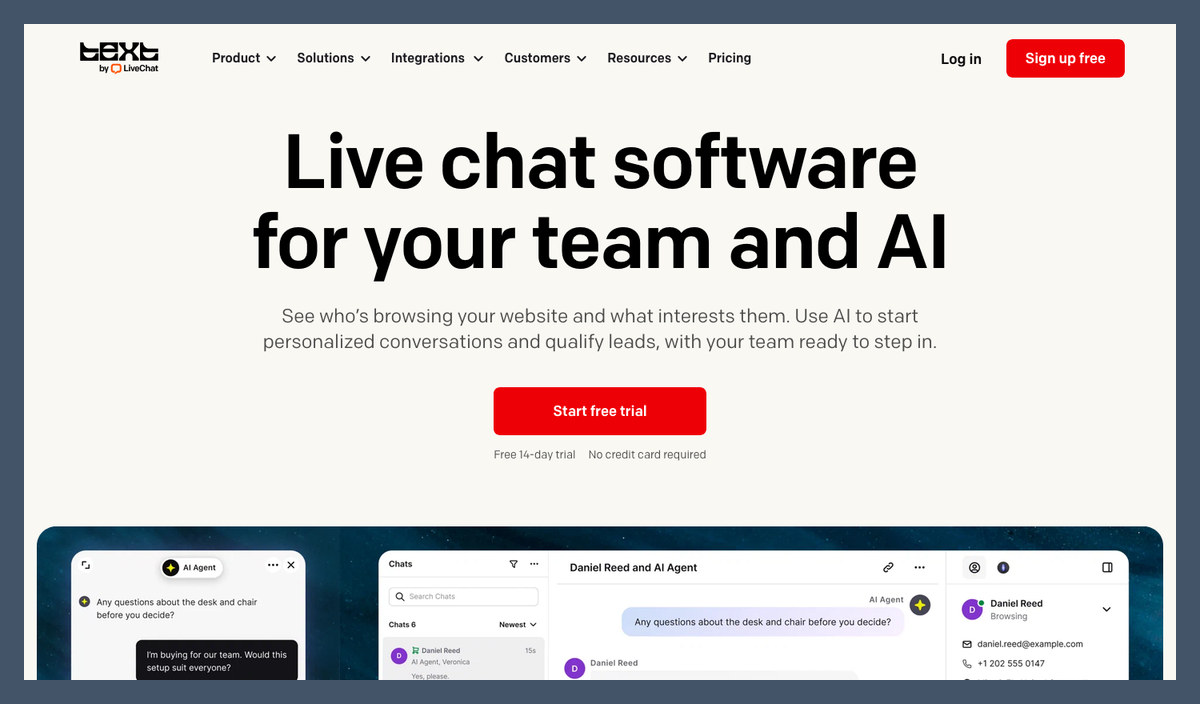
6. LiveChat: Best Live Chat With Human Handoff

LiveChat’s AI Agent answers and sells from your Shopify catalog, then hands chats to your team with full history. Growth adds supervision and takeover, but everyone answering needs a seat.
- Pro: Full-history handoff
- Pro: Growth supervision and takeover
- Pro: Live Shopify catalog selling
- Con: Per-seat costs
- Con: Tight Essential allowance
- Con: No ready-made refund or cancellation action
- Best for
- AI chat backed by people
- Agents
- AI Agent, Copilot
- Works with
- Shopify, WooCommerce, BigCommerce, Magento, Adobe Commerce, WordPress
- Free plan or trial
- 14-day trial, no card; no free plan
- Best for: AI chat backed by people
- Agents: AI Agent answers and sells; Copilot suggests staff replies
- Works with: Shopify, WooCommerce, BigCommerce, Magento, Adobe Commerce and WordPress
- Starting price: $19/user/month billed annually or $25 monthly; 10 AI resolutions
- Free plan or trial: 14-day trial, no card; no free plan
LiveChat leads for human handoff because it transfers chats with their full history, while Growth adds supervision and takeover for your team.
However, everyone answering needs a seat, and ready-made refunds and cancellations are missing. Fin adds automation to your existing helpdesk without Fin seat fees.
Pros
- Full-history handoff
- Growth supervision and takeover
- Live Shopify catalog selling
- Resolution-based AI allowance
Cons
- Per-seat costs
- Tight Essential allowance
- No ready-made refund or cancellation action
What’s new with LiveChat?
New customers receive Text by LiveChat plans following the Text brand launch in May 2026, rather than the existing LiveChat plans. These combine chat with Shopify-native AI selling and custom skills, bringing those capabilities into the new plan structure. However, existing LiveChat customers keep their plan, price and login, so migration is optional rather than a requirement.
Why use LiveChat in 2027?
The sales skill displays Shopify product cards with add-to-cart buttons, while Conversion Radar flags buying signals for your team. Handoffs without an answer, test chats and spam don’t consume resolutions, so those conversations aren’t treated like successfully answered questions. If you’re comparing this mix of selling and human support, our best AI live chat apps guide covers the alternatives.
My LiveChat testing notes
I recommend starting with the website-generated AI Agent preview, then adding help documents and custom skills to build out its coverage. Request a person and inspect the receiving inbox to check that the conversation history follows the handoff. Our LiveChat review covers the workspace, so make sure you check handoff and allowance together before choosing your plan.
How Much Does LiveChat Cost?
Every user answering chats needs a seat, and I recommend Growth if you need supervision alongside regular AI capacity.
| Plan | Monthly price per user (billed annually) | Monthly price per user (billed monthly) | AI Agents | AI resolutions per month | Extra AI resolutions |
|---|---|---|---|---|---|
| Essential | $19 | $25 | 1 | 10 | $49.50 per 50 |
| Growth | $79 | $99 | 10 | 200 | $49.50 per 50 |
| Enterprise | Custom quote | Custom quote | Custom | 2,000+ | Custom |
Try LiveChat: Visit LiveChat
7. Fin: Best Pay-Per-Outcome Support Agent

Fin charges per outcome rather than per answer, and runs on your existing helpdesk without Fin seats. Fin for Ecommerce combines shopping and support on Shopify with the Intercom helpdesk.
- Pro: No charge for unanswered requests
- Pro: Existing-helpdesk deployment without Fin seats
- Pro: Shopify shopping and support together
- Con: Silence can become billable
- Con: Ecommerce requires Shopify and Intercom
- Con: Peak-volume cost exposure
- Best for
- Outcome-based support on an existing helpdesk
- Agents
- Fin, Fin for Ecommerce
- Works with
- Shopify and Intercom for Ecommerce; API for Service
- Free plan or trial
- 14-day trial; no free plan
- Best for: Outcome-based support on an existing helpdesk
- Agents: Fin handles service; Fin for Ecommerce combines shopping and support
- Works with: Shopify and Intercom for Ecommerce; API connections for Service
- Starting price: $0.99/outcome; $49/month minimum including 50 outcomes on another helpdesk
- Free plan or trial: 14-day trial; no free plan
Fin wins for outcome billing because you pay for an outcome, rather than every answer the agent attempts to give.
However, silence after an answer can count, as can completed Procedures ending in handoff. LiveChat instead requires an answer directly solving a question.
Pros
- No charge for unanswered requests
- Existing-helpdesk deployment without Fin seats
- Shopify shopping and support together
- Spending limits and escalation rules
Cons
- Silence can become billable
- Ecommerce requires Shopify and Intercom
- Peak-volume cost exposure
What’s new with Fin?
Intercom renamed the company Fin on 12 May 2026, while retaining Intercom as the name of its helpdesk rather than dropping it entirely. Salesforce then completed its acquisition on 10 September 2026, adding another change to the company’s ownership and branding. Fin 4 and Apex 2.0 are the current generation, although outcome pricing remains unchanged through these changes.
Why use Fin in 2027?
Fin for Ecommerce keeps shopping and support in one conversation, using Shopify variants, availability and browsing context to handle those connected requests. Shoppers can add products to their cart and request returns without starting again in a separate conversation with the agent. However, that ecommerce setup requires Shopify and Intercom, while other store platforms use Fin for Service through API connections.
My Fin testing notes
I recommend writing Guidance with escalation rules before configuring Procedures or filtering the catalog, so the handoff rules come first. Our Fin AI review explains the connected workflows and how they fit into setup. Silence and completed Procedures can generate charges even without a simple resolution, so make sure you set a monthly spending limit and inspect billed conversations.
How Much Does Fin Cost?
Fin bills per outcome, not per conversation, with Intercom seats added separately or your existing helpdesk subscription remaining in place.
| Option | Price | What’s included |
|---|---|---|
| Fin on your existing helpdesk | $0.99 per outcome, $49/month minimum | 50 outcomes in the minimum; no seat costs |
| Fin with the Intercom helpdesk | $0.99 per outcome, plus seats from $29 per seat/month (billed annually) | Intercom helpdesk; Fin for Ecommerce on Shopify |
| Fin Voice | $1.99 per voice outcome | Sold through sales |
Try Fin: Visit Fin
8. Salesforce Agentforce: Best Enterprise Commerce Suite

Agentforce puts shopper, merchandising and B2B agents on one Salesforce platform with published unit prices. It requires Commerce Cloud, and Data 360 adds costs.
- Pro: Shopper, merchant and B2B coverage
- Pro: Published consumption prices
- Pro: Gemini and Google AI Mode checkout
- Con: Salesforce platform dependency
- Con: Additional Data 360 costs
- Con: Overlapping licensing options
- Best for
- Retailers already using Salesforce
- Agents
- Carter, Merchandising Agent, B2B agents
- Works with
- Commerce Cloud, CRM, Service Cloud, Data 360
- Free plan or trial
- Foundations for existing Salesforce customers
- Best for: Retailers already using Salesforce
- Agents: Carter assists shoppers; Merchandising Agent creates rules; B2B agents handle buying and administration
- Works with: Salesforce Commerce Cloud, CRM, Service Cloud and Data 360
- Starting price: Foundations $0 for Salesforce customers; $2/conversation or $0.10/action through Flex Credits
- Free plan or trial: Foundations for existing Salesforce customers
Salesforce Agentforce wins for enterprise commerce because shopper, merchandising and B2B agents share one platform, backed by published unit prices.
However, Commerce Cloud is required, and Data 360 brings additional costs, whereas Shopify includes its store agents in your subscription.
Pros
- Shopper, merchant and B2B coverage
- Published consumption prices
- Gemini and Google AI Mode checkout
- Free Foundations entry for Salesforce customers
Cons
- Salesforce platform dependency
- Additional Data 360 costs
- Overlapping licensing options
What’s new with Salesforce Agentforce?
Shopper, Buyer and Merchant agents became generally available in July 2026, covering customer-facing and behind-the-scenes commerce work within the Salesforce platform. Dreamforce subsequently introduced Carter and Commerce Connect, extending the lineup beyond those releases for retailers using the suite. Commerce Connect supports checkout in Gemini and Google AI Mode while synchronizing the catalog to ChatGPT, where that synchronization supports discovery.
Why use Salesforce Agentforce in 2027?
Agentforce suits teams whose product, order and customer records already live in Salesforce, rather than stores looking only for a standalone chat widget. Its agents use those records for merchandising rules and B2B reorders, connecting their actions to the platform you already use. If you’re still choosing your CRM, our HubSpot AI vs Salesforce Agentforce comparison helps with that decision.
My Salesforce Agentforce testing notes
I recommend starting with Agentforce Builder through Foundations and keeping actions narrowly scoped rather than enabling broad changes immediately. The Merchandising Agent accepts plain-language boost and bury rules in Business Manager, but I recommend reviewing the resulting rules before deployment. Consumption is only part of the bill, so make sure you price Data 360 alongside Flex Credits.
How Much Does Salesforce Agentforce Cost?
Salesforce publishes unit rates but requires sales confirmation for actual pricing, with employee add-ons and customer-facing consumption covering different uses.
| Option | Price | What you get |
|---|---|---|
| Salesforce Foundations | $0 | Agentforce Builder and Prompt Builder for existing Salesforce CRM customers |
| Conversations | $2 per conversation | Customer-facing agents |
| Flex Credits | $500 per 100,000 credits | 20 credits ($0.10) per standard action |
| Agentforce add-ons | $125 per user/month | Unmetered employee use in Sales, Service and Field Service |
Try Salesforce Agentforce: Visit Salesforce Agentforce
9. Sierra: Best Enterprise Customer Experience Agent

Sierra builds one custom brand agent that spans chat, voice and ChatGPT and connects to order, return, warranty and subscription actions. Pricing is a custom, outcome-based contract.
- Pro: Shared agent across channels
- Pro: Agreed-outcome billing
- Pro: Guardrails and tool-call monitoring
- Con: Custom pricing only
- Con: Sales-led implementation
- Con: No off-the-shelf store app
- Best for
- Large brands needing custom customer service
- Agents
- Ghostwriter-built brand agent
- Works with
- Custom CRM, order and inventory integrations
- Free plan or trial
- None published
- Best for: Large brands needing custom customer service
- Agents: Ghostwriter builds a brand agent for orders, warranty claims, returns and subscriptions
- Works with: Custom CRM, order and inventory integrations across digital channels and voice
- Starting price: Custom quote, outcome-based
- Free plan or trial: None published
Sierra leads for enterprise CX because one custom agent spans channels, including voice and ChatGPT, while connecting to account and order actions.
However, custom implementation and unpublished pricing make it unsuitable for most small stores, while Fin is easier to budget before contacting sales.
Pros
- Shared agent across channels
- Agreed-outcome billing
- Ghostwriter builds from business procedures
- Guardrails and tool-call monitoring
Cons
- Custom pricing only
- Sales-led implementation
- No off-the-shelf store app
What’s new with Sierra?
Sierra introduced Ghostwriter in September 2026, adding a way to build a brand agent from business procedures and transcripts. It followed that release with the Personal Agent Protocol, Poppy, whose version 1.0 arrived on 13 November with Shopify among its design partners. Sierra says Shopify has enabled the protocol for every merchant, although Sierra itself remains a custom implementation.
Why use Sierra in 2027?
Sierra suits brands needing consistent behavior across chat and voice, with the same agent connected to their existing business systems. Its retail actions include handling warranty claims and converting returns into exchanges, rather than only explaining those processes to customers. However, the outcome-based contract supports predictable budgeting only when you and Sierra agree what success means for those requests.
My Sierra testing notes
I recommend making Ghostwriter’s guardrails and tool-call monitoring part of procurement, alongside clear requirements for when conversations should reach your team. Ghostwriter builds from procedures and transcripts, but Sierra isn’t a self-serve trial you can start without that process. Make sure you define billable outcomes in writing, including how conversations ending in human handoff count toward the bill.
How Much Does Sierra Cost?
Sierra prices outcomes under a custom contract, so I don’t recommend it if you need a subscription price before speaking to sales.
| Plan | Price | Pricing model |
|---|---|---|
| Enterprise | Custom quote | Outcome-based: you pay when the agent achieves an agreed outcome, such as a resolved conversation |
Try Sierra: Visit Sierra

10. Symphony by Wix: Best for Wix and Solo Store Owners

Symphony’s Maestro coordinates built-in, custom and external agents from one chat and asks for your approval before important actions. It is the newest product here, with a free plan and monthly AI credits.
- Pro: Ongoing free plan
- Pro: Low paid starting price
- Pro: Approval before important actions
- Con: Limited operating history
- Con: Agents pause without credits
- Con: Credits expire monthly
- Best for
- Solo owners delegating marketing and admin
- Agents
- Maestro plus built-in, custom and external agents
- Works with
- Wix; standalone desktop and mobile apps
- Free plan or trial
- Free plan, no card
- Best for: Solo owners delegating marketing and administration
- Agents: Maestro assigns jobs to built-in, custom and external agents
- Works with: Wix; standalone desktop and mobile apps for other businesses
- Starting price: Free; Basic $16/month billed annually or $20 monthly, with credit allowances
- Free plan or trial: Free plan, no card
Symphony by Wix earns its solo-owner crown because Maestro coordinates agents from one chat, asking for your approval before important actions.
However, it’s the newest product here, and depth outside Wix depends on external agents, while Shopify’s Sidekick offers more explicit order-editing capabilities.
Pros
- Ongoing free plan
- Low paid starting price
- Approval before important actions
- Available beyond Wix businesses
Cons
- Limited operating history
- Agents pause without credits
- Variable credit costs and monthly expiry
What’s new with Symphony by Wix?
Wix launched Symphony on 11 August 2026 for desktop, iOS and Android, making it available beyond a single website workspace. Maestro routes jobs to internal and external agents, including Shopify and Zendesk, rather than handling every task through one agent. Wix’s examples include configuring wholesale products across multiple Wix stores, so the scope extends beyond simply generating copy.
Why use Symphony by Wix in 2027?
Symphony handles background marketing and administrative work for owners without separate teams, bringing those jobs together through Maestro’s chat interface. Important messages and workflow changes come back for your approval, rather than treating delegation as permission to publish everything automatically. On paid plans, chatting with Maestro doesn’t consume credits, although the agents still spend credits when they execute the work.
My Symphony by Wix testing notes
I recommend reviewing Maestro’s approval summary before assigning customer-facing work, rather than skipping straight from the request to execution. Setup questions establish business context, but planning conversations on the free plan also spend credits before agents carry out tasks. Agents pause when credits run out, so make sure you check AI credits in the app menu before a busy period.
How Much Does Symphony by Wix Cost?
Credits are separate from a Wix website subscription and expire monthly, so I recommend starting free before choosing a larger allocation.
| Plan | Monthly price (billed annually) | Monthly price (billed monthly) | AI credits per month |
|---|---|---|---|
| Free | $0 | $0 | 500 (up to 100 a day) |
| Basic | $16 | $20 | 2,000 |
| Pro | $40 | $50 | 5,000 |
| Max | $80 | $100 | 12,000 |
| Max+ | n/a | $200 | 30,000 |
Try Symphony by Wix: Visit Symphony by Wix

How Do I Choose the Right Agentic AI Platform?
Choose the store job first, then compare actions and billing using the questions below. Our AI tools for ecommerce guide covers options beyond agents.
- Which layer needs help: selling, support, or marketing and operations?
- Can the agent refund, cancel or edit orders, or only answer?
- Does it support my platform beyond installing a widget?
- Am I paying per seat, resolution, conversation, session or credit?
- What approval runs before it changes an order, price or customer message?
- Can shoppers find my products through ChatGPT, Gemini or Copilot?
Start with one narrow job, such as order status, and check its behavior before expanding permissions. Our guide on how to use agentic AI explains this staged approach.
How Much Will Peak Season Cost?
The examples below assume 500 billable AI-handled conversations in a month, not a forecast of how many requests an agent will resolve.
| Platform | How the AI is billed | Unit price | Cost of 500 AI conversations | Also on the bill |
|---|---|---|---|---|
| Gorgias AI Agent | Per automated interaction | $0.90 billed annually or $1.00 billed monthly | $450 to $500 | Helpdesk plan; each AI conversation also uses a ticket |
| Fin | Per outcome | $0.99 | $495 | Intercom seats, if you use the Intercom helpdesk |
| LiveChat (Growth, 1 seat) | Seat with 200 resolutions, then packs | $49.50 per 50 extra | $376 ($79 seat plus 6 packs) | $79 for each extra seat, billed annually |
| Rep AI (on-site chat) | Store sessions, not conversations | $12 per extra 1,000 sessions | No per-chat charge | Store subscription and sessions above the included 3,000 |
Rep AI follows traffic, not chats, so visitor spikes can raise your bill without more conversations. Shopify’s Inbox costs nothing extra, but can’t cancel or refund orders.
You can’t calculate a guaranteed Tidio or Klaviyo bill from this workload alone. Lyro counts replies regardless of resolution, while Klaviyo’s published Customer Agent tier includes 1,000 resolutions for $700/month.
Which Other Agentic AI Platforms Should I Consider?
- Kore.ai: Custom-quoted shopper, store-operations and associate agents for large retailers with IT teams
- Algolia: Developer-led product discovery, with Agent Studio building assistants on its search platform
- Alhena AI: Shopping and support across Shopify, WooCommerce and Salesforce Commerce Cloud, starting free
If you need custom development instead of a ready-made retail app, compare our AI agent builders.
Can I Switch Agentic AI Platforms?
Yes, but switching involves more than replacing the widget, since skills and approval rules usually need recreating. Rep AI, Fin for Ecommerce and Gorgias’s native Shopify actions won’t follow you away from Shopify.
Fin and stand-alone Lyro can sit on an existing helpdesk, reducing replacement work. Before overlapping annual subscriptions, export your transcripts and check renewal dates.
How We Test and Rank the Best Agentic AI Platforms
We compared 17 retail and ecommerce platforms, prioritizing connected actions over fluent answers. I recommend checking the resulting order or customer record rather than accepting an agent’s “done” message as proof.
- Agent actions and guardrails (30%): We distinguish answers from order changes and examine confirmation requirements
- Pricing clarity and peak-season cost (20%): We compare billing units, allowances and busy-month costs
- Store platform fit (15%): We assess supported commerce platforms and feature-level lock-in
- Setup effort (15%): We consider knowledge preparation, connected actions and safe testing options
- Agentic commerce readiness (10%): We distinguish AI-channel discovery from supported checkout
- Reputation (10%): We consider user concerns around reliability, billing and support
Decagon and Zowie were enterprise-service alternatives, but custom pricing complicates upfront comparison. Zendesk offers a broader helpdesk rather than the store-order-first approach we prioritized.
Competing rankings commonly come from companies selling agent platforms and placing themselves first. Fritz.ai doesn’t sell an agent platform, and every pick has a stated limitation, including Sidekick’s inability to handle customer conversations.
Prices current as of November 2026.
Final Verdict: Which Agentic AI Platform Do I Recommend?
Shopify is my recommendation for most store owners because its agents are included and Sidekick’s changes wait for review. Plus, Agentic Storefronts extends product discovery to AI assistants, although Sidekick can’t handle customer support conversations.
For a specific bottleneck, I recommend the specialist that matches the job:
- Gorgias: Shopify order-heavy support
- Rep AI: Proactive storefront selling
- Klaviyo: Marketing campaigns and flow upkeep
- Tidio: An inexpensive support starting point
- LiveChat: Human handoff and supervision
- Fin: Outcome-based support on an existing helpdesk
- Agentforce: Retailers already on Salesforce Commerce Cloud
- Sierra: Custom enterprise customer experience
- Symphony: Background work for Wix sellers and solo owners
Start with a trial or free plan and give the agent one narrow job, such as order status. Before buying annually, test escalation and calculate your busiest month’s bill. Check that it completes the action rather than merely explaining it.
FAQs
What is the best agentic AI platform for ecommerce?
Shopify is our pick for most online stores, with Sidekick, Inbox, Flow and Agentic Storefronts included from $29/month, billed annually. However, Sidekick doesn’t handle customer conversations, so add Gorgias for order-heavy support or Rep AI for proactive selling. If you already use Salesforce Commerce Cloud, consider Agentforce instead.
What’s the difference between an AI chatbot and an AI agent?
The distinction is whether it takes connected actions, rather than only answering questions. An agent might cancel an order or build a campaign within your rules, although products labeled “chatbots” can also include actions. Compare permissions and integrations, or explore our best AI chatbots if answers are enough.
Can AI agents issue refunds and cancel orders?
Yes, some agents can, with the right integrations and permissions. Gorgias cancels Shopify orders after shopper confirmation, while Rep AI cancels and modifies orders, with refunds supported by its email and social add-on. Sidekick requires merchant approval for order edits, while Tidio and LiveChat leave standard refunds to people.
Can shoppers buy my products inside ChatGPT, Gemini or Copilot?
Checkout location varies by channel, even when eligible Shopify products appear through Agentic Storefronts. ChatGPT shoppers finish on your store, while eligible Gemini, Google AI Mode and Copilot setups support checkout inside the channel. Stores outside Shopify can use its Agentic plan, which has no monthly fee.
Is it safe to let an AI agent change orders or prices?
It can be, but approval controls don’t eliminate mistakes. Sidekick requires review, Gorgias enables shopper confirmation for irreversible actions, and Symphony requests approval for important changes. Start with restricted permissions and a fake customer profile, keeping sensitive refunds with your team until you’ve checked the conversation and resulting store record.

Comments 0 Responses