

Perplexity and Gemini are two of the most capable AI research tools available in 2026, but they take very different approaches to helping you find, verify, and use information.
I’ve spent significant time testing both platforms to bring you a clear recommendation for your research workflow.
As a result of my testing, Perplexity is the better choice if your primary goal is fast, source-backed research with verifiable citations.
If you need deep analysis across large documents, multimodal reasoning, or tight integration with Google Workspace, Gemini is the stronger option.
Perplexity vs Gemini: Quick Verdict
1. Perplexity – Best for research, citations, and source-backed writing
2. Gemini – Best for deep analysis, multimodal tasks, and Google Workspace integration
In this comparison, I’ll take a closer look at why Perplexity edges ahead for most research workflows, comparing the two AI tools on research capabilities, citation quality, deep research features, ease of use, pricing, and more.
Quick Comparison: Perplexity vs Gemini
Get a quick and clear overview of Perplexity and Gemini in the table below:
| Area | Perplexity | Gemini |
|---|---|---|
| Core strength | Search-first research with strong inline citations | Multimodal reasoning, long-context analysis, and Google integration |
| Research mode | Deep Research performs dozens of searches and can export to PDF, document, or Pages | Deep Research agent plans multi-step tasks and synthesizes cited reports |
| Sources and citations | Live web citations with numbered inline references and report export | Google Search plus your own data, with access to Drive and Gmail in the broader Gemini stack |
| Best for | Fast fact-finding, article research, source collection, and citation-heavy drafts | Big-context synthesis, science and engineering work, visual explanations, and Workspace workflows |
| Pricing | Free tier with limits; Pro unlocks high-volume Deep Research | Google AI Ultra for full Deep Think access; Gemini 3.1 Pro rolling out across products |
Perplexity: Pros and Cons
Pros
- Inline numbered citations on every answer make source verification fast
- Deep Research is free for all users, with higher volume on Pro
- Iterative follow-up questions let you refine research in real time
- Export to PDF, document, or Perplexity Pages for a research-to-publish workflow
- Research mode combines web search with uploaded documents for deeper analysis
Cons
- Limited multimodal capabilities compared to Gemini
- No native integration with productivity suites like Google Workspace
- Free tier has daily limits on Deep Research queries
- Less suited to long-document analysis or complex structured reasoning
- Not designed for science or engineering-specific research tasks
Gemini: Pros and Cons
Pros
- Strong multimodal reasoning across text, images, code, and long documents
- Native Google Workspace integration with Drive, Gmail, and NotebookLM
- Gemini 3.1 Pro and upgraded Deep Think excel at technical and scientific research
- Deep Research agent autonomously plans and executes complex multi-step tasks
- Large context window handles lengthy reports and datasets effectively
Cons
- Deep Think requires a Google AI Ultra subscription for full access
- Research workflow is slower, with reports taking several minutes to generate
- Citation transparency is less prominent than Perplexity’s inline system
- Less intuitive for quick, iterative web research sessions
- Export and publishing options are less developed for content creators
1. Best for Research Workflow: Perplexity
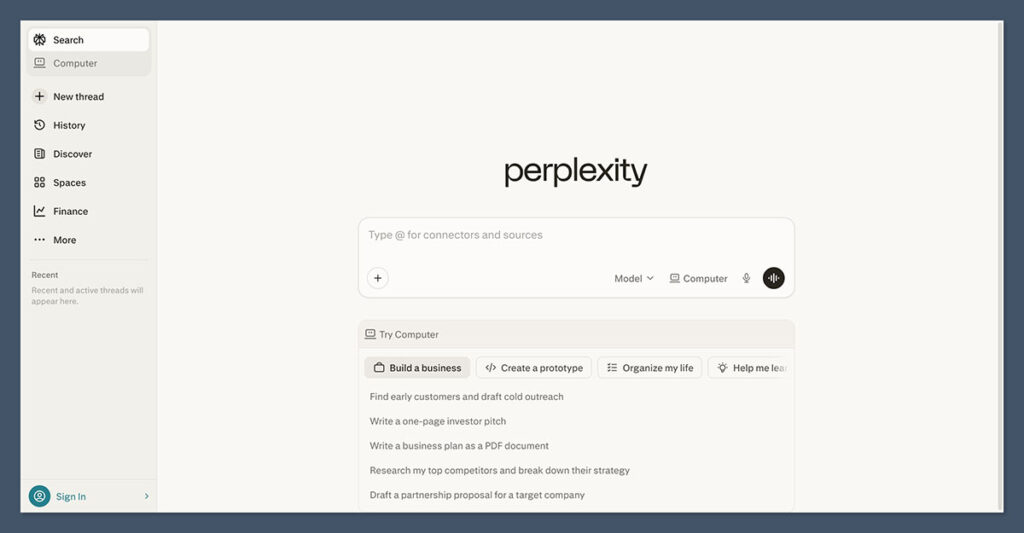
When it comes to the core experience of searching, verifying, and building on information, Perplexity is the more natural fit for most research workflows.
Its interface is built around live web search, iterative follow-up questions, and explicit citations in every answer, which makes it significantly easier to verify claims while you’re drafting.
When I tested Perplexity’s standard mode, I could ask a question, get a cited answer, and immediately drill into follow-ups without losing context.
The tool’s Research mode goes further by searching multiple sources, reading full documents, and letting you combine uploads with web results for deeper analysis. This iterative loop of search, read, and refine is where Perplexity feels most polished.
Gemini’s Deep Research takes a different approach. Rather than quick, interactive searching, it’s designed as a “set it running and come back later” tool.
Google describes it as a multi-step planning system that autonomously plans, executes, and synthesizes research tasks using web search and your own data. According to Google’s API documentation, the agent can take several minutes and uses background execution for asynchronous research jobs.
This is a genuine strength for complex tasks, but it also means the feedback loop is slower. If you need to pivot your research direction mid-task or want to quickly verify a single claim before moving on, Perplexity’s real-time approach is considerably faster.
The Winner
Perplexity’s interactive, citation-first workflow is better for everyday research
Perplexity gives you cited answers in seconds and lets you refine your search in real time. Its iterative approach is better suited to content writing, fact-checking, and source collection than Gemini’s longer-running agentic model.
2. Best for Deep Research: It’s Close
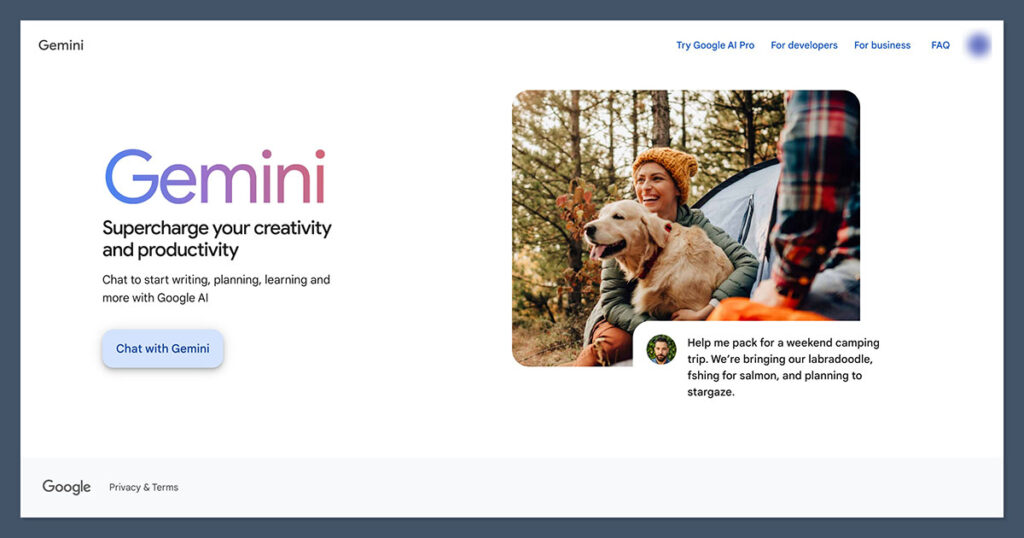
Both platforms made significant upgrades to their deep research capabilities in early 2026, and this is where the comparison gets interesting.
Perplexity launched its updated Deep Research on March 15, 2026. According to Perplexity, it performs dozens of searches, reads hundreds of sources, reasons through the material, and returns a structured report in about two to four minutes.
The output can be exported to PDF or document format, or converted into a Perplexity Page for sharing. Notably, Deep Research is free for all users, with Pro subscribers getting access to a higher volume of queries.
On the Gemini side, Google’s Deep Research agent is now powered by Gemini 3.1 Pro, which was released on February 19, 2026.
The Deep Think capability was upgraded on February 12, 2026, specifically for science, research, and engineering use cases. Gemini’s Deep Research is designed to autonomously plan multi-step research tasks, pull from web search and your own connected data, and produce comprehensive cited reports.
In practice, the difference comes down to speed versus depth. Perplexity delivers a usable report faster and makes it easy to export or publish. Gemini’s reports tend to go deeper into structured reasoning, especially when working with technical or scientific material, but they take longer to generate.
The Winner
Perplexity and Gemini are closely matched on deep research
Perplexity is faster and more export-friendly. Gemini goes deeper on technical and scientific analysis. Your choice here depends on whether you prioritize speed and publishing ease or analytical depth.
3. Best for Citations and Source Transparency: Perplexity
This is the area where Perplexity has its clearest advantage. Every answer Perplexity produces includes numbered inline citations that link directly to the source material.
You can click through to verify any claim without leaving the interface, and the sourcing is visible by default rather than tucked away.
For content creators, researchers, and anyone working in SEO or publishing, this matters a lot. When I’m drafting an article, I don’t want to spend extra time hunting for the source behind a particular statistic or claim. Perplexity’s approach means the verification step is baked into the output.
Gemini does provide citations in its Deep Research reports, and it can pull from your own connected data through Google Drive and Gmail. But citation transparency isn’t Gemini’s primary selling point. Its strength lies more in synthesizing large volumes of information into coherent analysis than in giving you a trail of breadcrumbs back to each individual source.
The Winner
Perplexity’s inline citations make source verification fast and simple
If you need to trace every claim back to its origin, Perplexity is the better tool. Its numbered citation system is built for writers, researchers, and anyone who needs their work to be verifiable.
4. Best for Multimodal and Long-Context Tasks: Gemini
Where Gemini pulls ahead is in handling tasks that go beyond text-based web research. If your workflow involves processing long documents, analyzing images or code, or working across different media types, Gemini is the stronger platform.
Gemini 3.1 Pro brings improved reasoning across large context windows, which means you can feed it lengthy reports, technical papers, or complex datasets and get meaningful synthesis back.
Google has positioned the 2026 upgrades specifically for science, engineering, and technical research, and the improvements show when you’re working with material that requires structured reasoning rather than quick lookups.
The Google Workspace integration is another genuine advantage. If your files already live in Drive, your emails are in Gmail, and your workflow runs through Google’s ecosystem, Gemini can access and reason across those files natively. Perplexity can work with uploads, but it doesn’t have the same seamless connection to an existing productivity stack.
Perplexity’s focus remains squarely on web-based research, which it does exceptionally well but without the broader multimodal capabilities that Gemini offers.
The Winner
Gemini’s multimodal reasoning and Workspace integration are unmatched
For long-document analysis, visual tasks, and workflows tied to Google’s ecosystem, Gemini is the clear choice. Its 2026 upgrades make it especially relevant for technical and scientific research.
5. Best for Pricing and Access: Perplexity
Perplexity has a notable advantage on accessibility. Its Deep Research feature is free for all users, with limited daily access.
Pro subscribers get a higher volume of Deep Research queries, plus extended access to Pro Search, more uploads, and access to advanced models. This means you can test the full research workflow before committing to a paid plan.
Gemini’s pricing structure is tied to Google’s broader AI product tiers. Gemini 3.1 Pro is rolling out across the Gemini app, API, Vertex AI, and NotebookLM. However, the upgraded Deep Think capability requires a Google AI Ultra subscription.
For users who are already paying for Google Workspace, some Gemini features may be bundled in, but the most powerful research tools sit behind the higher-tier subscription.
For someone who wants to try AI-powered research without upfront cost, Perplexity’s free tier is considerably more generous. BigCommerce’s no-transaction-fee model is a similar kind of advantage: it doesn’t mean the product is cheaper overall, but it removes a friction point that matters for certain users.
The Winner
Perplexity offers more research capability on its free tier
Perplexity’s free Deep Research access and straightforward Pro upgrade make it the easier platform to start with. Gemini’s most powerful features require a higher-tier Google subscription.
6. Best for Publishing and Export: Perplexity
If your research workflow ends with publishing, whether that’s a blog post, a report, or a client deliverable, Perplexity has built its pipeline with this in mind. Deep Research results can be exported to PDF or document format, or converted into a Perplexity Page, which functions as a shareable, web-based summary of your research.
This research-to-publish workflow is something Perplexity has been refining steadily. The combination of cited sources, structured output, and multiple export options means you can go from question to publishable draft without switching tools.
Gemini’s output is more suited to internal analysis. You’ll get a comprehensive report, but the path from Gemini’s output to a published piece involves more manual formatting and restructuring.
That’s not a flaw if you’re using Gemini for technical analysis or internal decision-making, but it’s a gap if publishing speed matters to your workflow.
The Winner
Perplexity’s export options make it easier to go from research to published content
With PDF export, document export, and Perplexity Pages, the tool supports a complete research-to-publish pipeline that Gemini doesn’t currently match.
How We Compared Perplexity and Gemini
To provide a fair and useful comparison, I tested both platforms across several key areas, weighted according to their importance for research-focused users:
| Criteria | Weight | What we tested |
|---|---|---|
| Research workflow | 30% | Speed of search, iterative follow-ups, and how well the tool fits a real research session |
| Citation quality | 25% | Inline sourcing, traceability of claims, and ease of verification |
| Deep research | 20% | Quality and speed of extended research reports, including source coverage |
| Multimodal and integration | 10% | Ability to handle images, long documents, code, and connect to external tools |
| Pricing and access | 10% | Free tier generosity, paid plan value, and barrier to entry |
| Export and publishing | 5% | Options for exporting research into usable formats |
I tested both Perplexity and Gemini myself across real research tasks, including article research, fact verification, technical analysis, and multi-source synthesis. The recommendations in this comparison are based on first-hand experience with both platforms.
Key Takeaways
- Perplexity is purpose-built for live web research and makes every claim easy to trace back to its source, which is ideal for content creators, journalists, and anyone who needs to verify facts quickly.
- Gemini excels at processing long documents, handling multimodal inputs like images and code, and connecting to your existing Google Workspace files.
- Both platforms launched upgraded Deep Research features in early 2026, making this a closer competition than ever before.
- For everyday research and writing workflows, Perplexity’s iterative search and citation system gives it a clear edge. For technical, scientific, or enterprise-level analysis, Gemini’s deeper reasoning and ecosystem integration may be worth the trade-off.
Perplexity vs Gemini: Our Verdict
For content creators, researchers, and SEO teams who need fast, verifiable, and citation-rich research, Perplexity is the better daily research tool. It’s faster to verify, easier to cite, and more obviously optimized for source-backed writing.
With the addition of Deep Research and Page export in 2026, it now covers a near-complete research-to-publish pipeline.
Gemini is the better pick when your workflow depends on Google files, long documents, multimodal inputs, or deeper structured reasoning across complex data. Its 2026 upgrades, including Gemini 3.1 Pro and the improved Deep Think, make it especially relevant for technical, scientific, and engineering research rather than quick web-backed drafting.
Both tools have improved significantly in 2026, and neither is a poor choice. I’d recommend trying both on a real task from your workflow to see which one feels more natural. If you’re writing and publishing, start with Perplexity. If you’re analyzing and synthesizing, start with Gemini.

Comments 0 Responses