

Want to boost your marketing without hiring a full team?
AI marketing tools are the fastest way to save time, improve results, and scale your content or ad output — and AdCreative.ai is the top tool we’ve tested across the board.
In late 2025, we spent over 200 hours testing 15+ AI tools across key marketing categories like ad creation, SEO, content writing, and automation. AdCreative.ai stood out for its speed, ease, and real conversion-focused results.
Our Top AI Marketing Tools
Semrush AI – For data-backed SEO and strategy
AdCreative.ai – Best for ad creation and fast testing
Surfer SEO – For content optimisation and rankings
Jasper – For bulk copywriting with brand voice
Originality.ai – For AI detection and clean content
ChatGPT – For fast research, drafts, and ideas
Grammarly – For clarity, editing, and tone
HubSpot AI – For CRM and workflow automation
Influencity – For influencer campaign management
Key Takeaways 🔍
- AdCreative.ai is the best overall tool for marketers who want results fast
- Surfer SEO helps content teams optimise live while writing
- Jasper and ChatGPT are great for fast, on-brand content
- Originality.ai is essential for content audits and plagiarism detection
- Prices range from $12/month to $139/month, depending on the tool and usage
- Some tools (like HubSpot and Semrush) work best if you’re already using the ecosystem
- Every tool on this list was tested across real marketing workflows — no fluff, no gimmicks
If you’ve worked in digital marketing for more than five minutes, you’ve probably been promised an “AI revolution” at least twice a week. Every new tool claims it’ll change your workflow, 10x your conversions, and practically tuck you into bed at night.
I’ve fallen for a few of those promises myself. After a few hundred hours of trials, demos, and the occasional rage-quit, I’ve discovered a lot of AI tools are smoke and mirrors. But the handful that get it right? They’ve completely changed how I work.
A few years ago, I was buried under client work: juggling ad creatives, SEO outlines, and endless content calendars for ecommerce brands that all needed everything “yesterday.” Most of my day disappeared into repetitive tasks that never seemed to end.
Then AI tools started flooding the market. I ignored them at first, convinced they’d put people like me out of a job. Funny how that turned out.
These days, my entire workflow runs on AI. The right tools help me brainstorm faster, spin up new creatives in minutes, and figure out what’s actually working before I waste time guessing.
Quick Comparison: My Top AI Marketing Tools for 2026
| Tool | Best For | Key Feature | Starting Price | Verdict |
| Semrush AI (ContentShake + Copilot) | SEO + content strategy | Combines AI writing with Semrush’s live data | $60+/mo | Best for data-driven content teams |
| HubSpot AI | CRM & marketing automation | Breeze Assistant + AI Agents inside CRM | Included in HubSpot package tiers | Everything connected, everything faster |
| AdCreative.ai | Ad creatives & copy | Conversion-scored visuals that actually perform | $39/mo | Fastest way to build test-ready ads |
| Surfer SEO | SEO optimization | Real-time on-page scoring & keyword insights | $99/mo | Essential for content marketers |
| Jasper | Copywriting at scale | Brand-voice templates + campaign automation | $69/mo | Your creative partner when deadlines hit |
| Originality.ai | AI detection & plagiarism | Detects AI-written or copied content | $14.95/mo | Great for detecting AI content |
| Influencity | Influencer marketing | Analytics + outreach + performance tracking | $48/mo | Agencies’ secret weapon for influencer ROI |
| Grammarly | Editing & brand tone | AI rewrites + clarity + tone control | Free / $12/mo | Makes even your Monday emails look good |
| ChatGPT | Generalist AI copilot | Research, writing, ideation, and more | Free / $20/mo | My daily creative sidekick |
My Favorite AI Marketing Tools (Tried, Tested, and Actually Worth Using)
When I first started experimenting with AI tools, my marketing stack looked like a tech startup’s junk drawer – twenty browser tabs, ten logins, and a graveyard of “free trials” that never earned a renewal.
Over time, though, a few tools rose above the noise. They helped me get results that would’ve taken a small team before.
1. Semrush AI: Best for SEO and Content Strategy
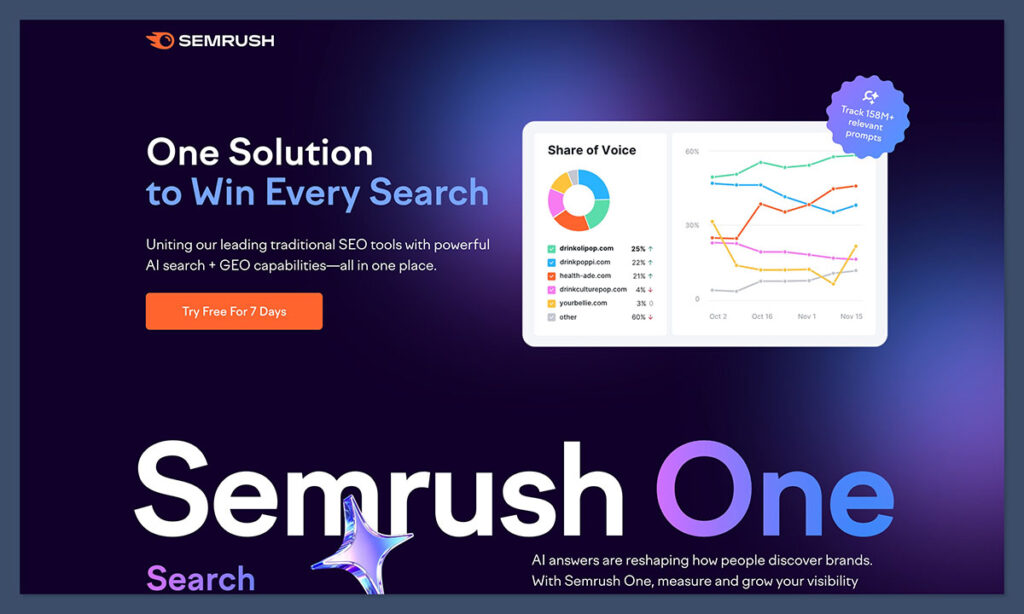
I’ve used Semrush for years – long before it started adding AI features. What I like is that they didn’t just tack AI onto the platform for buzz. They built tools that actually make SEO work faster.
The first is ContentShake AI, which blends SEMRush’s keyword and competitor data with AI writing assistance.
You can brainstorm topics, build outlines, and draft posts that already include ranking keywords. It’s like having your SEO and content planner in one tab.
Then there’s Semrush Copilot, the AI assistant built right into your dashboard. It scans your site audits, backlink reports, and keyword gaps, then suggests exactly what to fix next. It feels like having a strategist quietly pointing out where you’re leaving money on the table.
Pros:
- Combines SEO data with AI writing tools
- Smart recommendations through Copilot
- Keeps everything in one clean interface
- Trusted by marketers for years
Cons:
- Pricing climbs quickly with multiple add-ons
- ContentShake still needs human editing
- Takes time to learn the full toolkit
Pricing: ContentShake starts around $60/month, while full SEMRush plans begin near $139/month.
2. HubSpot AI: Best for CRM and Marketing Automation

I’ve been in the HubSpot ecosystem for a while, mostly for CRM and email. But the new AI features: especially Breeze Assistant and the AI Agents, have turned it into a serious timesaver.
HubSpot Breeze AI works like a smart teammate. It helps me draft blog posts, polish emails, and summarize meeting notes straight inside HubSpot. No need to copy and paste between tools, because it’s all native.
The AI Agents go deeper. They analyze campaigns, look for gaps, and suggest what to fix or test next. It’s like having an extra set of eyes on every report. And when you’re juggling multiple pipelines or lists, that’s gold.
Pros:
- Fully integrated with existing HubSpot tools
- AI writing and summarizing built right into workflows
- Agents surface real, actionable insights
- Great for marketing or sales teams already using HubSpot
Cons:
- Best features locked behind higher plans
- Can be overwhelming for beginners
- Extra seats and contact costs add up fast
Pricing: included in specific HubSpot tiers.
3. AdCreative.ai: Best Overall for Ad Creation and Testing
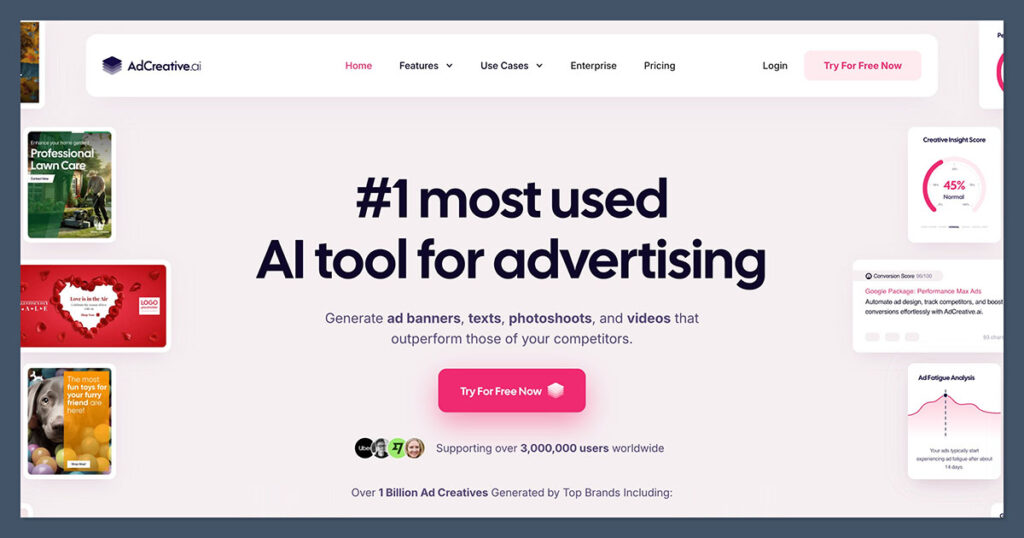
I used to think ad design was the biggest time sink in marketing. Endless resizing, rewriting, and arguing over which version of a headline “felt right.” Then I tried AdCreative.ai, and honestly, it’s been hard to go back.
It’s not another AI gimmick. You drop in your brand details: logo, colors, fonts – and within minutes it spits out a full set of ad creatives that actually look polished. Square posts, stories, display banners, even short videos. Everything’s already sized for each platform.
The clever part is the conversion score. Every creative is rated based on how likely it is to perform, using data pulled from millions of real campaigns. Instead of guessing which ad might work, I can see which ones probably will, before I spend a dime on testing.
The copy tool is solid too. It pulls from frameworks like AIDA and PAS, so the first draft rarely feels robotic. I usually tweak a few words, and it’s ready to ship.
Pros:
- Simple setup and clean interface
- Generates images, copy, and videos fast
- Smart scoring that predicts ad performance
- Great for teams running multiple campaigns
Cons:
- Credit system adds up fast if you download a lot
- Some visuals look a bit too “template”
- Limited control for fine-tuning layouts
Pricing: from $39/month, with a free trial to test the waters.
4. Surfer SEO: Best for Content Optimization
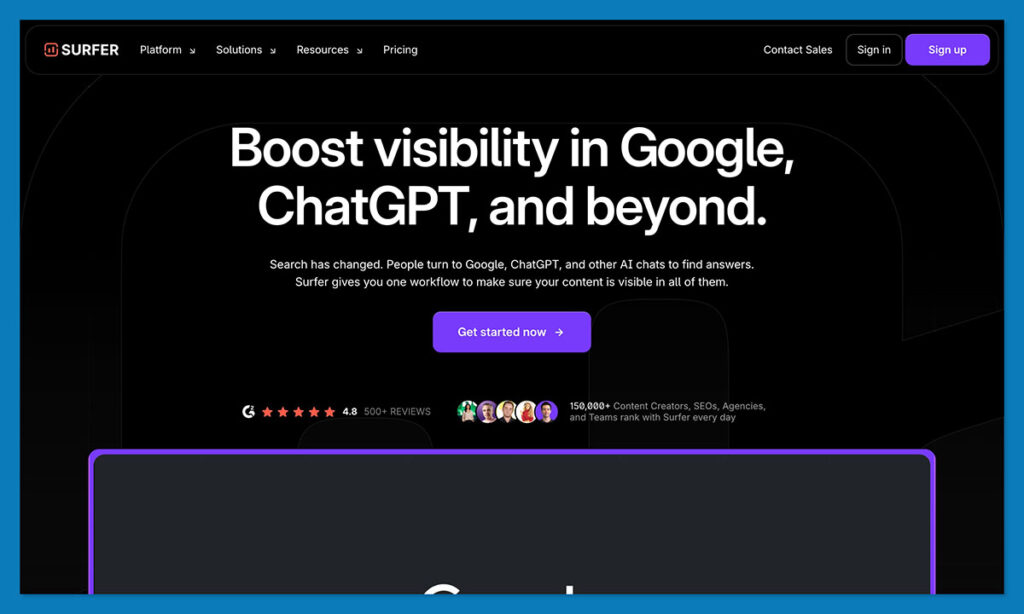
I’ll be honest, I used to rely on gut feeling for SEO. Sometimes it worked, sometimes it tanked. Then I found Surfer SEO, and it turned the whole process into something measurable.
The best way to describe it? Like having a quiet editor who actually knows Google’s mood swings. As I write, Surfer sits off to the side, scoring my draft in real time.
It checks how often I’m using keywords, whether my structure makes sense, and even how readable the piece feels. That little green number becomes oddly addictive.
It’s also great for collaboration. I can share briefs with my team, and we all work toward the same SEO target instead of guessing what “optimized” means. It plugs straight into Google Docs, WordPress, and Jasper, so I never have to bounce between tabs.
Pros:
- Real-time scoring keeps SEO visible as you write
- Helps structure posts around what’s already ranking
- Works with Docs, WordPress, and Jasper
- Clear content guidelines for teams
Cons:
- Can feel mechanical if you chase the score too hard
- Pricing climbs if you manage several sites
- Long drafts sometimes lag a bit
Pricing: from $99/month, with a short free trial.
5. Jasper AI: Best for Copywriting at Scale
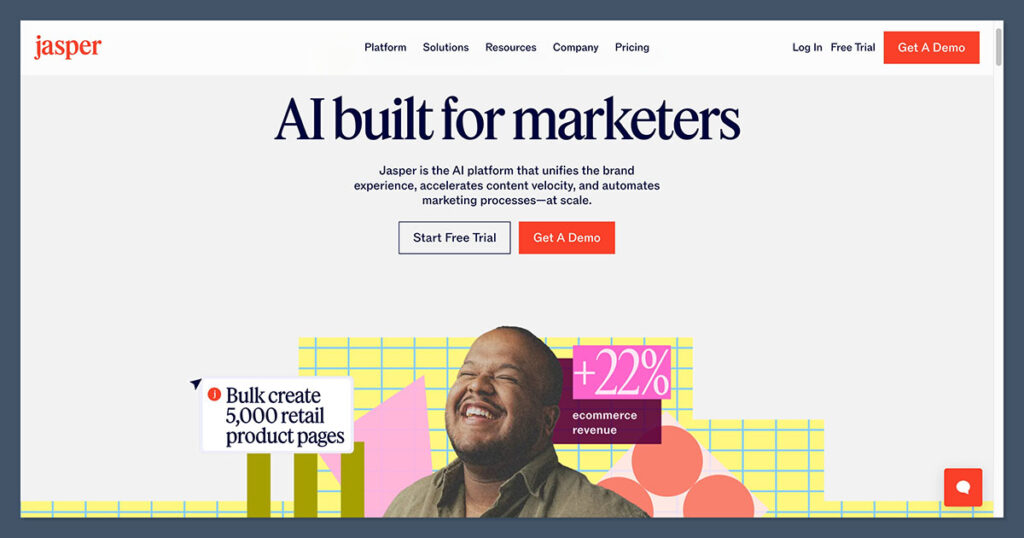
When people first told me about Jasper, I hated the idea. Another “AI copywriter” promising to save me time. But the first week I used it, I wrote an entire email sequence before my second coffee, and I saw the value.
Jasper’s simple. You choose a template, add a short brief, and it spits out multiple options in seconds. Most drafts still need a few human tweaks, but the tone and flow are surprisingly natural. The more you guide it, the better it gets.
The standout feature for me is Brand Voice. Feed it samples of your own writing, and it starts matching your tone – casual, sharp, friendly, whatever you need. When you’re writing for several clients, that’s pure gold.
Pros:
- Captures your tone through Brand Voice training
- Great range of templates for blogs, ads, and emails
- Fast idea generator when you’re stuck
- Team collaboration built in
Cons:
- Needs human editing for polish
- Some outputs can sound too generic
- Premium tiers get pricey for small teams
Pricing: starts at $69/month, with custom Business plans.
6. Originality.ai: Best for AI Detection and Plagiarism Checks
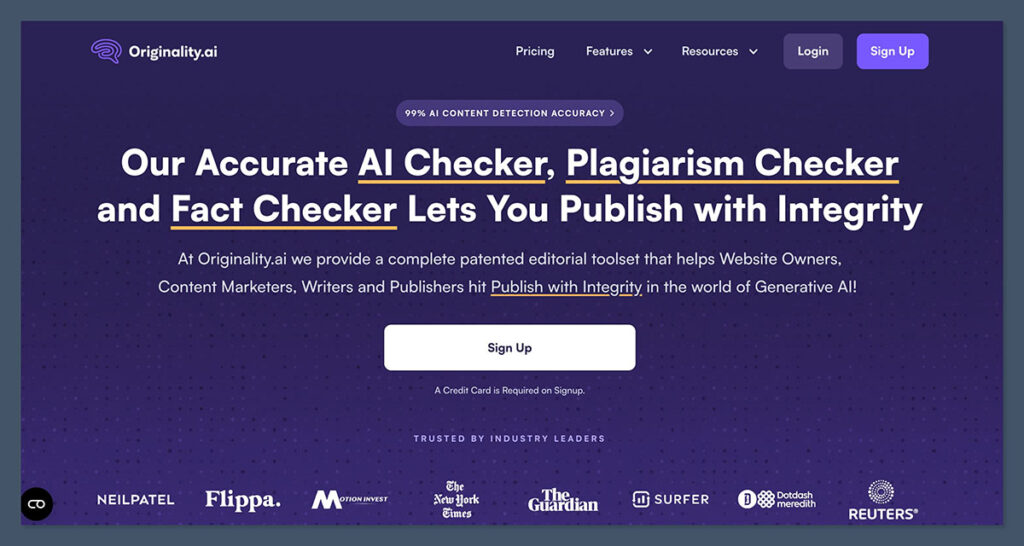
The rise of AI writing has been great for productivity, and a total nightmare for editors. I’ve had freelancers send me work that looked fine at first glance, but something felt off. That’s when I started running everything through Originality.ai.
It’s built to spot AI-generated text and plagiarism in seconds. Just paste your draft, hit scan, and it spits out a detailed report with percentages for human vs. AI writing, plus any copied sections it finds online. It’s quick, reliable, and a lot more accurate than the free detectors floating around.
I mostly use Originality.ai as my last line of defense before publishing guest pieces or outsourced articles. It’s not flawless. Sometimes it flags writing that’s clearly human, but I’ll take a false alert over something that could damage my credibility any day. It’s quick, reliable, and keeps my content process clean.
Pros:
- Detects AI-written and plagiarized content fast
- Works on large batches or single pages
- Easy-to-read reports for editors and writers
- Great for agencies and content teams
Cons:
- Can occasionally mislabel human text
- No deep content editing features
- Credit system adds up with heavy use
Pricing: starts around $14.95/month, based on word credits.
7. Influencity: Best for Influencer Marketing and Campaign Management
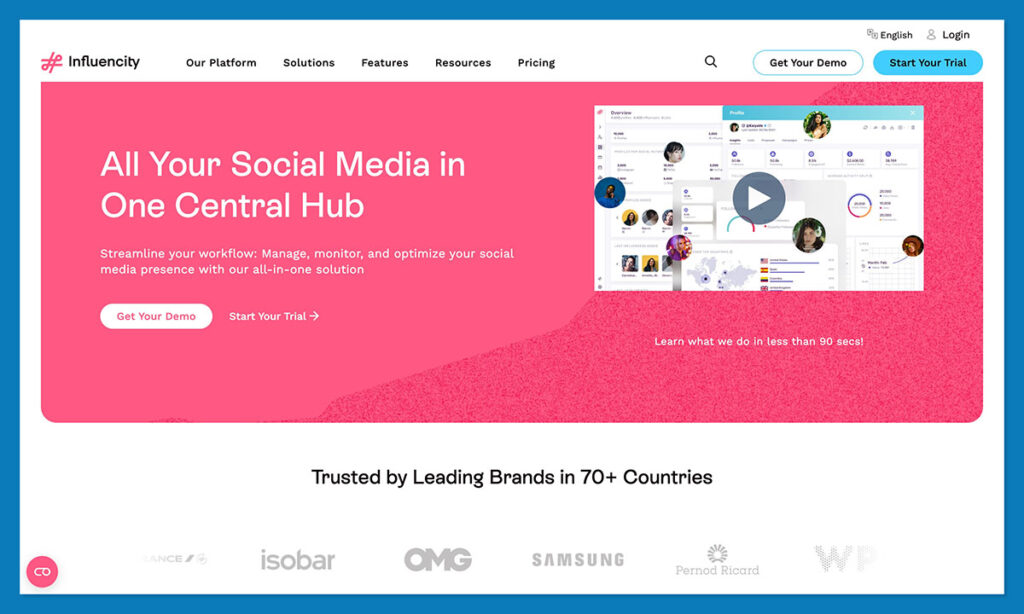
Running influencer campaigns without a proper tool is a nightmare. I used to do it all manually: tracking followers, engagement, and invoices in messy spreadsheets, and it fell apart fast. Influencity was the first platform that made influencer marketing feel less like herding cats.
You start with a massive database. Millions of profiles, across every niche you can imagine. You can filter by engagement quality, audience age, country, even fake follower ratio. It’s not just quantity – it’s insight. I can spot which creators are the real deal before I even send a DM.
Then there’s the campaign management side. Outreach, contracts, tracking, reporting – all in one place. The analytics go deep, showing true reach, ROI, and what’s actually moving the needle.
Pros:
- Huge influencer database with deep filters
- Audience authenticity metrics (spot fake followers fast)
- Built-in outreach and performance tracking
- Clean, visual reports that clients love
Cons:
- Takes a little time to learn the dashboard
- Some data updates lag a few days behind
- Pricing rises with scale and team seats
Pricing: starts around $48/month, depending on plan size.
8. Grammarly: Best for Editing and Tone Control
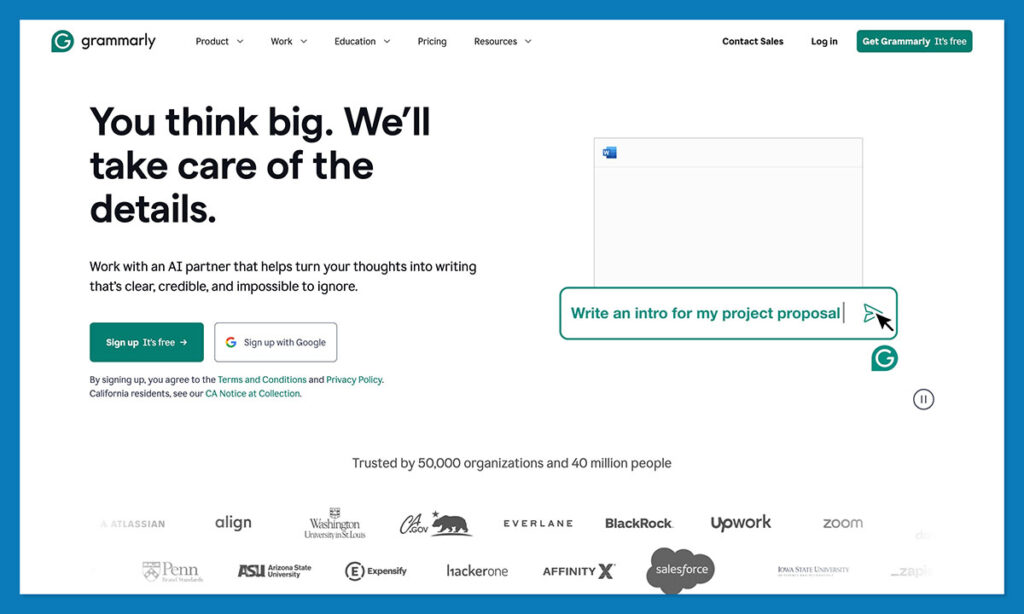
I don’t hit publish without running my work through Grammarly first. It’s not about fixing typos; it’s about catching the small things your eyes start skipping after hours of editing.
What’s made it essential now is the tone detection. It tells me when a paragraph sounds too formal, too relaxed, or just doesn’t fit the brand voice I’m writing for. That’s priceless when I’m switching between clients or writing both blog posts and ad copy in the same afternoon.
The rewrite suggestions don’t always stick, but they nearly always make me pause – and that’s what a real editor should do.
Pros:
- Sharp grammar, spelling, and clarity checks
- Helpful tone analysis for brand consistency
- Works inside browsers, Docs, and email apps
- Easy to use, even on the go
Cons:
- Occasionally overcorrects style choices
- Doesn’t always grasp creative phrasing
- Premium plan needed for advanced tone tools
Pricing: free basic plan; Pro version starts around $12/month.
9. ChatGPT: Best All-Purpose AI Copilot

When ChatGPT first launched, I wasn’t as blown away as everyone else. The early outputs were clunky, generic, and sounded like a robot reading from a script. But these days, it’s one of the tools I open first every morning.
I use it for just about everything, now: brainstorming ad angles, outlining blog posts, rewriting awkward sentences, even checking data sources before I dive into research. The trick is giving it context. The more background I feed it, the more natural the response feels.
Sometimes I’ll draft a section, paste it in, and ask it to make it “sound like me.” Half the time, it nails it. The other half, it gives me a starting point that’s good enough to refine.
Pros:
- Handles writing, ideation, and quick research
- Great for brainstorming and structuring drafts
- Easy to adapt to your tone with good prompts
- Constantly improving with updates
Cons:
- Needs clear instructions to stay on track
- Can sound generic if you rush it
- Internet access limited on free plan
Pricing: free version available; Plus plan at $20/month.
What to Look for in an AI Marketing Tool
After years of testing tools that promised the world and delivered pop-ups, I’ve learned that picking the right AI software isn’t about who shouts the loudest — it’s about what actually fits your workflow.
Here’s what I look for every time:
- Integration, not isolation. A great tool should blend into what you already use, not force you to rebuild your process from scratch.
- Accuracy over flash. Fancy dashboards mean nothing if the data isn’t reliable. Look for tools with proven track records or live performance metrics.
- Control over tone and output. If it writes for you, it should sound like you. Tools that learn your brand voice age better than ones that don’t.
- Transparent pricing. Hidden limits and credit systems are fun until your budget disappears mid-project.
- Active support and updates. The AI landscape moves fast; stagnant tools fall behind quickly.
I always tell clients: test it on one real project. If it saves you time and improves the result, it’s worth keeping. If it just looks impressive in a demo, close the tab.
The AI Marketing Tools That Actually Earned Their Place
After a few years of trial, error, my marketing stack has finally settled into something lean and reliable.
If I had to start over tomorrow, these are the five I’d grab first: AdCreative.ai for fast ad creation, Surfer SEO for ranking smarter, Semrush AI for strategy, ChatGPT for brainstorming, and Grammarly to clean it all up.
The rest depend on your setup – Jasper if you need bulk copy, Influencity for influencer campaigns, HubSpot AI for CRM workflows, and Originality.ai to keep things clean.
The truth is, AI in marketing isn’t the future, it’s already baked into how we work. The tools just make it faster, sharper, and a lot less painful.
If you’re still skeptical? I get it. I was too. But try one of these on your next project, and you’ll see what I mean. You’ll wonder how you ever did marketing without them.

Comments 0 Responses