

OpenAI was spending roughly $15 million a day on Sora inference against about $2.1 million in lifetime in-app purchase revenue, and downloads had already fallen 66% from their November 2025 peak. That is the whole story of why the app is gone, and why several million people now need somewhere else to generate video.
The short answer: Google Veo 3.1 is the closest overall replacement, the only pick here that ships 4K with native audio in one pass. Seedance 2.0 is where most people should actually start, because it holds the #1 spot on the Artificial Analysis Video Arena and its free tier is watermark-free. If you left Sora over price, that is your tool.
We compared 10 Sora AI alternatives on the four things that decide whether a tool survives contact with real work: cost per finished 10-second clip, independent benchmark position, maximum single-generation length, and watermark and commercial rights. Vendor marketing pages were checked against third-party benchmark standings and independent reviews, and every figure that sources disagree on is flagged as disputed rather than smoothed over.
The 10 best Sora alternatives at a glance
- Google Veo 3.1 is the best overall Sora replacement, and the only one with true 4K and native audio.
- Seedance 2.0 is the best value and the only genuinely usable free tier, ranked #1 on the arena.
- Kling 3.0 and O3 are the best for character motion and phoneme-level lip sync.
- HappyHorse 1.1 tops the text-to-video leaderboard, but has no published consumer pricing.
- Runway Gen-4.5 is the best for editing and post-production control inside one suite.
- Hailuo is the cheapest cost per finished clip at roughly $0.30 for 10 seconds at 1080p.
- Luma Ray 3 is the only model shipping 16-bit HDR with EXR export for real color grading.
- Pika is the best for animating stills you already own, and the cheapest clean commercial export.
- Grok Imagine is the fastest route from idea to a posted clip, if you publish on X.
- Wan 2.6 is the self-hosting option, with a licensing status nobody has resolved.
| Tools compared | 10, all capable of generating scenes from text or images with a commercial path |
|---|---|
| Cheapest 10-second clip | ~$0.30 (Hailuo at 1080p), against ~$7.50 for the same clip on Veo Standard |
| Highest benchmark score | 1,287 Elo text-to-video (HappyHorse 1.0) and 1,351 Elo image-to-video (Seedance 2.0) |
| Free tiers without a watermark | 1 of 10. Only Seedance 2.0 exports clean on a free plan |
| Hard migration deadline | September 24, 2026, when the Sora API shuts down for good |
What actually happened to Sora
- Discontinuation announced March 24, 2026; app and web closed April 26, 2026; the API shuts down September 24, 2026.
- An export path exists at sora.chatgpt.com/exports/me, contradicting the “no timeline for data export” claim circulating elsewhere.
- OpenAI has not guaranteed a post-deadline export window. Assume permanent deletion after the cutoff.
- Compute and the Sora research team moved to enterprise coding tools, a ChatGPT “super app,” and robotics-oriented world-model research.
- The planned $1 billion equity-linked Disney character-licensing deal collapsed with it, reportedly on about 30 minutes’ notice.
If anything you run still calls the Sora API, September 24 is a hard date. Export first, migrate second.
Why trust this ranking:
Fritz.ai sells no AI video generator. Every other guide ranking on this query is published by a company that does, so this one treats benchmark scores and vendor claims as signals, not verdicts. Every pick generates scenes from text or images and has a commercial path. Avatar and presenter platforms are out: unlimited talking-head video is not cinematic b-roll.
1. Google Veo 3.1: Best Overall Sora Replacement
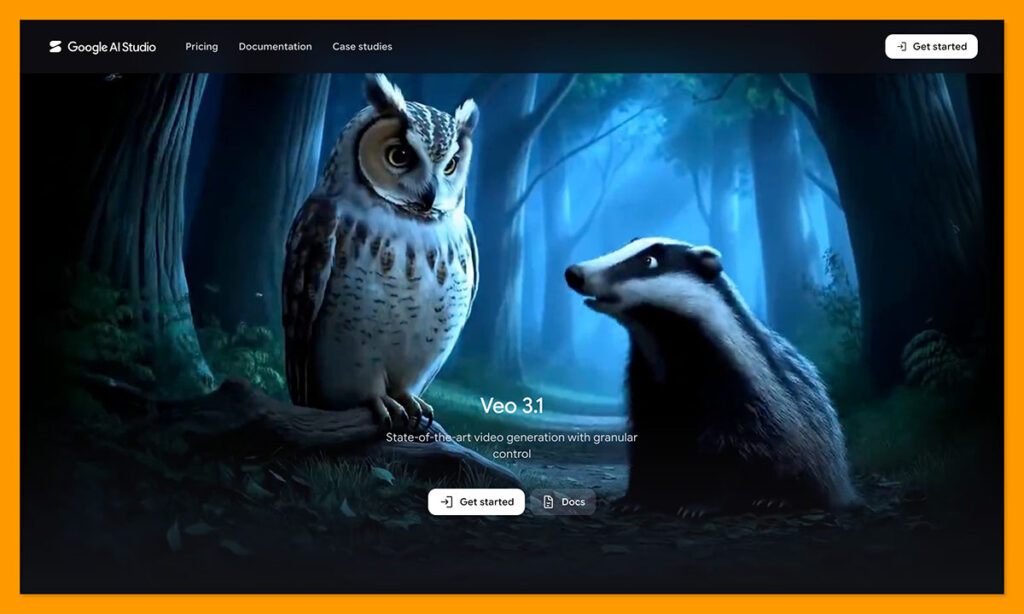
Veo 3.1 is sold as a true 4K model and described elsewhere as a 1080p, 8-second one. Both are half right. The 4K (3840×2160) is real, but one generation caps at 8 seconds at 24fps, and the 148-second figure comes from chained extensions, not a single pass. No 60fps mode has been confirmed.
| Pricing | $19.99-$249.99/month, or about $0.05/second on the Lite API |
|---|---|
| Cost per 10s clip | ~$7.50 at Standard’s ~$0.75/second, the most expensive mainstream option here |
| Independent benchmark | Gemini Omni Flash, 1,246.6 Elo on the Artificial Analysis Video Arena, below HappyHorse and Seedance |
| Watermark and commercial use | SynthID embedded by default, with C2PA metadata attached alongside it |
Key features
- True 4K output (3840×2160) at 24fps
- Native audio generated with the scene
- Extend-video chaining to roughly 148 seconds
- Available via Gemini, AI Studio, Vertex AI, and Flow
Pros
- ✔️ Strongest documented photorealism. Multiple 2026 head-to-heads put Veo first on prompt accuracy.
- ✔️ Audio ships with the shot. No separate sound pass, the biggest workflow saving over Sora.
- ✔️ Durable provenance. SynthID survives cropping, compression, and re-encoding; C2PA headers do not.
Cons
- ❌ Eight seconds per pass. Longer output means chained extensions, which cost more and take longer.
- ❌ The real model sits behind $249.99. AI Premium at $19.99 unlocks only Veo 3.1 Lite.
- ❌ SynthID ships with every clip. Provenance or a blocker, depending on the client.
Pricing tiers
- Free (AI Studio / Flow): small daily Veo quota plus $300 in new Cloud credits. Evaluation only.
- Google AI Premium, $19.99/month: Veo 3.1 Lite, limited generations. Enough to learn the model, not to ship with it.
- Google AI Ultra, $249.99/month: five full-quality videos a day with audio, 20TB storage, 25,000 credits.
Verdict:
Best for creators who want native audio and finished-looking output inside Google’s stack. Skip if you need more than 8 seconds in one pass, or you generate at volume where $7.50 a clip stops being defensible.
2. Seedance 2.0: Best Value and the Most Usable Free Tier
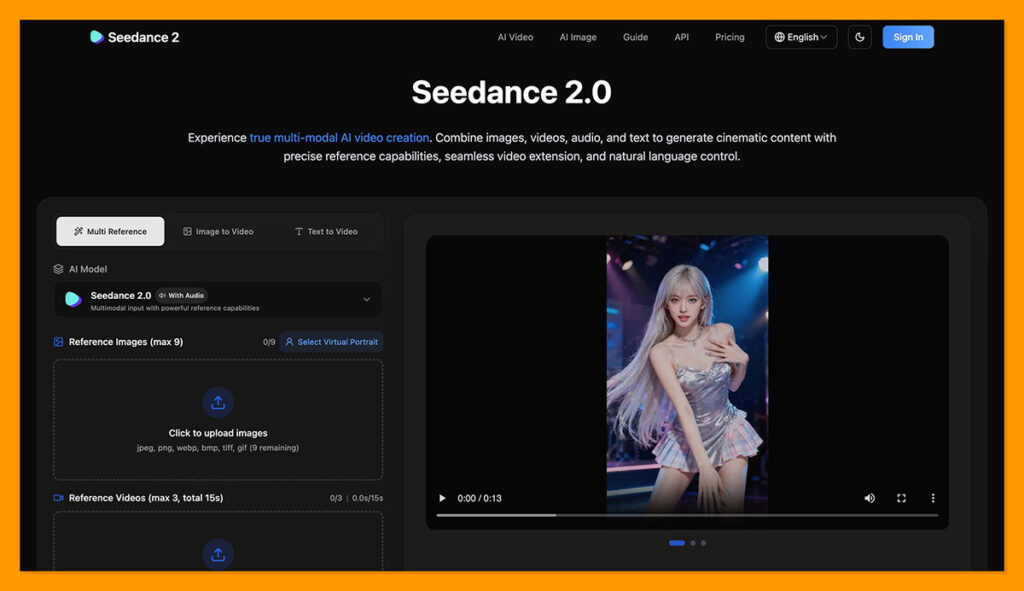
Seedance 2.0 holds the #1 Elo on the Artificial Analysis Video Arena, 1,269 for text-to-video and 1,351 for image-to-video, and its free tier ships without a watermark and refreshes daily. That combination does not exist anywhere else on this list. The complication is access.
| Pricing | Free tier; API ~$0.05-$0.50 per 5-second 720p clip by provider |
|---|---|
| Cost per 10s clip | ~$0.90 on Seedance 2.0 Fast at ~$0.09/second, the cheapest production-quality rate in circulation |
| Independent benchmark | 1,269 Elo text-to-video and 1,351 image-to-video, #1 on Artificial Analysis as of June 2026 |
| Watermark and commercial use | Free tier reported watermark-free with a daily credit refresh |
Key features
- Native audio-visual sync with lipsynced speech
- Identity Lock / Omni Reference for cross-scene character consistency
- Output up to 2K resolution
- Access through BytePlus, Volcengine, fal.ai, PiAPI, and EvoLink
Pros
- ✔️ Top of the leaderboard. First on both the text-to-video and image-to-video boards as of June 2026.
- ✔️ Identity Lock fixes drift. Faces hold across scenes and camera angles, the exact failure Sora users hit stitching a story together.
- ✔️ Cheapest production-quality second. Seedance 2.0 Fast at ~$0.09/second undercuts every paid rival here.
Cons
- ❌ Access is uneven. Sources reported mainland-China-limited availability during parts of the 2026 rollout, and most third-party endpoints still served Seedance 1.5 Pro.
- ❌ Fifteen-second ceiling. Single generations stop there.
- ❌ Tighter filters globally. The international release carries stricter moderation for EU, California, and Asia compliance.
Pricing tiers
- Free tier: watermark-free generations with a daily refresh. The closest thing to Sora’s old free experience.
- Third-party API: ~$0.05-$0.50 per 5-second 720p clip, with EvoLink cited as low as $0.056/second.
- BytePlus or Volcengine direct: the first-party route for production pipelines.
Verdict
If you want Sora’s old price-to-quality ratio and you can get access, start here. Seedance 2.0 launched February 12, 2026 and 2.5 was announced June 23, so confirm what your provider serves.
3. Kling 3.0 and O3: Best for Character Motion and Lip Sync
Kling 3.0 shipped, per-clip credit costs jumped to 90-120 credits, and a visible share of creators went straight back to 2.6 for volume work. A single generation caps at 10 seconds, with 15 seconds cited for standalone runs. The 2-minute and 3-minute figures in circulation are chained extensions, not one pass.
| Pricing | $6.99-$64.99/month, or $0.084-$0.112/second via fal.ai |
|---|---|
| Cost per 10s clip | ~$0.70 at the ~$0.07/second figure used in cost comparisons; fal.ai’s published $0.084-$0.112/second puts it nearer $0.84-$1.12. Cited either way as the paid price-performance leader |
| Independent benchmark | Kling 3.0 1080p Pro at 1,246 Elo, below HappyHorse and Seedance |
| Watermark and commercial use | Paid tiers strip the watermark, with the Pro tier cited as unlocking commercial rights |
Key features
- O3 reasoning tier for the highest-realism output
- Phoneme-level lip sync for multi-character dialogue
- 10-second single generations, chainable toward 3 minutes
- API access through fal.ai
Pros
- ✔️ Best dialogue on this list. Two characters can hold a conversation with each mouth synced phoneme by phoneme.
- ✔️ Cheap per second. Both fal.ai tiers sit well under Veo’s rate.
- ✔️ Motion and performance. Comparisons credit Kling with the strongest cinematic motion and emotional performance.
Cons
- ❌ 3.0 costs 90-120 credits a clip. The jump over 2.6 drove genuine backlash.
- ❌ Strictest moderation of any major model. No NSFW mode, no adult toggle, no API parameter, under China’s Cyberspace Administration rules. Anyone who left Sora over moderation false positives will not find relief here.
- ❌ Entry pricing is quoted two ways. $6.99 and $10 both circulate for the same Standard plan, depending on billing cycle and region.
Pricing tiers
- Standard, $6.99-$10/month: entry access.
- Pro, ~$32.56/month: 3,000 credits, watermark-free, commercial rights cited at this level.
- Premier, $64.99/month: heaviest allowance.
Verdict:
Best for narrative work with people talking on screen. Skip if your subject matter brushes Kling’s filters, or you need predictable costs at volume, where 2.6 remains the answer.
4. HappyHorse 1.1: Top of the Text-to-Video Leaderboard

The model topping the public text-to-video leaderboard is one no other guide describes correctly. One calls it an unreleased Alibaba project. Another calls it a Q1 2026 free beta. Both are wrong.
HappyHorse-1.0 appeared anonymously around April 7, 2026 and immediately topped the Artificial Analysis Video Arena. Alibaba confirmed authorship on April 10, developer API access went live April 27, and 1.1 shipped in June 2026.
| Pricing | Not published as a consumer subscription; access via fal and Alibaba Cloud |
|---|---|
| Cost per 10s clip | Not published. Check current API rates before budgeting. |
| Independent benchmark | 1,287 Elo (1.0) and 1,274 (1.1), the highest text-to-video scores in these standings |
| Watermark and commercial use | Governed by Alibaba Cloud’s API terms, not a consumer plan. Confirm before commercial use. |
Key features
- Highest text-to-video Elo on the arena
- API access through fal and Alibaba Cloud Model Studio
- Developer and enterprise access since April 27, 2026
- Full API coverage since the 1.1 release
Pros
- ✔️ Top of the text-to-video board. 1,287 and 1,274 Elo clear Kling 3.0 Pro (1,246), Gemini Omni Flash (1,246.6), and Seedance 2.0 720p (1,225 T2V / 1,197 I2V).
- ✔️ Real and shipping. Confirmed by CNBC and Bloomberg in April 2026, not a rumor.
- ✔️ Clean developer path. Two established API routes rather than a waitlist.
Cons
- ❌ No published consumer pricing. Nothing to weigh against a $10 subscription.
- ❌ Thin tooling. Documentation, community tutorials, and plugin support lag Veo, Kling, and Runway.
- ❌ The newer version scores lower. 1.1 sits 13 points below 1.0 with no public explanation.
Pricing tiers
- Free: none published.
- Developer API via fal: live; check the published rate.
- Alibaba Cloud Model Studio: full 1.1 access for enterprise pipelines.
Quick comparison:
HappyHorse leads text-to-video; Seedance leads image-to-video at 1,351 and wins the workflow outright on consumer access, free tier, and tooling. On an API, that gap matters much less.
5. Runway Gen-4.5: Best for Editing and Post-Production Control
Nobody can tell you what a second of Gen-4.5 costs. Sources put it at 12 credits per second and at 25, and the difference decides whether an entry plan buys you a minute of video or twenty-five seconds.
| Pricing | $12/user/month billed annually on Standard; the $15 figure elsewhere is the monthly-billed rate |
|---|---|
| Cost per 10s clip | Disputed. Comparisons cite ~$1.20; at 25 credits/second the Standard plan’s 625 credits yield roughly 25 seconds of video a month. |
| Independent benchmark | No Elo published in these standings; Seedance 2.0 is reported ahead of Gen-4.5 |
| Watermark and commercial use | Watermark-free export requires a paid tier |
Key features
- Editing and creative-control tooling wrapped around the generator
- 625 monthly credits on the entry Standard plan
- Established production integrations and team workflows
- Gen-4.5 generation inside the wider Runway suite
Pros
- ✔️ The suite, not the model. Editing and iteration tooling is why production teams stay.
- ✔️ Cinematic quality holds up. An independent Seedance review concedes Runway edges Seedance on cinematic output.
- ✔️ Low entry price. $12/month annual sits below Grok Imagine and Google AI Ultra.
Cons
- ❌ The credit rate is unresolved. 12 versus 25 credits per second is a 2x budgeting error waiting to happen.
- ❌ Credits vanish fast. Users report burning $15+ just to get a character to walk across frame without artifacts.
- ❌ Twenty-five seconds a month. That is the entry plan’s whole output on the worse assumption.
Pricing tiers
- Free: exports carry a watermark. A trial, not a production tier.
- Standard, $12/user/month annual: 625 credits and watermark-free export.
- Higher tiers: larger credit pools for teams.
Verdict:
Worth it if you are editing inside one professional suite and per-clip cost is somebody else’s line item. Otherwise buy a month before you buy a year.
6. Hailuo: The Cheapest Cost Per Finished Clip
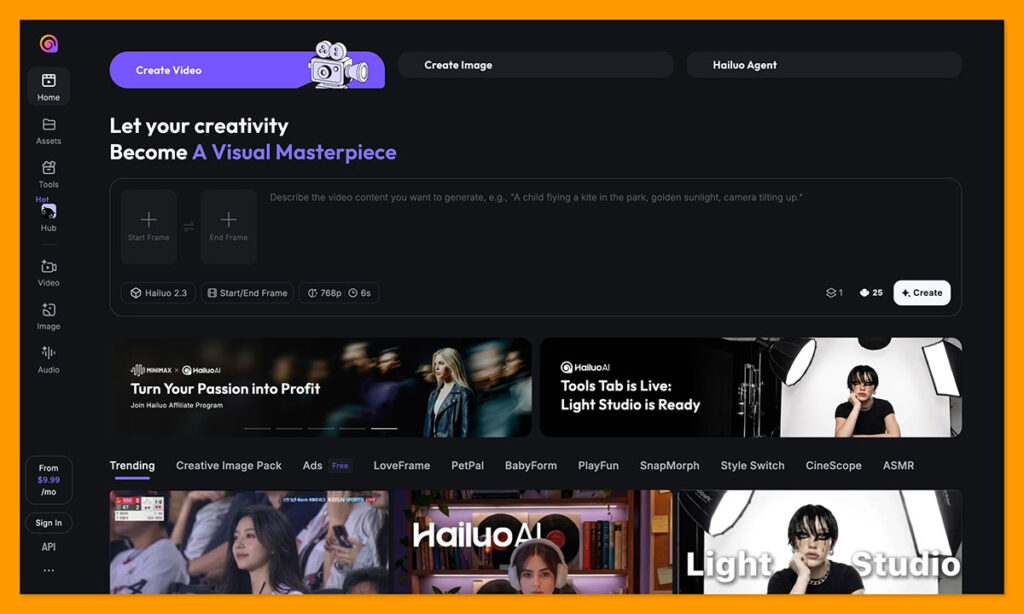
About $0.30 for a 10-second 1080p clip, against roughly $1.20 for the same clip on Runway. If you are producing variants rather than masterpieces, that ratio is the entire argument for MiniMax’s Hailuo.
| Pricing | $9.99-$199.99/month |
|---|---|
| Cost per 10s clip | ~$0.30 at 1080p, roughly a quarter of Runway’s cited rate |
| Independent benchmark | Not ranked alongside Seedance, Kling, and HappyHorse on Artificial Analysis |
| Watermark and commercial use | Not documented in the sources reviewed. Confirm export terms on your plan before commercial delivery. |
Key features
- 1,000 credits on the $9.99 Standard plan
- 5-10 credits for a typical 6-second 1080p clip
- Daily free credits without a subscription
- Global availability with an English interface
Pros
- ✔️ Cheapest finished clip here. Roughly $0.30 per 10-second 1080p generation.
- ✔️ Variant strategy becomes affordable. Campaigns commonly run 50-100 variants to test hooks and CTAs.
- ✔️ Free tier beats Runway’s. Daily credits, no subscription needed.
- ✔️ No regional workaround. Globally accessible in English, alongside Kling, Vidu, and PixVerse.
Cons
- ❌ No benchmark visibility. Hailuo does not appear in the Artificial Analysis standings, so no equal-footing quality claim against Seedance or Kling is possible.
- ❌ Credit burn scales. Higher resolutions and longer clips erode the cheap entry price.
- ❌ Heavy use needs the $94.99 or $199.99 plans.
Pricing tiers
- Free: daily credits, more generous than Runway’s.
- Standard, $9.99/month: 1,000 credits, roughly 100 to 200 six-second 1080p clips.
- Unlimited $94.99 / Max $199.99: continuous production volume.
Verdict:
Best for high-volume social and ad testing where you need 30 usable clips, not one perfect one. Skip if the shot is the deliverable and quality is judged frame by frame.
7. Luma Ray 3: Best for HDR and Professional Color Work

Ray 3 is the only mainstream video model shipping native 16-bit HDR output with EXR export. Every other tool in this guide hands your colorist flat 8-bit footage. A 16-bit pipeline preserves highlight and shadow detail through a real grade, which decides whether AI footage can sit in a commercial timeline.
| Pricing | $9.99-$300/month |
|---|---|
| Cost per 10s clip | 1,200 credits at 1080p, more than a third of Lite’s entire 3,200-credit month |
| Independent benchmark | Not ranked in the Artificial Analysis standings cited above |
| Watermark and commercial use | Free tier watermarked and non-commercial; Lite at $9.99 is still watermarked |
Key features
- Native 16-bit HDR output with EXR export
- Branded by Luma as the first “reasoning” video model
- Ladder from $9.99 to $300/month
- About 30 free generations a month for evaluation
Pros
- ✔️ Grade-ready output. EXR export drops straight into a professional color pipeline.
- ✔️ Genuinely unique capability. No other pick in this guide offers 16-bit HDR.
- ✔️ The ladder has real steps. Hobbyist to studio.
Cons
- ❌ HDR doubles the cost. A 5-second 720p clip runs 100 credits standard and 200 in HDR mode.
- ❌ 1080p at 10 seconds costs 1,200 credits. The differentiator is expensive to use.
- ❌ Serious commercial work starts at $90-$300/month. Above every other pick here.
Pricing tiers
- Free: about 30 watermarked, non-commercial generations a month.
- Lite, $9.99/month: 3,200 credits, still watermarked. Fine for tests, not delivery.
- Ultra, $300/month: 15x the Plus allowance, for studios running HDR.
Quick comparison:
Veo 3.1 gives you 4K and native audio, Ray 3 gives bit depth a colorist can work with. Pick the definition of quality your deliverable is graded against.
8. Pika: Best for Animating Images You Already Have
One 10-second 1080p clip costs 80 credits on Pika. The free tier gives you 80 credits a month. Your entire free allocation, gone in a single generation.
| Pricing | Free, or $8-$10/month on Standard |
|---|---|
| Cost per 10s clip | 80 credits at 1080p, roughly $1 out of the Standard plan’s 700-credit allowance |
| Independent benchmark | Not ranked in the Artificial Analysis standings cited above |
| Watermark and commercial use | Free tier is 480p and watermarked; Standard removes the watermark and permits commercial use |
Key features
- Image and clip animation rather than free-form scene generation
- Stylized editing effects on existing footage
- All resolutions unlocked on Standard
- 700 monthly credits on the entry paid plan
Pros
- ✔️ Cheapest clean commercial output here. $8-$10/month buys watermark-free, commercially usable exports.
- ✔️ Purpose-built for animating stills. Product shots, illustrations, and existing footage are the sweet spot.
- ✔️ No resolution gate once you pay. Standard unlocks everything.
Cons
- ❌ The free tier is a demo. 80 credits at 480p, watermarked: one 1080p clip’s worth of budget.
- ❌ Credits do not roll over. Unused allocation is lost at each billing reset.
- ❌ Not a Sora replacement. Text-prompt scene generation is not what this tool is built for.
Pricing tiers
- Free: 80 credits a month at 480p, watermarked.
- Standard, $8-$10/month: 700 credits, all resolutions, no watermark, commercial use.
- Fancy, 6,000 credits/month: roughly 150 clips, for continuous output.
Verdict:
Best for anyone with a library of stills, product shots, or clips that need motion on a small budget. Skip if you need scenes from a text prompt.
9. Grok Imagine: Fastest Route From Idea to Posted Clip
Grok Imagine is the shortest path from idea to posted clip on this list. It also stopped being free on March 19, 2026, which is not how most roundups still describe it. Access now requires a paid xAI plan, which disqualifies it from any free-alternative shortlist.
| Pricing | $30/month (SuperGrok) or $40/month (X Premium+); API at $0.08/second output |
|---|---|
| Cost per 10s clip | ~$0.80 via API at $0.08/second, with 720p video input billed at $0.14/second |
| Independent benchmark | Not ranked in the Artificial Analysis standings cited above |
| Watermark and commercial use | Not documented in the sources reviewed. Confirm xAI’s current terms before commercial delivery. |
Key features
- 720p clips up to 15 seconds
- Video Extend to 30 seconds total
- Image-to-video across the main surfaces
- Direct publishing into X
Pros
- ✔️ Generate and distribute in one loop. Tight X integration removes the export-and-upload step.
- ✔️ Transparent API pricing. $0.08/second output, not buried in credits.
- ✔️ Extend reaches 30 seconds. Longer than Veo’s single pass, with no chaining logic to build.
Cons
- ❌ No longer free. Image and video generation went paid March 19, 2026.
- ❌ 720p ceiling. Below Veo, Kling, and Seedance on resolution.
- ❌ Text-to-video is not guaranteed. Availability depends on the product surface.
Pricing tiers
- Free: none since March 19, 2026.
- SuperGrok, $30/month: the entry route.
- X Premium+, $40/month: adds X platform benefits.
Verdict
Worth the subscription only if you already publish on X and speed beats resolution. Paying $30 a month purely to generate video, Kling or Seedance give you more for less.
10. Wan 2.6: The Self-Hosting Option, With a Licensing Caveat
The open-source pick on most Sora-alternative lists may not be open source. As of July 2026, nobody has settled whether Wan 2.6’s weights were ever published.
Some sources call it Apache 2.0 and freely self-hostable. Others report a closed, API-only release through Alibaba Cloud Bailian, with weights never posted to HuggingFace, GitHub, or ModelScope. Public reporting does not resolve it.
| Pricing | Free if self-hosted and licensed for it; ~$0.50 per 10-second clip via cloud providers |
|---|---|
| Cost per 10s clip | ~$0.50 through hosted providers, or GPU time on the confirmed-open Wan 2.2 |
| Independent benchmark | Not ranked in the Artificial Analysis standings |
| Watermark and commercial use | Disputed. Wan 2.2’s open license is confirmed; 2.6’s terms are not. |
Key features
- Wan 2.2 confirmed open-source and locally deployable
- Wan 2.6 and 2.7 on OpenRouter
- Alibaba Cloud Bailian as the first-party route
- Model-level control on your own GPUs
Pros
- ✔️ A confirmed open version exists. Wan 2.2 deploys locally today.
- ✔️ Among the cheapest hosted rates. Roughly $0.50 for a 10-second clip.
- ✔️ Available either way. OpenRouter’s launch lineup carried both 2.6 and 2.7.
Cons
- ❌ The license question is open. Apache 2.0 versus closed API-only, weights unconfirmed.
- ❌ “Free” has a hardware prerequisite. Self-hosting costs GPU and deployment time.
- ❌ No consumer product. No app, no free tier, no support desk.
Pricing tiers
- Self-hosted (Wan 2.2): no license fee, GPU and setup time instead.
- Hosted API: about $0.50 per 10-second clip.
- OpenRouter: unified access, seven video models at launch.
Verdict
Best for technical teams already running GPUs that want model-level control. Skip if you want a product rather than a deployment, or need a clear commercial license.
How the 10 Sora Alternatives Compare
| Tool | Best for | Entry price | Cost per 10s clip | Max single-generation clip | Watermark and commercial use |
|---|---|---|---|---|---|
| Google Veo 3.1 | Overall replacement | $19.99/mo | ~$7.50 | 8s | SynthID by default |
| Seedance 2.0 | Value, free access | Free | ~$0.90 | 15s | Free tier watermark-free |
| Kling 3.0 / O3 | Motion and lip sync | $6.99-$10/mo | ~$0.70 | 10s (15s cited) | Paid tiers strip it |
| HappyHorse 1.1 | Benchmark quality | Not published | Not published | Not published | Alibaba Cloud terms |
| Runway Gen-4.5 | Editing and post | $12/mo annual | Disputed (~$1.20) | Not published | Paid tier required |
| Hailuo | Cost per clip | $9.99/mo | ~$0.30 | Not published | Not documented |
| Luma Ray 3 | HDR color work | $9.99/mo | 1,200 credits | Not published | Watermarked on Free/Lite |
| Pika | Animating stills | $8-$10/mo | ~$1 | Not published | Standard removes it |
| Grok Imagine | Speed to post on X | $30/mo | ~$0.80 (API) | 15s (30s extended) | Not documented |
| Wan 2.6 | Self-hosting | Free if self-hosted | ~$0.50 | Not published | Disputed |
Sora Alternatives: Frequently Asked Questions
When exactly did Sora shut down, and can I still get my videos out?
OpenAI announced the discontinuation on March 24, 2026, closed the app and web experience on April 26, 2026, and shuts the API down on September 24, 2026. Export through sora.chatgpt.com/exports/me, or pull videos individually from the library. No post-deadline export window was guaranteed, so assume permanent deletion after the cutoff.
What is the best free Sora alternative?
Seedance 2.0’s free tier is the strongest: watermark-free with a daily refresh. Google AI Studio and Flow give a small daily Veo quota, Pika gives 80 credits a month (roughly one 1080p clip), and Hailuo’s daily free credits beat Runway’s. None replicates Sora’s old free consumer experience, and Grok Imagine is no longer free.
Which Sora alternative is best overall right now?
It forks by job. Seedance 2.0 for value and free access, Veo 3.1 for polish and native audio inside Google’s stack, Kling 3.0 for character dialogue, HappyHorse 1.1 for raw leaderboard position. Among the best AI video generators of 2026, no tool wins every category, and leaderboard rank is a signal, not a verdict.
Can I use these videos commercially, and will they be watermarked?
Watermark-free commercial export generally requires a paid tier. Pika Standard at $8-$10/month is the cheapest route; Runway and Kling Pro strip watermarks on paid plans. Google’s SynthID is embedded in Veo output by default and survives cropping, compression, and re-encoding, unlike C2PA metadata, which is trivially strippable. Whether your content trains a vendor’s model is not consistently disclosed, so check each platform’s terms.
Is there an open-source Sora alternative I can self-host?
Wan 2.2 is confirmed fully open-source and locally deployable. Wan 2.6’s status is disputed: some sources call it Apache 2.0, others describe a closed API-only release with weights never published. Do not assume 2.6 is self-hostable without checking Alibaba’s terms. Self-hosting is only free once you own the GPU.
How do I migrate a Sora API workflow before September 24, 2026?
Inventory your current Sora calls and parameters first. Evaluate an aggregator such as OpenRouter, which already serves Seedance 2.0, 2.0 Fast and 1.5 Pro, Veo 3.1, and Wan 2.6 and 2.7 under one API. Benchmark equivalent prompts across two or three candidates for cost and quality. Re-test moderation edge cases; filter behavior differs sharply by vendor.
Why did OpenAI kill Sora if it was so popular?
Economics first: roughly $15 million a day in inference cost against about $2.1 million in lifetime revenue, plus a 66% download decline from the November 2025 peak. Strategy second: compute went to enterprise tools, a ChatGPT super app, and world-model research. Johns Hopkins’ Anton Dahbura attributes the decision to financial, strategic, and reputational factors together.

Comments 0 Responses