

At this stage, I’ve used far more AI and plagiarism detection tools than I really feel comfortable with. I wish we lived in a world where people were automatically too “ethical” to copy someone else’s work, or delegate their latest essay to ChatGPT, but here we are.
Turnitin is actually one of the better tools I’ve tried, especially for academic institutions. It’s made for the educational industry, pretty good at detecting both machine-generated text and “borrowed” work, and it integrates automatically with your LMS system. All good things.
Still, it’s definitely not the best option for everyone. If you want multilingual detection, better help finding out when students might have got too much “support” from an AI tool, or at the very least, fewer false positives, there are definitely better alternatives.
These are the ones I’d actually recommend.
How I Tested These Turnitin Alternatives
I had a pretty specific audience in mind for this comparison. Turnitin is very closely tied to institutional workflows, so I assumed people looking for a “competitor” would want something with similar features, like LMS integrations and vast database access. Plus, I was guessing they’d be hoping for a plagiarism and AI detection tool in one. Not every tool does that.
But I also wanted to find tools that fixed the problems Turnitin still has, like the “false positive” rate (which can be shockingly bad), and the fact that the text-matching feature isn’t ideal at distinguishing “similar” text from “completely copied paragraphs”.
To get the best overview, I did my usual experiment, running different types of text: human-written, human and machine-assisted, copied, paraphrased, and completely unique through about ten different tools. Then I narrowed down a list of “winners” based on what I thought would matter most to people not quite getting enough value from Turnitin.
This is the shortlist I ended up with:
| Tool | AI detection | Plagiarism detection | Best for | Biggest strength |
|---|---|---|---|---|
| Pangram | Yes | Yes | Teachers, moderation teams, high-stakes review | Best balance of accuracy and restraint |
| Originality.AI | Yes | Yes | Content teams, publishers, agencies | Strong workflow and site scanning |
| Scribbr | Yes | Yes | Students and academic writers | Strong plagiarism-first workflow |
| GPTZero | Yes | Yes | Teachers, students, budget-conscious users | Easy to try, widely used in education |
1. Pangram: Best overall Turnitin alternative
Starting price: Free trial; paid plans from $20/month
AI writing detection: Yes
Plagiarism detection: Yes
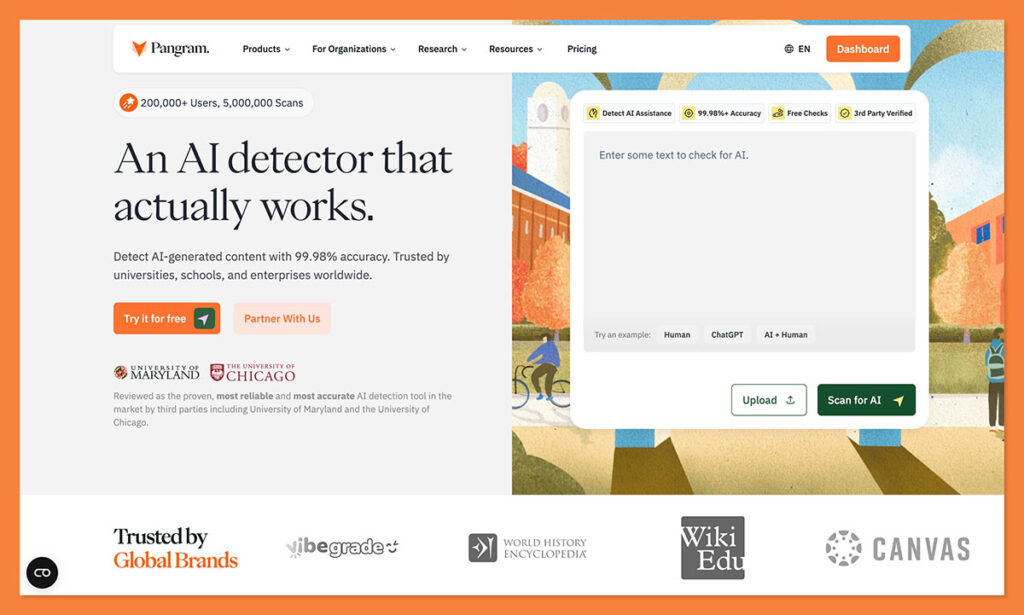
If you ask me, Pangram doesn’t get nearly as much credit as it should. I know it’s been mentioned in a lot of news reports, and some pretty impressive institutions trust it, but it still sometimes falls under the radar. Maybe because it’s not as aggressive with advertising as something like Originality.ai.
That hasn’t stopped it from becoming my favorite AI detector, and one of the tools I prefer for pinpointing plagiarism, though. What I love about Pangram is that it doesn’t build its whole identity around the ability to sniff out AI or copied text. The platform can do both of those things very well, even better than a lot of mainstream alternatives in some cases. It can even see when text has been written with AI assisted, or when human text is mixed in with machine-built content.
Still, the bigger focus is on ethical accuracy. Pangram doesn’t just flag everything that might look a tiny bit robotic. It’s proud of its practically non-existent false positive score. Really, it’s earned the right to be at a time when so many other tools seem to think people prefer confirmation of their assumption that “everything” is AI.
Beyond that, Pangram has all the product features most people looking at Turnitin alternatives would be concerned about. AI and plagiarism detection, integrations with Chrome, Google Docs, and education-focused tools, API access, and support for up to 20 languages.
There’s even a free plan where you get 4 credits you can use a day to test it out.
Pros
- Best false-positive profile in this roundup
- Strong on rewritten and AI-assisted text
- Great fit for education and moderation
- Strong independent backing
- Really easy to use
Cons
- Free usage is limited
- Short passages are still trickier
Best for: Teachers, trust teams, moderation workflows, and anyone who wants a detector that doesn’t seem overly keen to accuse everyone.
2. Originality.AI: Best for content teams
Starting price: $14.95/month or $30 pay as you go
AI writing detection: Yes
Plagiarism detection: Yes
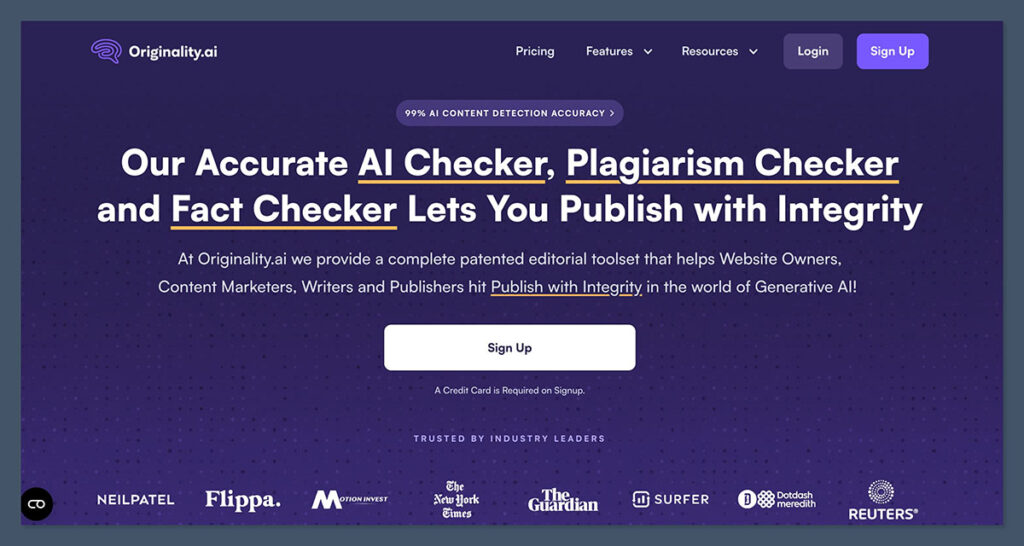
Originality.AI was my go-to AI detector for a while, just because it was so well-trusted, and so convenient. In its defense, it can be very accurate at detecting machine-written content, and it bundles plagiarism detection and readability insights into scans, too. That’s actually more than you’d get from Turnitin in general.
Another really good thing about Originality.ai is that you can check a lot of content very quickly. There’s an URL scanner for checking live pages or entire websites at once. You’ve got a Chrome extension and WordPress plugin too. You can also access collaboration tools if you’re moderating or reviewing content as part of a team.
The thing that’s been causing me to fall more “out of love” with Originality.ai over the years, though, is its problem with flagging false positives. I’ve never had trouble using it to flag obvious machine-written copy, but I have also seen it claim pieces of content from 2017 (before ChatGPT) might have been AI-generated. That makes it a bit harder to trust.
I also don’t think the insights you get from Originality are as useful as you could be. You mostly get color-coded highlights showing you how likely something is to be AI, or copied, but not a lot of explanation as to “why”.
That’s another issue because, generally, if I’m going to accuse someone of using a bot, or stealing content, I want some proof to point to, particularly with a tool that I know might not be 100% accurate.
Pros
- Great for agencies and publishers
- Site Scan and WordPress integrations are genuinely useful
- Good collaboration and workflow controls
- Very good at finding obvious machine-generated content
- Includes plagiarism and readability checks
Cons
- More expensive than some alternatives
- False positives are more common
- Not the best reports.
Best for: Content teams that need speed, collaboration, and website-level scanning, but still don’t mind using their own human judgment.
3. Scribbr: Best for plagiarism-first academic checking
Starting price: Pay per document
AI writing detection: Yes
Plagiarism detection: Yes
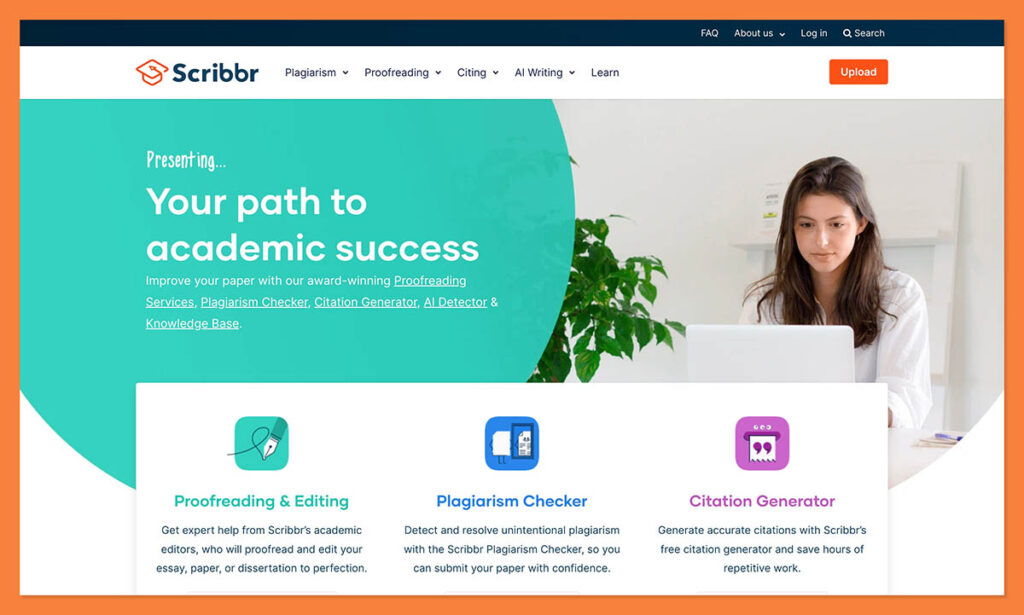
Scribbr is a lot closer to Turnitin than a lot of these other tools. It actually uses the Turnitin database for its plagiarism checks, in fact. It does offer a few other things you won’t get from Turnitin, though, such as a team of human editors who can actually proofread your academic documents and comprehensive citation tools.
For all of those things, Scribbr is excellent. It also stands out on this list because it’s one of the few tools to promise strong data protection. Nothing you send to the team or system will be stored or sold to third parties, which is important in education.
The AI detection tools are a lot more basic than what you’d get from something like Pangram or Originality.ai, but they’re decent enough with clearly GPT-inspired content. They’re just not quite as accurate as they could be, whether you’re worried about false negatives or false positives.
The other problem with Scribbr is that it’s expensive. There aren’t a lot of free tools here; you have to pay for each document you check, which can cost between $20 and $40. It’s also not exactly fast, particularly if you need a human to double-check things.
I do like Scribbr’s commitment to keeping human judgment in the picture with these sorts of things, but I can’t see it being ideal for everyone.
Pros
- Strong plagiarism-first workflow
- Good fit for essays, papers, and dissertations
- Actual expert support from proofreaders available
- Useful academic support tools
- Clear privacy and originality positioning
Cons
- Pay-per-check pricing adds up
- Less suited to teams or high-volume review
- Basic AI detection
Best for: Students and academic writers doing a serious originality check before handing work in, or anyone who needs help with citations.
4. GPTZero: Best free starting point for education
Starting price: Free plan available
AI writing detection: Yes
Plagiarism detection: Yes
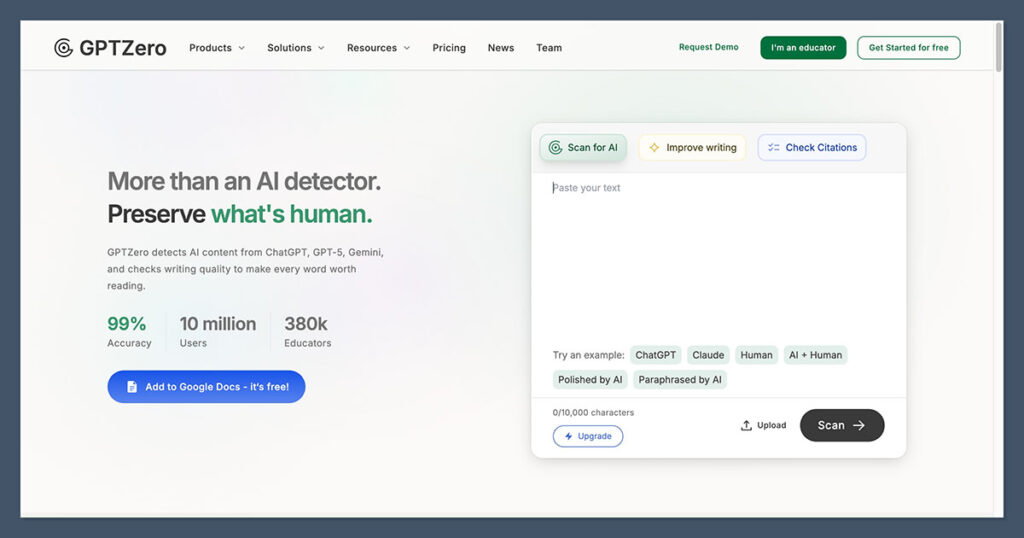
GPTZero is another tool similar to Originality.AI that I’ve ended up using quite a lot in the last couple of years, even if I don’t totally trust it. The accuracy scores are pretty variable, going anywhere from 85% to 99% depending on the style of text, the length, and a bunch of other things.
Still, it does have lower false positive rates than some of the other options out there (even if it can’t compete with Pangram on that front). It also gives you a pretty detailed analysis when it finds something that might have been machine-written.
I think the main thing that draws people to GPTZero, though, is how accessible it is. The free plan is surprisingly generous, supporting up to 10,000 words per month, and you can’t argue that it’s not easy to use. Plus, it’s an official partner of the American Federation of Teachers, so you can tell the company cares about the education industry.
I just can’t really put this tool in the same league as something like Pangram or Originality.AI. There are too many downsides, from the language limitations to the fact that it always seems to struggle to detect writing that’s been paraphrased, rewritten, or “humanized”. It’s also not the most effective option out there for plagiarism detection, compared to Turnitin.
Pros
- Generous free plan available
- Very easy to try
- Reasonably low level of false positives
- Strong education adoption
- Helpful sentence-level analysis
Cons
- Struggles with humanized AI text
- Not the best for plagiarism detection
- Language limitations and short text issues
Best for: Teachers and students who want a familiar, low-cost starting point, not something they can rely on without double-checking.
The Best Turnitin Alternative Overall
I obviously did try a few other tools, Winston AI, Copyleaks, Paperpal, and so on, but none of them stood out enough that I wanted to recommend them as an alternative to Turnitin. I ended up with these four because they all did something better than Turnitin in one way or another.
Originality.ai gives you more scalability (and readability checks), GPTZero gives you a generous free starting point, and Scribbr gives you stronger plagiarism detection and real human input. Pangram, ultimately, ended up offering the most value overall.
It’s not just that it handles both plagiarism and AI detection at once, or that it still integrates with educational tools; it’s that it’s easier to use, more convenient, and most importantly, more ethically accurate overall. It feels like the kind of tool you can trust if you’re genuinely looking for insights into who might be cutting corners with content, without accusing everyone of the same bad behavior.
For people in education, publication, or moderation spaces, I think Pangram is the kind of tool you can feel more comfortable using. That’s why I gave it the win.

Comments 0 Responses