

Semrush and ZipTie.dev are two leading tools for tracking brand visibility in AI search, but which one actually wins for generative engine optimization?
We’ve dug into hundreds of data points, independent benchmarks, and hands-on feature breakdowns to bring you a clear recommendation.
Based on our analysis, ZipTie.dev is the stronger pick if your priority is AI search visibility, while Semrush remains the better choice if you need a full SEO suite with AI visibility layered on top.
Semrush vs ZipTie.dev: Quick Verdict
- ZipTie.dev – Best for AI search visibility, ideal for AEO and GEO specialists
- Semrush – Best all-in-one SEO suite with AI visibility built in
In this comparison, I’ll take a closer look at how these two platforms stack up on AI Overview detection, query management, optimization workflows, pricing, evidence capture, and more, so you can pick the right fit for your team.
Quick Comparison: Semrush vs ZipTie.dev
Get a quick overview of how Semrush and ZipTie.dev compare across the areas that matter most for AI search visibility:
| Feature | Semrush | ZipTie.dev |
|---|---|---|
| Core focus | Full SEO and SEM suite with AI visibility add-on | AI search and GEO monitoring specialist |
| AI engines tracked | Google AI Overviews, Google AI Mode, ChatGPT, other major AI engines | Google AI Overviews, ChatGPT, Perplexity, Claude, and more |
| Traditional SEO data | 25B+ keyword database, backlinks, site audit, rank tracking | Limited; relies on GSC imports and URL-based estimates |
| AI Overview detection | Lower detection rate in independent tests | Up to 17x higher detection on the same keyword sets |
| Evidence capture | No native screenshot capture of AI Overviews | Full response storage, source lists, and screenshots |
| Seat model | Multi-seat friendly, extra users available as add-on | Single-seat restriction on all standard plans |
| Starting price | AI Toolkit from $99/month as add-on | Basic from around $69/month |
Best for Pricing: ZipTie.dev
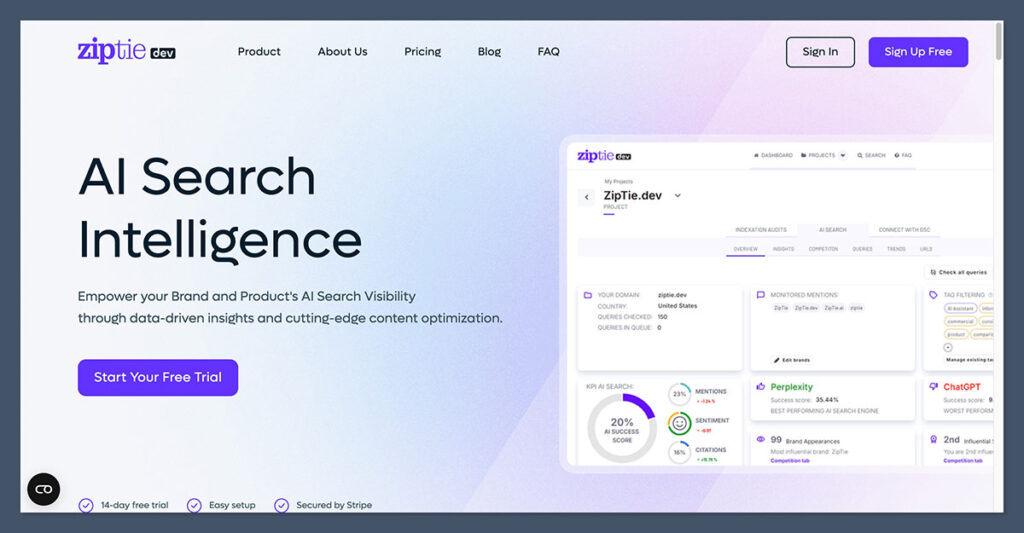
If you’re looking strictly at entry price for AI visibility monitoring, ZipTie.dev is the more accessible option. Its Basic plan starts around $69 per month, which covers 500 checks across three AI platforms.
Standard sits at $99 per month for 1,000 checks, and Pro comes in at $159 per month for 2,000 checks plus 100 AI summaries.
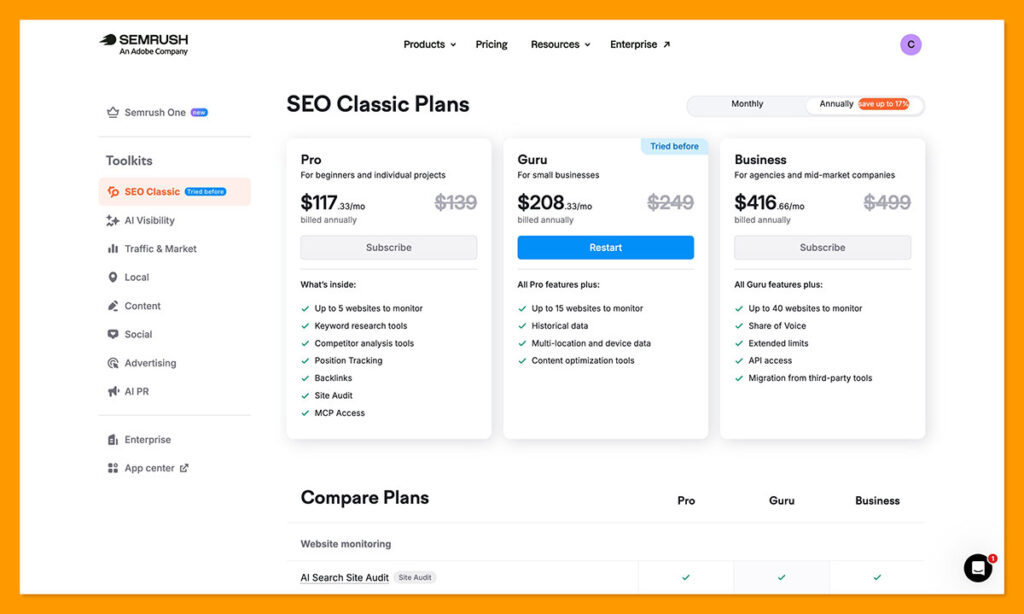
Semrush’s AI Toolkit starts at $99 per month for one domain and 25 prompts, but that’s typically sold as an add-on.
If you want the full Semrush One bundle, pricing starts at $199 per month and climbs from there. Extras add up fast: expect roughly $99 per additional domain, $60 per 100 extra prompts, $99 per extra user, and another $60 per month if you want the Content Toolkit.
The catch with ZipTie is its strict single-seat restriction on all standard plans, even at the Pro tier. If you’re running an agency or a multi-person in-house team, that limitation gets expensive quickly, and ZipTie’s agency packages are generally considered pricey.
Some users also describe its pay-per-action internal billing as less transparent than they’d like.
Semrush, by contrast, is far more seat-friendly. Additional users cost extra but the model scales more naturally for teams.
For budget-conscious operators who already need a broad SEO stack, Semrush often replaces ZipTie entirely because AI visibility becomes one more module in a tool they already pay for, rather than a separate subscription line.
The Winner: ZipTie.dev wins on entry price, but Semrush wins on value for teams
ZipTie’s Basic plan is the cheapest way to get started with AI visibility monitoring. However, once you factor in multiple seats or a broader SEO toolset, Semrush typically delivers more for the money.
Best for AI Overview Detection: ZipTie.dev
This is the headline matchup, and it’s where ZipTie.dev pulls clearly ahead. Detecting AI Overviews accurately is the foundation of any GEO strategy, and independent benchmarks run by ZipTie’s own team show significant gaps between the two platforms.
Detection Rates
In a direct comparison on Onely.com, ZipTie reported AI Overviews on 28% of tracked keywords, while Semrush detected them on just 1.6% of the same keyword set. That’s roughly a 17x difference, and similar gaps have been documented against other general SEO suites like Ahrefs.
The reason comes down to methodology. ZipTie emulates logged-in Google users and actively monitors layout changes in AI Overviews, which means it catches AI answers that other tools miss entirely.
Semrush added AI Overview tracking relatively recently through its AI Visibility features, and while it works, the detection rate is dramatically lower in apples-to-apples comparisons.
For an AEO or GEO audience, this matters enormously. If your strategy depends on correctly estimating how often AI Overviews appear for your keywords and how they cite your content, underreporting by an order of magnitude leads to bad decisions about where to invest.
Query and Prompt Management
Semrush’s AI Toolkit asks you to configure prompts manually, with the number of prompts you can track limited by plan. It feels like a traditional SEO workflow extended into AI questions, which works fine if you already know what you want to monitor.
ZipTie.dev takes a different approach. It generates AI queries automatically from URLs or Google Search Console imports, prioritizes them using AI success scores, and suggests new queries to monitor based on what it finds.
This helps you discover AI questions you wouldn’t have thought to track manually, which is often where the real GEO opportunities hide.
The Winner: ZipTie.dev dominates AI Overview detection
ZipTie detects up to 17x more AI Overviews than Semrush in head-to-head benchmarks, and its automatic query generation surfaces AI prompts you’d otherwise miss. For AI-first visibility work, this is the decisive factor.
Best for Optimization Workflow: Semrush
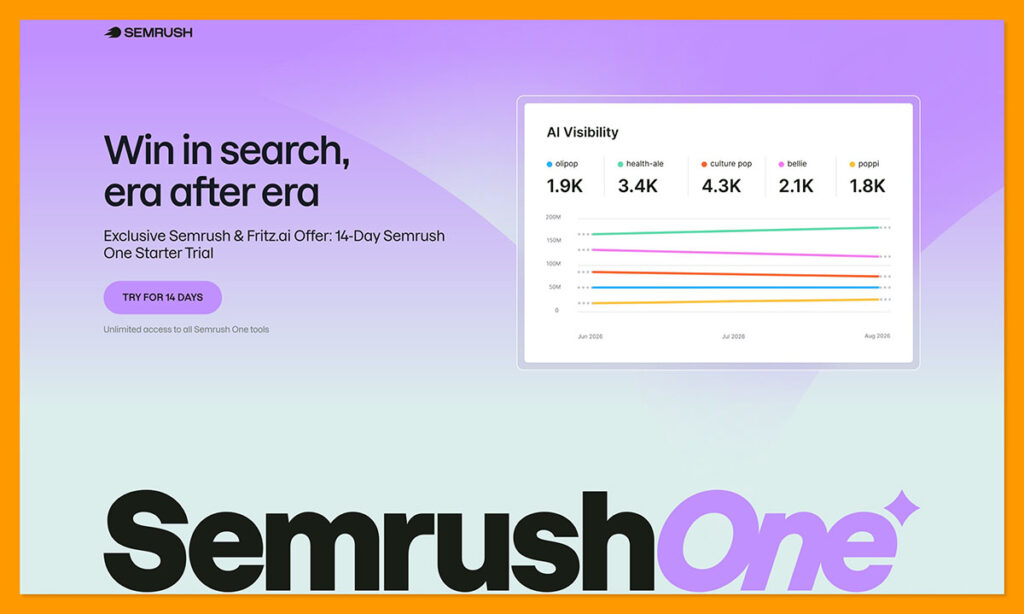
Detection is only half the battle. Once you know where your brand does and doesn’t show up in AI answers, you need a way to act on it. This is where Semrush’s broader toolkit starts to shine.
Content Optimization
Semrush’s main optimization engine is the SEO Writing Assistant (SWA), which scores content in real time against top competitors for readability, tone, and keyword usage. It works inside Google Docs, as a browser extension, and within the Semrush UI itself.
For content-heavy workflows with multiple writers, that integration is hard to beat.
Semrush also runs an AI search health audit as part of its wider site audit, checking for technical blockers to AI crawling like missing llms.txt files or blocked AI bots.
And because GEO and SEO data live in the same platform, you can overlay AI visibility on top of traditional rankings for the same keywords, which is genuinely useful for prioritization.
ZipTie.dev provides AI search optimization recommendations tied directly to AI Overview snapshots, with specific change suggestions for content and structure. It also surfaces AI success scores for pages and queries, showing where your content wins or loses inside AI answers.
That said, entry plans often cap deeper optimization workflows at around 10 pages, which is restrictive compared to Semrush’s editor-style tools.
Unified Search Intelligence
One of Semrush’s strongest arguments is that you don’t have to split your data across two platforms. You see SERP positions, backlinks, keyword volumes, and AI visibility in one place, which prevents the AI data silo problem. With ZipTie, you get best-in-class AI detection but still need separate infrastructure for traditional SEO.
The Winner: Semrush offers the more complete optimization workflow
Semrush’s SEO Writing Assistant, site audit, and unified data model make it the better fit for teams that need to turn visibility insights into content action, especially at scale.
Best for Evidence and Reporting: ZipTie.dev
If you run an agency or need to show clients what’s happening inside AI answers, evidence capture matters. This is another area where ZipTie.dev’s specialist focus pays off.
ZipTie saves full AI Overview responses, the list of cited sources, net sentiment scores, and screenshots that show exactly how a brand appears inside an AI answer.
You can filter reports by project, platform, or query, and export to CSV for further analysis. For AEO client reporting, being able to literally show before-and-after AI answer panels is a compelling differentiator.
Semrush offers strong, agency-grade reporting with presentation-ready PDFs, customizable dashboards, and API access. The reporting is mature and combines classic SEO data with AI visibility. However, it puts less emphasis on visual evidence from AI results themselves, with no native screenshot capture of AI Overviews.
For pure retainer reporting on GEO performance, ZipTie’s evidence trail is harder to beat. For broader marketing reports that roll AI visibility into overall search performance, Semrush’s dashboards hold their own.
The Winner: ZipTie.dev has the better evidence capture for AI-specific reporting
Screenshots, full response storage, and sentiment scoring give ZipTie a real edge for client-facing GEO work. Semrush still wins on overall reporting breadth.
Strengths and Weaknesses at a Glance
Semrush: Pros and Cons
Advantages:
- Massive SEO dataset with over 25 billion keywords and mature tooling for keyword research, rank tracking, site audits, backlinks, and competitive research
- Unified search intelligence that combines SERP positions and AI visibility in one place, avoiding separate data silos
- SEO Writing Assistant integrates into writer workflows through Google Docs and browser extensions
- Multi-seat friendly pricing that scales better for agencies and in-house teams
Limitations:
- AI visibility is an add-on to an SEO suite rather than the core product, and insights can feel shallower than specialist tools
- Key features like SWA and some AI modules are sold as separate add-ons, so the total bill adds up quickly
- Independent benchmarks show significantly lower AI Overview detection than specialist tools on the same keyword sets
ZipTie.dev: Pros and Cons
Advantages:
- Built exclusively for AI search visibility with the highest AI Overview detection rates of any tool we’ve seen benchmarked
- Provides full AI answers, source lists, screenshots, sentiment scoring, and AI success scores to prioritize work
- Auto query generation from URLs and GSC imports surfaces long-tail AI questions you wouldn’t otherwise track
- Strong evidence capture makes it ideal for AEO and GEO client retainers
Limitations:
- No full SEO suite, so you’ll need a separate platform for traditional keyword research and backlink analysis
- Strict single-seat restriction on all standard plans makes it awkward for team use
- Some users describe the pricing model and pay-per-action billing as complex or non-transparent
- Entry plans cap deeper optimization workflows at around 10 pages
How to Choose Between Semrush and ZipTie.dev
The right pick depends on how central AI search is to your strategy and what your team already has in place. Here are three questions to help you decide:
Do you want unified SEO plus AI visibility, or the deepest AI visibility possible?
If you need one platform to cover keyword research, rank tracking, backlinks, and AI visibility together, Semrush wins by default. If your entire job is getting brands into AI Overviews and you already have other SEO infrastructure, ZipTie delivers dramatically better detection.
What kind of workflow does your team run?
Content-heavy operations with multiple writers working in Google Docs will get more value from Semrush and its SEO Writing Assistant. Strategy-led teams focused on research and client reporting around AI Overviews, with fewer power users, are a natural fit for ZipTie.dev.
How sensitive are you to AI data accuracy?
If decisions depend on precisely estimating how often AI Overviews appear and how your brand gets cited, ZipTie’s higher detection rates and screenshot-based evidence are a real differentiator. If AI is a secondary channel next to classic organic traffic, Semrush’s AI modules are probably good enough bundled into your existing SEO budget.
How We Compared Semrush and ZipTie.dev
We evaluated both platforms across the areas that matter most for AI search visibility work, weighted according to how much impact each has on real-world GEO outcomes:
| Criterion | Weight | What we looked at |
|---|---|---|
| AI Overview detection accuracy | 30% | Benchmark detection rates against the same keyword sets |
| Optimization workflow | 20% | Content scoring, recommendations, and integration with writing tools |
| Query and prompt management | 15% | Automatic query generation, prompt limits, and prioritization |
| Evidence and reporting | 15% | Screenshots, response storage, client-ready exports |
| Pricing and seats | 10% | Entry cost, add-ons, and team scalability |
| Traditional SEO coverage | 10% | Keyword data, backlinks, site audits, and unified reporting |
We drew on independent benchmarks comparing AI Overview detection rates, product documentation from both platforms, and third-party reviews covering real user experiences with pricing, seats, and workflow limitations.
Semrush vs ZipTie.dev: Final Verdict
For teams whose primary goal is showing up in AI Overviews and other generative search surfaces, ZipTie.dev is the better tool.
Its detection rates are in a different league, its evidence capture is built for AEO client work, and its automatic query generation surfaces opportunities you wouldn’t find manually. If GEO is your job, ZipTie is worth the specialist price tag.
Semrush remains the better all-in-one choice. If you already pay for a broad SEO stack, its AI Visibility Toolkit and SEO Writing Assistant fold AI visibility into workflows your team already runs, with multi-seat pricing that scales for agencies.
It won’t match ZipTie on pure AI Overview detection, but for most businesses where AI search is one channel among many, it’s probably enough.
The honest answer for many AEO-focused agencies is that they’ll end up running both: Semrush for traditional SEO and content production, ZipTie for AI visibility monitoring and client reporting.
It’s not cheap, but until one platform closes the gap on the other, it’s the combination that covers all the bases.

Comments 0 Responses