

Semrush and AirOps are two heavyweight platforms in the SEO and AI search space, but which comes out on top?
I’ve spent dozens of hours analyzing and testing both tools to bring you an honest recommendation for your content and visibility operations.
Here’s the short answer: neither wins outright. Semrush is the stronger all-round SEO and competitive intelligence suite, while AirOps is the stronger execution layer for teams running SEO and AEO content operations at scale.
Semrush vs AirOps: Quick Verdict
- Semrush – Best for research, competitive intelligence, and SEO monitoring across multiple channels
- AirOps – Best for executing SEO and AEO content workflows at scale with first-party data
In this review, I’ll take a closer look at how these two platforms differ, comparing them on data models, workflows, AI search visibility, integrations, pricing, and who each one is actually built for.
Quick Comparison: Semrush vs AirOps
Here’s a high-level overview of where each platform sits:
| Dimension | Semrush | AirOps |
|---|---|---|
| Primary focus | Research, monitoring, competitive intel across SEO, PPC, social, local | Execution of SEO and AEO content ops with unified analytics and workflows |
| Data model | Third-party keyword and backlink databases, clickstream traffic models | First-party GSC and GA4 plus AI search citations at page level |
| AI search coverage | AI Visibility Toolkit inside Semrush One | Native tracking across 30+ AI search and assistant surfaces |
| Execution layer | Content Toolkit with AI assistants, exports for complex flows | Grid and Workflows for bulk, conditional content updates and CMS publishing |
| Breadth vs depth | Very broad marketing stack, lighter on production workflows | Narrower category, deeper on content production and integrations |
Best for Positioning and Core Use Cases: It Depends
Unlike most head-to-head comparisons, these two tools aren’t really fighting for the same job.
Understanding where each one sits in your stack is the most important decision you’ll make before committing to either.
Semrush is an all-in-one SEO and marketing intelligence suite.
It covers keyword and competitor research, backlink analysis, technical audits, rank tracking, traffic and market intelligence, and local, paid, and social tools, plus an AI Visibility Toolkit layered on top.
It’s the right fit when your bottleneck is discovering opportunities, benchmarking competitors, and monitoring performance across many channels.
AirOps, by contrast, is an AI-native content operations platform.
It connects Google Search Console, GA4, and AI search citations, then orchestrates content creation, refresh, and publishing workflows across many URLs at once. It’s the right fit when your bottleneck is shipping changes at scale and coordinating SEO and AEO work across content, SEO, and dev teams.
If you think of it as research versus execution, the picture gets much clearer. Semrush tells you what to do. AirOps helps you actually do it.
The Verdict
Semrush and AirOps serve different jobs. Semrush is the intelligence layer for teams that need to see opportunities. AirOps is the execution layer for teams that need to ship updates. Many mature content operations end up using both.
Best for Research and Data Coverage: Semrush
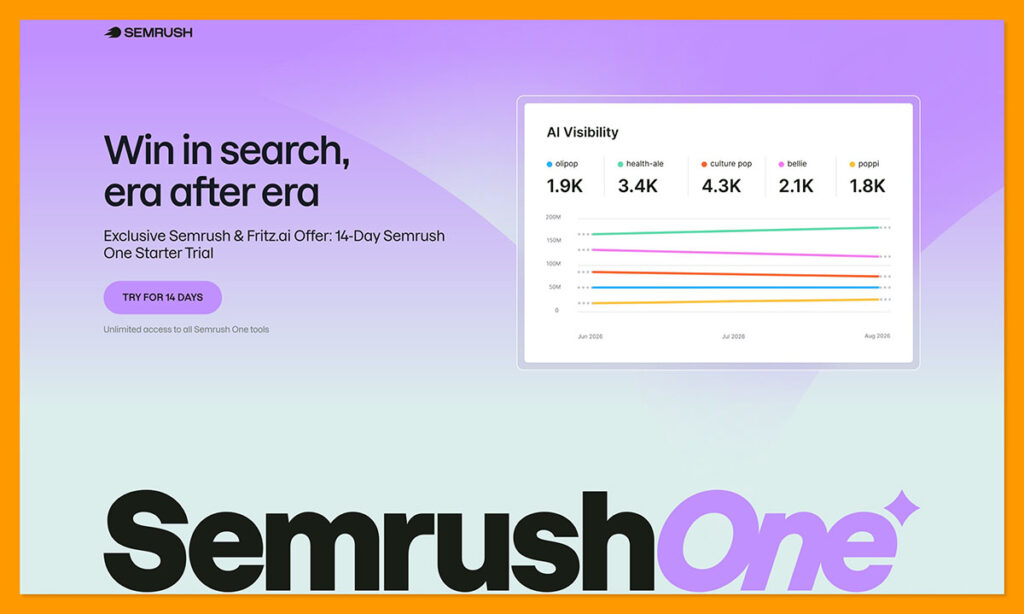
When it comes to raw data coverage, Semrush is in a league of its own. This is where the platform has spent the last decade investing heavily, and it shows.
Keyword and Competitor Research
Semrush gives you the Keyword Overview, Keyword Magic Tool, and Keyword Manager, covering search volume, difficulty, SERP features, intent, and clustering.
On the competitive side, Domain Overview, Traffic Analytics, and Market Explorer surface market share, audience overlap, and competitor discovery data that most teams simply can’t get elsewhere.
The data itself draws on tens of billions of keywords and trillions of backlinks across many geographies. For directional trend analysis, competitive benchmarking, and market sizing, this is the gold standard, though individual traffic numbers remain estimates rather than exact figures.
Backlink Intelligence
Backlink Analytics, Backlink Audit, and the Link Building tool sit on top of one of the largest publicly reported link indexes on the market. If backlinks are part of your strategy, Semrush gives you visibility that AirOps doesn’t attempt to replicate.
Technical SEO
Site Audit handles crawl issues, Core Web Vitals signals, internal linking, hreflang, and the rest of the standard technical checklist. Combined with Position Tracking for rank monitoring by keyword, device, and location, you get a complete picture of site health and visibility in traditional search.
Where AirOps Fits Here
AirOps doesn’t try to rebuild this layer. Instead, it includes prebuilt workflow steps to pull Semrush data directly into its own flows, including Backlinks Overview, Domain Organic Keywords, and the Keyword Magic Tool. Teams using both tools can feed Semrush signals into AirOps workflows without manual exports.
The Winner
Semrush’s data coverage is unmatched in my testing. If your main bottleneck is finding opportunities, spotting competitor moves, or benchmarking an entire market, Semrush is the stronger choice by a wide margin.
Best for Content Execution: AirOps
This is where AirOps separates itself from every traditional SEO suite, Semrush included. The platform is built around the idea that most content teams don’t need more insights, they need fewer manual steps between insight and published page.
Page360 and Opportunity Discovery
Page360 combines GSC clicks, GA4 engagement, and AI search citations into a single per-URL view, so you can prioritize what to refresh based on actual performance rather than estimated volume.
The Opportunities Engine then buckets pages into actions like create, refresh, outreach, or community, based on both performance and AI visibility signals.
This kind of first-party, page-level prioritization is something Semrush doesn’t really offer. Semrush can tell you that a keyword has opportunity. AirOps tells you that a specific URL is slipping and what to do about it.
Grid and Workflows
Grid is a spreadsheet-style environment for running bulk operations across hundreds or thousands of pages at once. Workflows let you chain steps together into repeatable pipelines: SERP analysis, research, brief creation, drafting, review routing, and direct CMS publishing, all in one flow.
A typical AirOps workflow might look like this: identify slipping URLs in Page360, pull Semrush and GSC data for context, generate a content brief, draft the update, send it to an editor for review, and publish to the CMS. All of that runs as a single conditional workflow rather than five separate tools and a Google Sheet.
Brand Kits and Knowledge Bases
To keep AI-generated drafts on-brand, AirOps uses Brand Kits and Knowledge Bases built from your own docs, blogs, and product content. This grounds outputs in your actual voice and product information rather than relying on a generic model response.
Where Semrush Fits Here
Semrush’s Content Toolkit includes the SEO Writing Assistant, content templates, and basic topic research tools. These are useful for individual writers working on one piece at a time. For complex flows that span many URLs and multiple stakeholders, though, you’ll typically need to export to Sheets, Docs, or a separate workflow tool, or build automations with Zapier or Semrush’s App Center.
The Winner
AirOps is built for execution at scale in a way Semrush simply isn’t. If your team is spending more time copying data between tools than shipping content, AirOps is the stronger fit.
Best for AI Search and AEO: AirOps (Narrowly)
Both platforms have invested in AI search visibility, but they approach it from different angles.
Semrush’s AI Visibility Toolkit, part of Semrush One, tracks how often your site appears in AI overview-style modules and ties that visibility back to specific keywords and competitors. If you already live inside Semrush for keyword research, having AI visibility data in the same interface is genuinely useful.
AirOps tracks AI citations across more than 30 AI search and assistant surfaces, and critically, ties those signals directly into its workflows. You don’t just see that a page is losing AI visibility, you can trigger a refresh workflow off that signal automatically.
The difference comes down to what you want to do with the data. Semrush gives you better context for understanding AI visibility as part of a broader SEO picture. AirOps gives you a faster path from a drop in AI citations to a republished, updated page.
The Winner
AirOps takes a slight edge for AEO-focused teams thanks to broader AI surface coverage and tighter integration with content workflows. Semrush wins if you want AI visibility layered into your existing SEO research environment.
Best for Automation and Integrations: AirOps
Semrush and AirOps both offer automation, but they automate different parts of the work.
Semrush excels at monitoring automation: scheduled audits, alerts, recurring reports, and auto-updated rank tracking dashboards. Once something goes wrong, you’ll know about it quickly.
Moving from “issue detected” to “content updated” still typically involves external tools, though, whether that’s Google Sheets, Docs, your CMS, a task manager, or custom Zapier flows.
AirOps is built for production automation. It supports complex conditional workflows, multi-sheet Grid operations, and native bulk publishing. The integration footprint reflects this:
| Integration Area | Semrush | AirOps |
|---|---|---|
| Analytics and search | Deep GSC and GA4 integration, plus proprietary data | Native GSC and GA4 as primary signals |
| CMS and publishing | Mostly via App Center partners, Zapier, or APIs | 30+ native integrations, including 7 CMS platforms and Webflow Sync for bulk updates |
| External SEO data | Native Semrush data | Pulls Semrush metrics via prebuilt workflow steps |
| Other tools | Broad marketing stack integrations (local, ads, social) | Deeper connections to project management and content tools |
The Winner
AirOps wins on execution automation and CMS publishing by a clear margin. Semrush wins on monitoring and alerting within its own ecosystem.
Best for Pricing and UX: Semrush
Neither platform is cheap, but Semrush offers a more predictable, self-serve path to getting started.
Semrush uses tiered subscriptions based on feature set and limits like projects, keywords, and reports. Costs rise as you add products such as Traffic Analytics or Market Explorer, or bring on more users, but the pricing is transparent and you can sign up without talking to sales.
AirOps follows a sales-led, usage-tiered model for paid plans. Setup is heavier, and the platform is aimed at teams that want to run a large share of their SEO and AEO work inside one environment.
For a solo marketer or a small agency, this can feel like overkill. For a content team managing hundreds of URLs, the setup cost pays off quickly.
Semrush UX
- G2 reviewers often praise the interface as intuitive and easy to navigate
- Fast time-to-value for analysts and smaller teams
- Self-serve signup with no sales call required
- Huge library of tutorials, webinars, and certification content
- The sheer number of tools can feel overwhelming on day one
- Advanced features are gated behind higher tiers
AirOps UX
- Turns manual SEO and content tasks into repeatable workflows
- Grid interface is familiar to anyone who has used a spreadsheet
- Strong documentation for building custom workflows
- Steeper learning curve while teams explore advanced Grid and Workflow features
- Sales-led pricing makes it harder to evaluate casually
- Less useful for teams that don’t have volume to justify workflow setup
The Winner
Semrush is easier to get started with and offers a more predictable path from signup to value. AirOps rewards the investment once your content operation hits real scale.
How I Evaluate SEO and AEO Platforms
I regularly review and analyze SEO and content operations tools using a consistent framework. This helps me identify the platforms that actually hold up under real-world use, rather than ones that just demo well.
I evaluate platforms across seven weighted criteria:
| Criteria | Weight | What I Test |
|---|---|---|
| Data Coverage and Accuracy | 25% | Breadth and reliability of keyword, backlink, and performance data |
| Workflow and Execution | 20% | How well the platform moves from insight to published change |
| AI Search and AEO Features | 15% | Coverage of AI surfaces and integration with content workflows |
| Integrations | 12% | Native connections to GSC, GA4, CMS platforms, and data warehouses |
| Automation | 10% | Depth of conditional workflows, bulk operations, and alerts |
| User Experience | 10% | Learning curve, interface clarity, and time to first value |
| Pricing Transparency | 8% | Predictability, self-serve access, and value at each tier |
Semrush vs AirOps: Final Verdict
Neither of these platforms is a knockout winner, and honestly, that’s the right answer. They’re built for different jobs.
Choose Semrush if your main bottleneck is seeing opportunities.
It’s the stronger pick for agencies and in-house SEO teams that need deep keyword, backlink, and competitor intelligence across multiple client sites, or for organizations that want one central place for SEO, PPC, local, and social analytics and are comfortable handling production in other tools.
Choose AirOps if your main bottleneck is shipping updates.
It’s the stronger pick for content and SEO teams whose biggest problem is execution volume rather than finding opportunities, or for organizations already using Semrush, GSC, and GA4 that want an AEO-aware layer to operationalize insights across hundreds or thousands of URLs.
For many mature content operations, the real answer is both: Semrush as the intelligence layer feeding Semrush data into AirOps workflows for execution.
The two tools are more complementary than competitive, and the teams getting the most out of modern SEO and AEO are usually running some version of that combined stack.

Comments 0 Responses